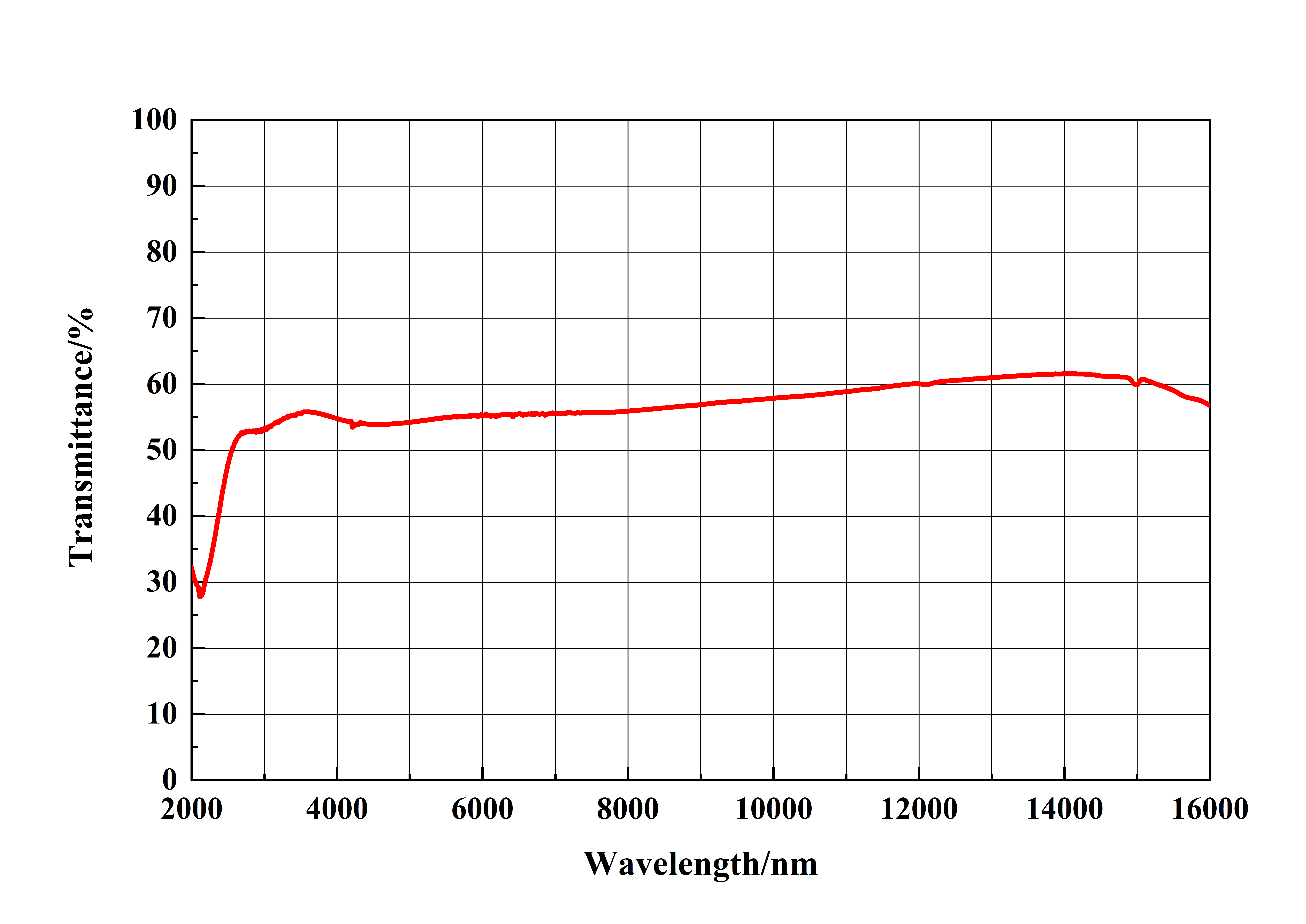
BS2000-16000 Beamsplitter
1. Definition and Principle
A beamsplitter acts as an optical device that divides an entering light beam into two or more paths heading in distinct directions. Its basic operation depends on light’s interference and reflection qualities, created by placing an exact thin film layer onto the optical base material. As a result, this method permits controlled division of light according to its wavelength, polarization condition, or strength.
2. Key Parameters and Features
- Splitting Ratio
This describes the power sharing between the transmitted and reflected portions of light, usually in forms like 50:50 or 70:30. Furthermore, it allows adaptation to meet particular needs in applications.
- Operating Wavelength Range
It refers to the color spectrum where the beamsplitter works reliably, and therefore it needs to correspond with the light source of the entire system.
- Polarization Dependency
Certain beamsplitters respond to the polarization of incoming light, so they can be made into polarization beamsplitters or versions that do not depend on polarization.
- Angle of Incidence Range
This covers the entry angles at which the beamsplitter functions correctly. In addition, moving away from the intended angle could influence the splitting ratio along with transmission performance.
- Surface Quality and Flatness
It encompasses the evenness of the surface and its levelness, which in turn directly influence the optical system’s performance and minimize energy waste.

 Afrikaans
 Albanian
 Amharic
 Arabic
 Armenian
 Azerbaijani
 Basque
 Belarusian
 Bengali
 Bosnian
 Bulgarian
 Catalan
 Cebuano
 Chichewa
 Chinese (Simplified)
 Chinese (Traditional)
 Corsican
 Croatian
 Czech
Czech Danish
 Dutch
Dutch English
 Esperanto
 Estonian
 Filipino
 Finnish
 French
 Frisian
 Galician
 Georgian
 German
 Greek
Greek Gujarati
 Haitian Creole
 Hausa
Hausa Hawaiian
 Hebrew
 Hindi
Hindi Hmong
Hmong Hungarian
 Icelandic
 Igbo
Igbo Indonesian
 Irish
Irish Italian
 Japanese
 Javanese
 Kannada
 Kazakh
 Khmer
Khmer Korean
 Kurdish (Kurmanji)
 Kyrgyz
 Lao
Lao Latin
Latin Latvian
 Lithuanian
 Luxembourgish
 Macedonian
 Malagasy
 Malay
Malay Malayalam
 Maltese
 Maori
Maori Marathi
 Mongolian
 Myanmar (Burmese)
 Nepali
 Norwegian
 Pashto
 Persian
 Polish
 Portuguese
 Punjabi
 Romanian
 Russian
 Samoan
 Scottish Gaelic
 Serbian
 Sesotho
 Shona
Shona Sindhi
 Sinhala
 Slovak
 Slovenian
 Somali
 Spanish
 Sundanese
 Swahili
 Swedish
 Tajik
Tajik Tamil
Tamil Telugu
 Thai
Thai Turkish
 Ukrainian
 Urdu
Urdu Uzbek
Uzbek Vietnamese
 Welsh
Welsh Xhosa
Xhosa Yiddish
 Yoruba
 Zulu
Zulu