English
 Afrikaans
 Albanian
 Amharic
 Arabic
 Armenian
 Azerbaijani
 Basque
 Belarusian
 Bengali
 Bosnian
 Bulgarian
 Catalan
 Cebuano
 Chichewa
 Chinese (Simplified)
 Chinese (Traditional)
 Corsican
 Croatian
 Czech
Czech Danish
 Dutch
Dutch Esperanto
 Estonian
 Filipino
 Finnish
 French
 Frisian
 Galician
 Georgian
 German
 Greek
Greek Gujarati
 Haitian Creole
 Hausa
Hausa Hawaiian
 Hebrew
 Hindi
Hindi Hmong
Hmong Hungarian
 Icelandic
 Igbo
Igbo Indonesian
 Irish
Irish Italian
 Japanese
 Javanese
 Kannada
 Kazakh
 Khmer
Khmer Korean
 Kurdish (Kurmanji)
 Kyrgyz
 Lao
Lao Latin
Latin Latvian
 Lithuanian
 Luxembourgish
 Macedonian
 Malagasy
 Malay
Malay Malayalam
 Maltese
 Maori
Maori Marathi
 Mongolian
 Myanmar (Burmese)
 Nepali
 Norwegian
 Pashto
 Persian
 Polish
 Portuguese
 Punjabi
 Romanian
 Russian
 Samoan
 Scottish Gaelic
 Serbian
 Sesotho
 Shona
Shona Sindhi
 Sinhala
 Slovak
 Slovenian
 Somali
 Spanish
 Sundanese
 Swahili
 Swedish
 Tajik
Tajik Tamil
Tamil Telugu
 Thai
Thai Turkish
 Ukrainian
 Urdu
Urdu Uzbek
Uzbek Vietnamese
 Welsh
Welsh Xhosa
Xhosa Yiddish
 Yoruba
 Zulu
Zulu


Infrared technology holds a growing place in today’s industrial tools. Devices like thermal imaging units, gas analyzers, and process watchers rely on it heavily. Precise infrared sensing usually hinges on one vital optical part: the infrared filter. These filters manage which wavelengths hit the detector. They enable tools to gather solid data in settings full of extra light, warmth, or rays that might mess up readings.
For makers of industrial sensors and testing gear, picking the proper infrared filter goes beyond a mere tech choice. The filter’s spectral band, coating setup, and toughness can shape the whole system’s precision and steadiness. Firms like Bodian Optical focus on crafting infrared optical filters that fit the tough demands of industrial uses, particularly long-wave pass filters for infrared measurement setups.
These guidelines offer a straightforward summary on choosing infrared filters that work well for industrial tools. They include examples of filters for various wavelength bands.

Why Are Infrared Filters Important for Industrial Instruments?
Industrial optical tools often work in tough spots with many light sources and heat rays at once. Without good filtering, detectors pick up jumbled signals that cut down on reading sharpness. Infrared filters serve as wavelength guards. They let only the needed wavelengths reach the sensor and stop the rest.
Such wavelength handling aids tools in zeroing in on key signals instead of background clutter. And this focus boosts overall performance in real-world tasks.
Spectral Isolation for Accurate Detection
Many industrial sensors check certain infrared wavelengths tied to heat levels, chemical uptake, or substance traits. A filter built for the right spectral zone singles out these wavelengths. Thus, the detector mainly reacts to the main signal. This matters a lot in tasks like gas spotting or infrared spectrum analysis, where tiny wavelength shifts can signal big shifts in makeup.
By keeping signals pure, these filters ensure that tools deliver dependable results even in busy conditions.
Noise Reduction in Infrared Measurement Systems
Work sites have powerful stray ray sources. Things like hot machines, sun rays, and man-made lights add unwanted light clutter. Infrared filters cut this bother by stopping spectral zones that add nothing to the reading. As a result, the output turns clearer and simpler to understand.
Improved Signal-to-Noise Ratio in Industrial Sensors
When extra wavelengths get cut before they reach the detector, the key signal shows up more sharply. This boost in signal-to-noise ratio helps tools give steady outputs over long runs. For watchers that keep going nonstop, even minor gains in signal purity can improve reading trust a good deal.
What Key Parameters Should Be Considered When Selecting an Infrared Filter?
Picking an infrared filter calls for close review of several optical and physical traits. Industrial tools face harsh conditions, so the filter needs to fit the system’s spectral demands and stay firm over time.
The main factors often cover wavelength band, pass-through rate, and material strength. Considering these ensures a good match for the job.
Cut-On Wavelength and Spectral Range Matching
In long-wave pass filters, the cut-on wavelength sets where pass-through starts. Rays longer than this mark go through, but shorter ones get stopped. Selecting the right cut-on value relies on the detector kind and the tool’s exact measurement strip.
A poor match between filter and detector can lower sensitivity or bring in extra signals. Therefore, careful alignment is key to solid work.
High Transmission and Blocking Performance
Industrial sensors gain from filters that let the wanted wavelength band through with little waste while firmly stopping other zones. Strong pass-through sends more useful power to the detector. And solid stopping avoids mix-ups from other bands.
Thin-film interference coatings often strike this balance between pass-through and cutoff in the infrared field. They make sure the filter works efficiently in practice.
Substrate Materials and Coating Stability
The base material and coating build affect the filter’s mechanical and heat firmness. Choices like silicon or special infrared glass work well in infrared zones because they handle those wavelengths smoothly.
Firm multilayer coatings also keep spectral traits steady under heat shifts and long runs, which happen often in industrial gear. This durability supports ongoing use without issues.
How Do Different Long-Wave Pass Filters Meet Various Industrial Needs?
Various industrial tasks need entry to different infrared spectral zones. Long-wave pass filters offer a handy fix by letting wavelengths past a set mark through and blocking shorter ones.
Bodian Optical supplies several long-wave pass filters made for different infrared bands. These often fit into measurement tools, thermal viewing systems, and testing setups. Their designs address specific job requirements effectively.
ILP3000 Long-Wave Pass Filter for Short-to-Mid Infrared Systems
The ILP3000 infrared long wave pass filter serves uses needing pass-through above about 3 μm. This wavelength zone comes up often in spectrum study and some eco-watch systems.
Tools in this band gain from firm stopping of shorter wavelengths and steady pass-through in the target infrared strip. The ILP3000 filter delivers this wavelength split. It helps sensors grab sharper infrared signals in measurement setups. Overall, it enhances clarity in such applications.
ILP5500 Long-Wave Pass Filter for Mid-Infrared Industrial Monitoring
The ILP5500 infrared long wave pass filter aims at a taller cut-on wavelength near 5.5 μm. This zone matters in heat sensing, gas checking, and industrial process watching where mid-infrared uptake traits show up.
With its well-planned coating build, the ILP5500 filter lets longer wavelengths through and stops lower ones that might disrupt readings. The outcome is a tighter infrared signal for tools studying heat outputs or molecule uptake shapes. This precision aids reliable monitoring.
ILP10000 Long-Wave Pass Filter for Far-Infrared Thermal Applications
For setups in far-infrared zones, the ILP10000 infrared long wave pass filter gives a cut-on wavelength near 10 μm. This spectral zone sees wide use in thermal viewing and high-heat watching tasks.
Industrial thermal cameras and check systems often count on filters in this band to spot given-off heat rays. By stopping shorter wavelengths and passing far-infrared rays, the ILP10000 filter backs precise heat readings in hard spots. It proves vital for accurate thermal work.
How Does Coating Technology Affect Infrared Filter Performance?
An infrared filter’s work relies much on its thin-film coating setup. These coatings include many layers of dielectric stuff laid down with exact thickness checks. Even tiny changes in layer depth can move the filter’s spectral reply.
For this reason, making accuracy shapes the end optical work greatly. Skilled methods ensure the filter meets needs consistently.
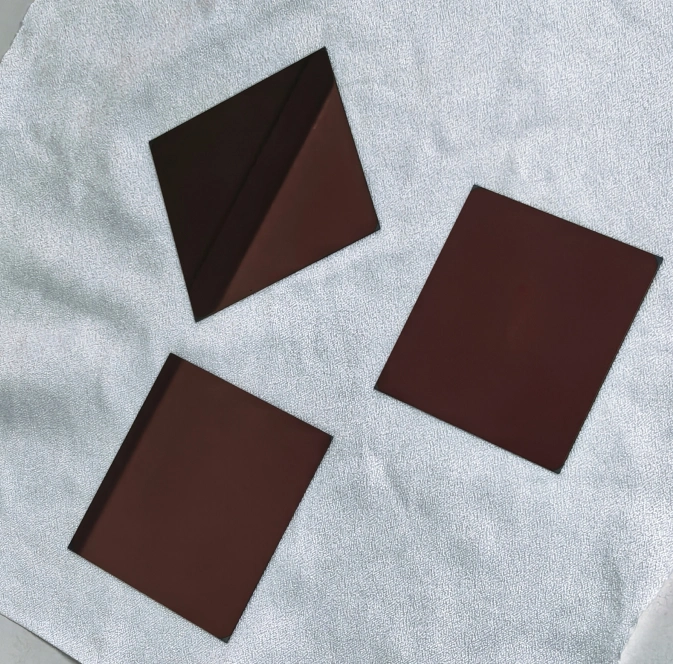
Multilayer Dielectric Coating for Stable Spectral Control
Multilayer coatings make interference that sets which wavelengths go through the filter. By tweaking layer depth and index contrast, builders can craft filters with set cut-on wavelengths and stop zones.
Smartly built coatings hold steady spectral traits even under heat changes or long runs. This reliability keeps the filter performing as planned over time.
High-Power Resistance for Industrial Environments
Industrial tools sometimes run close to heat spots or strong infrared rays. Filters in these setups must handle raised heat and fierce rays without breaking down.
Better coating steps raise resistance to heat strain and keep optical traits over time. Thus, they suit demanding work sites well.
Long-Term Optical Stability in Measurement Systems
Steadiness counts big in industrial checking. A filter that slowly moves its spectral reply can cause wrong outputs or setup issues.
Top coating tech aids in keeping spectral steadiness over long service times. This cuts the need for regular tool re-setup. In turn, it supports smooth operations.
Why Choose Bodian Optical Infrared Filters for Industrial Instruments?
Choosing a filter maker forms a key step in making solid industrial tools. Makers seek filters with exact optical work plus steady making quality.
Bodian Optical centers on infrared optical parts built for measurement setups, viewing devices, and science tools. Their approach ensures high standards across the board.
Precision Long-Wave Pass Filter Design for Industrial Sensors
Bodian Optical creates long-wave pass filters spanning several infrared bands. This lets builders pick filters that fit their tool’s spectral wants. These filters aim to give clear splits between passed and stopped wavelengths.
That exactness raises spotting sharpness in setups that lean on infrared checking. It makes integration straightforward and effective.
Reliable Coating Technology and Consistent Production Quality
Firm coating tech is vital for making filters with repeated work. Bodian Optical uses checked thin-film laying methods that hold steady spectral traits across making lots.
For tool makers, this steadiness lowers shifts between units and eases system setup. It leads to more uniform results in final products.
Customizable Infrared Filters for Specialized Instrument Systems
Industrial tools often call for optical parts fitted to set wavelength bands or size needs. Bodian Optical gives tweak choices that let filters match different system designs.
This bendability helps gear makers blend infrared filters into fresh sensor plans or special testing tools. It speeds up development and fits unique demands.
FAQ
Q1: What is a long-wave pass infrared filter?
A: A long-wave pass infrared filter blocks wavelengths shorter than a specific cut-on point while transmitting longer wavelengths. It is commonly used in thermal imaging, spectroscopy, and industrial sensing applications.
Q2: How do infrared filters improve measurement accuracy?
A: Infrared filters remove unwanted wavelengths before light reaches the detector. By limiting the signal to a specific spectral band, the instrument receives cleaner data with less interference from background radiation.
Q3: Which infrared filter wavelength should be selected for industrial instruments?
A: The correct wavelength depends on the detector type and the application. For example, filters near 3 μm may be used in spectroscopy systems, while filters around 10 μm are often used in thermal imaging or heat monitoring equipment.