English
 Afrikaans
 Albanian
 Amharic
 Arabic
 Armenian
 Azerbaijani
 Basque
 Belarusian
 Bengali
 Bosnian
 Bulgarian
 Catalan
 Cebuano
 Chichewa
 Chinese (Simplified)
 Chinese (Traditional)
 Corsican
 Croatian
 Czech
Czech Danish
 Dutch
Dutch Esperanto
 Estonian
 Filipino
 Finnish
 French
 Frisian
 Galician
 Georgian
 German
 Greek
Greek Gujarati
 Haitian Creole
 Hausa
Hausa Hawaiian
 Hebrew
 Hindi
Hindi Hmong
Hmong Hungarian
 Icelandic
 Igbo
Igbo Indonesian
 Irish
Irish Italian
 Japanese
 Javanese
 Kannada
 Kazakh
 Khmer
Khmer Korean
 Kurdish (Kurmanji)
 Kyrgyz
 Lao
Lao Latin
Latin Latvian
 Lithuanian
 Luxembourgish
 Macedonian
 Malagasy
 Malay
Malay Malayalam
 Maltese
 Maori
Maori Marathi
 Mongolian
 Myanmar (Burmese)
 Nepali
 Norwegian
 Pashto
 Persian
 Polish
 Portuguese
 Punjabi
 Romanian
 Russian
 Samoan
 Scottish Gaelic
 Serbian
 Sesotho
 Shona
Shona Sindhi
 Sinhala
 Slovak
 Slovenian
 Somali
 Spanish
 Sundanese
 Swahili
 Swedish
 Tajik
Tajik Tamil
Tamil Telugu
 Thai
Thai Turkish
 Ukrainian
 Urdu
Urdu Uzbek
Uzbek Vietnamese
 Welsh
Welsh Xhosa
Xhosa Yiddish
 Yoruba
 Zulu
Zulu


Night-time monitoring has changed a lot in recent years. Security teams now expect cameras to work in places where light is uneven, faint, or nearly absent. Under these conditions, visible-light imaging becomes unreliable. Cameras must depend on infrared technology, and in this process, infrared long-wave pass filters play a quiet but essential role.
Bodian Optical, a company with decades of experience in thin-film coatings, supplies a full set of IR long-pass filters that support these systems. Models such as ILP5500, ILP8200, and ILP10000 are used widely in surveillance devices, thermal imagers, and other infrared equipment. Although these filters do not look complicated, they shape how effectively a camera “sees” at night.
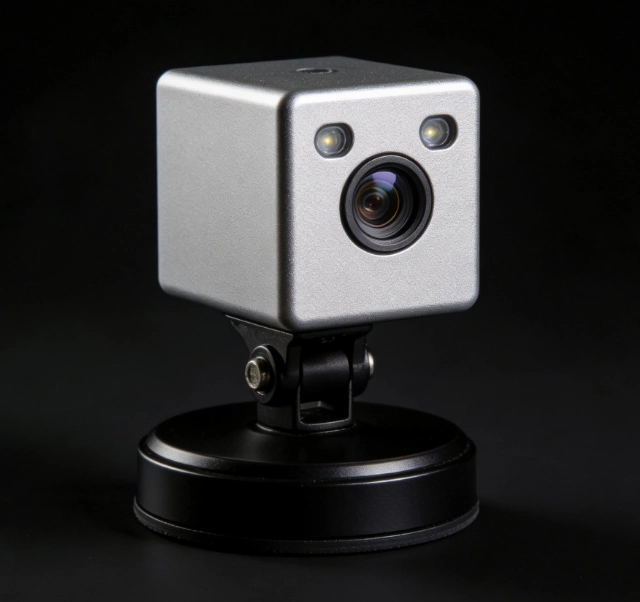
Why Night-Vision Cameras Rely on Infrared Long-Wave Pass Filters
Many people think infrared imaging is straightforward. Cameras switch to IR mode, and the sensor captures whatever is in front of it. But real scenes are messy. Outdoor areas often contain car headlights, digital billboards, scattered streetlights, and reflections from buildings. These elements add unwanted visible wavelengths, and the sensor receives signals it does not need. Without a filter, the image may appear washed out or too bright in certain spots.
Infrared long-wave pass filters work as a selective doorway. They let useful infrared wavelengths pass through while stopping the rest. This simple function makes a noticeable difference in low-light performance.
Improving Image Quality in Dim Environments
When visible light is mostly gone, the sensor still picks up IR reflections. A long-wave pass filter helps highlight those reflections by blocking the shorter wavelengths that create noise. As a result, the image becomes easier to read, even if the scene is extremely dark.
Reducing Bright Spots From Visible-Light Sources
Urban environments contain many sources of scattered illumination. Filters help cut down glare and random highlights. For night-vision cameras placed at building entrances or busy intersections, this is especially valuable. The filter helps maintain a cleaner, more stable view.
Supporting Better Sensor Performance
Modern image sensors respond to a wide spectral range. They can receive both visible and infrared energy. Long-wave pass filters help guide the sensor to the right portion of the spectrum. The camera then produces images more suited to night-time surveillance work.
How ILP5500, ILP8200, and ILP10000 Support Different Infrared Systems
Not every night-vision camera uses the same type of infrared light. Some rely on mid-IR illumination, while others detect heat directly in the long-wave infrared band. This is why Bodian Optical offers several filters. Each one is designed for a specific role.
ILP5500 Long-Wave Pass Filter for Mid-Infrared Use
The ILP5500 filter works well with mid-IR systems. It blocks visible wavelengths and allows IR light above around 5500 nm to pass. This is useful for cameras equipped with IR lamps or for devices used in industrial inspection.
The filter’s coating is stable and resists temperature changes. This makes it a suitable choice for outdoor cameras that run day and night.
ILP8200 Long-Wave Pass Filter for Higher-Contrast Imaging
The ILP8200 filter serves long-range monitoring and early thermal-imaging setups. It helps the camera pick out clear outlines in dark conditions.
By limiting unwanted wavelengths, the filter creates stronger contrast. Systems placed on towers, vehicles, or border fences often depend on this type of spectral control.
ILP10000 Long-Wave Pass Filter for True Thermal Detection
Thermal cameras work in the 8–14 µm range. The ILP10000 filter matches this range well. It blocks shorter wavelengths and allows long-wave IR to pass smoothly.
Because of this, the camera can detect small temperature shifts. These shifts matter in fire-prevention equipment, industrial protection systems, and heavy-duty monitoring sites.
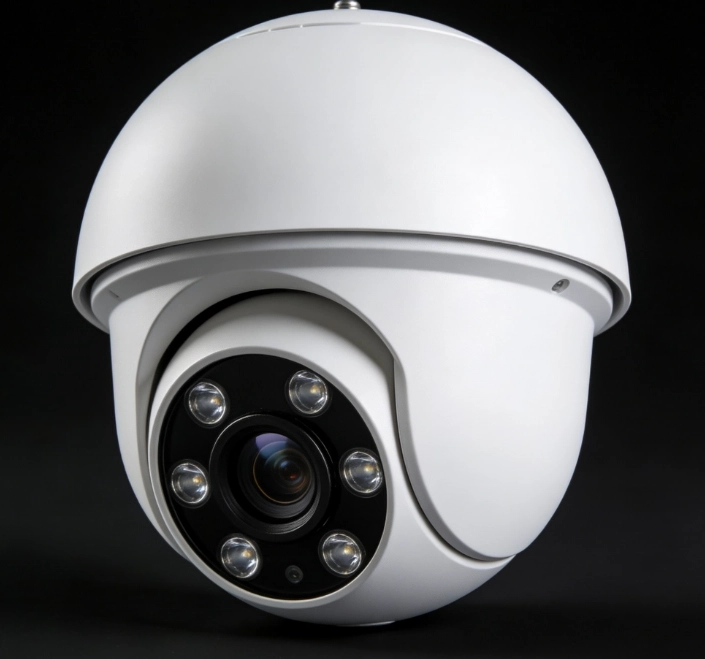
Key Optical Characteristics That Shape Filter Performance
Although filters look like simple glass pieces, their performance depends on precise optical engineering. Surveillance systems demand stable filters that can hold up under constant exposure to heat, humidity, and vibration. A few characteristics stand out across the industry.
High Transmission and Strong Blocking Ability
A good long-wave pass filter must transmit infrared energy while holding back unwanted wavelengths. High transmission helps the sensor pick up small IR signals.
At the same time, deep blocking—often several orders of magnitude—prevents stray visible light from entering the image. This balance is important for any night-vision device.
Reliable Coating Materials and Substrate Choices
Bodian Optical uses substrates such as silicon, germanium and sapphire. These materials behave well at infrared wavelengths and remain stable under high temperatures. Thin-film coatings are produced through controlled processes, including evaporation and sputtering. This gives the filters consistent performance and long service life.
Accurate Spectral Testing and Quality Checks
Before filters leave the factory, they go through detailed inspection. This includes measuring reflectance, transmittance, absorption, and surface quality.
These steps help avoid problems such as coating defects or unexpected spectral drift, which could affect the camera’s night-vision ability.
How Bodian Optical Filters Fit Into Modern Security Projects
Security systems today are expected to run continuously. They monitor long outdoor corridors, industrial yards, coastal zones, and remote stations. The filters used in these systems must handle these demanding environments.
Working Well With Infrared Imaging and Thermal Cameras
Bodian’s IR long-pass filters support both active and passive monitoring. Whether a camera depends on IR lamps or detects natural heat, the filter keeps the incoming wavelengths clean and focused. This leads to more reliable night-vision results.
Holding Up in Tough Environmental Conditions
Outdoor monitoring involves heat, cold, moisture, and occasional shock. Filters that cannot handle these changes may cause blurry images or drifting performance.
Bodian Optical designs its filters to stay stable across wide environmental ranges, which is a practical benefit for installers and camera manufacturers.
Offering Custom Sizes and Film Designs for OEM Projects
Different cameras require different shapes and coating patterns. Bodian Optical provides customized wavelength ranges, thicknesses, and dimensions.
For companies developing new IR cameras, this flexibility helps them match the filter to the lens and sensor design.
How Users Can Choose the Right Long-Wave Pass Filter
Selecting the correct filter is not only about wavelength. Users should also consider the working environment, the type of camera, and the final imaging goal.
Matching Wavelengths to the Imaging Sensor
For example:
– ILP5500 suits many conventional IR night-vision cameras.
– ILP8200 works well for long-range or specialty surveillance.
– ILP10000 is meant for thermal systems.
When the wavelength fits the sensor’s range, the image quality improves noticeably.
Thinking About the Site Conditions
Filters used outdoors may need more durability and better resistance to sunlight or temperature swings. Indoor systems might focus more on blocking bright reflections.
Looking at the Manufacturer’s Technical Strength
Even small coating differences can affect how a camera performs at night. A manufacturer with steady production control reduces the risk of inconsistent batches.
Bodian Optical’s long industry record and modern equipment make it a dependable choice for companies needing stable IR filters.
FAQ
Q1: What does an infrared long-wave pass filter mainly do in night-vision cameras?
A: It blocks visible light and allows the infrared band to pass into the sensor. This produces cleaner night-vision images and reduces glare from bright sources.
Q2: Are ILP5500, ILP8200, and ILP10000 used for different types of surveillance cameras?
A: Yes. ILP5500 is common in traditional IR night-vision systems, ILP8200 fits long-range IR imaging, and ILP10000 is designed for thermal detectors.
Q3: Why are coating quality and material stability important for these filters?
A: Stable coatings help the filter maintain its spectral curve. This reduces the chance of image distortion or loss of contrast, especially after long-term outdoor use.