English
 Afrikaans
 Albanian
 Amharic
 Arabic
 Armenian
 Azerbaijani
 Basque
 Belarusian
 Bengali
 Bosnian
 Bulgarian
 Catalan
 Cebuano
 Chichewa
 Chinese (Simplified)
 Chinese (Traditional)
 Corsican
 Croatian
 Czech
Czech Danish
 Dutch
Dutch Esperanto
 Estonian
 Filipino
 Finnish
 French
 Frisian
 Galician
 Georgian
 German
 Greek
Greek Gujarati
 Haitian Creole
 Hausa
Hausa Hawaiian
 Hebrew
 Hindi
Hindi Hmong
Hmong Hungarian
 Icelandic
 Igbo
Igbo Indonesian
 Irish
Irish Italian
 Japanese
 Javanese
 Kannada
 Kazakh
 Khmer
Khmer Korean
 Kurdish (Kurmanji)
 Kyrgyz
 Lao
Lao Latin
Latin Latvian
 Lithuanian
 Luxembourgish
 Macedonian
 Malagasy
 Malay
Malay Malayalam
 Maltese
 Maori
Maori Marathi
 Mongolian
 Myanmar (Burmese)
 Nepali
 Norwegian
 Pashto
 Persian
 Polish
 Portuguese
 Punjabi
 Romanian
 Russian
 Samoan
 Scottish Gaelic
 Serbian
 Sesotho
 Shona
Shona Sindhi
 Sinhala
 Slovak
 Slovenian
 Somali
 Spanish
 Sundanese
 Swahili
 Swedish
 Tajik
Tajik Tamil
Tamil Telugu
 Thai
Thai Turkish
 Ukrainian
 Urdu
Urdu Uzbek
Uzbek Vietnamese
 Welsh
Welsh Xhosa
Xhosa Yiddish
 Yoruba
 Zulu
Zulu


Security setups no longer fail when the sun goes down. In urban monitoring, boundary defense, and key facility oversight, night vision tools have transformed evening operations in current protection strategies. Rather than depending on man-made lights, sophisticated infrared detection lets cameras and detectors spot actions through warmth and bounced infrared rays.
The heart of this change involves a set of lens parts that seldom draw widespread notice, yet they strongly influence picture sharpness: infrared long wave pass filters. Firms like Bodian Optical, backed by years of thin-film layering expertise, provide these filters to aid protection setups in viewing sharply where people cannot.
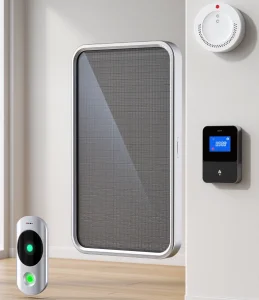
How Does Night Vision Technology Enhance Modern Security Systems?
Night vision tools boost protection by stretching sight into spots where regular cameras struggle. And this change has altered not only the way these setups function, but also the locations where they can be placed.
Before we dive into the lens elements driving this skill, it is useful to grasp what night vision truly brings to practical protection tasks.
Extended Infrared Detection Beyond Visible Light
Standard cameras work mostly in the visible range, about 400–700 nm. As soon as natural light fades, picture distortion grows quickly, and key details vanish. On the other hand, night vision setups grab infrared waves past visible light, so they can pick up even in pitch black.
Infrared long wave pass filters hold a vital spot in this process. Since they stop visible and short-wave disruptions while letting chosen infrared ranges through, these filters enable detectors to zero in on helpful signals rather than clutter. This proves particularly handy for outside protection, where car lights, road lamps, and bounces frequently muddle ordinary cameras.
Improved Target Recognition in Low-Visibility Conditions
Protection involves more than spotting motion. It means identifying exactly what that motion represents. People, cars, and creatures give off distinct heat signatures. Infrared detection naturally stresses these variations.
Paired with the proper long wave pass filter, sharpness rises. Scene mess fades. Outlines show up more distinctly. Therefore, software programs and watch operators can reach faster, surer judgments in evening rounds or distant oversight.
Reliable Performance Across Diverse Security Environments
Night vision setups now function in areas once seen as overly tough: misty shorelines, gritty factory areas, dimly lit frontiers, and below-ground sites. Infrared filters built with steady layers keep even transmission despite heat swings and moisture shifts.
Such dependability has turned infrared-driven protection into a routine pick instead of a special one.
Why Are Infrared Long Wave Pass Filters Essential for Night Vision Security?
Night vision setups depend on detectors, but detectors by themselves fall short. Without fitting wave control, undesired waves cut sharpness and boost wrong alerts.
Grasping the role of infrared long wave pass filters shows why they count as main parts, not add-ons.
Selective Infrared Transmission for Noise Reduction
Long wave pass filters permit waves over a set limit to go through, all while halting shorter ones. In protection tasks, this implies visible glare, echoes, and random glows get held back.
The outcome is a purer feed hitting the sensor. For night vision cameras, this purer feed turns straight into steadier pictures and less handling mistakes.
Stable Optical Characteristics in Harsh Operating Conditions
Protection gear typically runs around the clock, in the open, and out of easy reach for fixes. Filters need to keep their wave traits for years, not just months.
Bodian Optical applies proven thin-film layering methods to create filters with reliable limit precision and pass steadiness. This steadiness counts a lot when setups go into far-off or risky spots where adjustments cost plenty.
Compatibility With Infrared Sensors and Imaging Systems
Various night vision setups work in varied infrared zones. Some target near-infrared for setups with active lighting, whereas others count on heat pickup in longer waves.
Infrared long wave pass filters get made to fit these sensor gaps, so setup creators can weigh expense, pickup strength, and spot range without overhauling the full lens route.
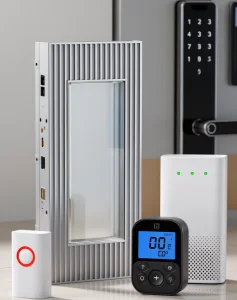
Which Infrared Long Wave Pass Filters Support Different Security Scenarios?
Not every protection setting calls for the same infrared reply. Bodian Optical supplies several infrared long wave pass filters, each fitting particular watch demands.
ILP3000 Infrared Long Wave Pass Filter for Near-Infrared Surveillance
The ILP3000 filter lets waves above about 3.0 μm through, which fits near-infrared watch setups well. It commonly goes into systems mixing infrared lighting with picture sensors for close- to medium-distance checks.
Common uses cover inside protection, storage oversight, and managed boundary areas.
ILP7700 Infrared Long Wave Pass Filter for Enhanced Thermal Contrast
The ILP7700 filter handles longer infrared waves, boosting heat sharpness and cutting scene meddling. This suits outside protection setups where heat gaps between items outweigh bounced light.
It gets picked often for boundary protection, frontier oversight, and factory site watching.
ILP10600 Infrared Long Wave Pass Filter for Long Wave Infrared Applications
Built for long wave infrared (LWIR) setups, the ILP10600 filter backs waves above around 10.6 μm. This zone sees wide use in heat picture cameras for top-tier protection and vital site guarding.
Uses span power plants, airfields, travel centers, and armed forces watch systems.
How Do Bodian Optical Filters Improve the Reliability of Security Systems?
Every sharp night picture rests on exact lens handling. Bodian Optical’s background in infrared thin-film methods straightly aids lasting setup dependability.
High Precision Thin Film Coating Technology
Bodian Optical draws its method origins over forty years back, with strong ties to lens layering studies and country-scale efforts. Cutting-edge layering gear and firm step oversight let close handling of limit waves and pass lines.
This accuracy aids protection setup makers in keeping steady output over big batch runs.
Consistent Spectral Performance With Tight Tolerances
Infrared protection setups frequently blend several cameras and detectors. Uneven filters cause spotty pictures and setup problems.
Bodian Optical filters get made with managed limits, so those putting together systems can gain even picture acts across whole setups, not merely lone pieces.
Customization Capability for Professional Security Integrators
Protection efforts differ a great deal. Some need odd sizes. Others call for tweaked limit waves or special base picks.
Bodian Optical backs tailored work from plans, examples, or task needs, which eases things for system builders to fit filters to actual field setups instead of tweaking systems to fit ready-made bounds.
Industry Data: Infrared Bands Used in Night Vision Security
The chart below shows widely recognized infrared spans used in protection imaging, drawn from usual field groupings.
| Infrared Band | Wavelength Range | Typical Security Use |
| Near-Infrared (NIR) | 0.75–1.4 μm | Active IR surveillance, indoor security |
| Short Wave Infrared (SWIR) | 1.4–3 μm | Low-light imaging, fog penetration |
| Mid Wave Infrared (MWIR) | 3–5 μm | Thermal imaging, vehicle detection |
| Long Wave Infrared (LWIR) | 8–14 μm | Human detection, perimeter security |
These spans steer filter choices and sensor matches in today’s protection setups.
Filter Comparison: Bodian Optical ILP Series Overview
The chart that follows sums up practical output placement for the three ILP types covered.
| Filter Model | Approximate Cutoff Wavelength | Primary Security Application |
| ILP3000 | ≥ 3.0 μm | Near-infrared surveillance |
| ILP7700 | ≥ 7.7 μm | Outdoor thermal contrast |
| ILP10600 | ≥ 10.6 μm | Long wave thermal imaging |
True setup output hinges on sensor kind and lens build, but these figures match standard protection field wants.
What Future Trends Will Shape Night Vision Security Technology?
Protection setups keep growing, and infrared tools are advancing alongside.
Growing Demand for Infrared-Based Smart Surveillance
AI-backed watching depends on clear picture feeds. Infrared detection, backed by fitting filtering, cuts false starts and lifts item sorting precision in evening times.
Higher Integration of Optical Filters in Intelligent Security Systems
Filters no longer act as idle parts. Their wave part straightly sways setup smarts, so lens planning gains more weight in protection schemes.
Expanded Use of Long Wave Infrared in Critical Infrastructure Protection
As states and businesses pour more into site guarding, LWIR setups turn routine. Long wave pass filters made for steadiness and accuracy will stay key in this move.
FAQ
Q1: Why are long wave pass filters important in night vision cameras?
A: They block unwanted visible and short-wave light, allowing sensors to focus on useful infrared signals. This improves contrast and reduces noise in dark environments.
Q2: How do ILP filters differ from standard infrared filters?
A: ILP filters are designed with precise cutoff wavelengths and deep blocking regions, making them suitable for professional security and thermal imaging systems rather than general optics.
Q3: Can Bodian Optical filters be customized for specific security projects?
A: Yes. Bodian Optical supports customization based on wavelength, size, and substrate needs, helping system integrators match filters to real-world deployment conditions.