English
 Afrikaans
 Albanian
 Amharic
 Arabic
 Armenian
 Azerbaijani
 Basque
 Belarusian
 Bengali
 Bosnian
 Bulgarian
 Catalan
 Cebuano
 Chichewa
 Chinese (Simplified)
 Chinese (Traditional)
 Corsican
 Croatian
 Czech
Czech Danish
 Dutch
Dutch Esperanto
 Estonian
 Filipino
 Finnish
 French
 Frisian
 Galician
 Georgian
 German
 Greek
Greek Gujarati
 Haitian Creole
 Hausa
Hausa Hawaiian
 Hebrew
 Hindi
Hindi Hmong
Hmong Hungarian
 Icelandic
 Igbo
Igbo Indonesian
 Irish
Irish Italian
 Japanese
 Javanese
 Kannada
 Kazakh
 Khmer
Khmer Korean
 Kurdish (Kurmanji)
 Kyrgyz
 Lao
Lao Latin
Latin Latvian
 Lithuanian
 Luxembourgish
 Macedonian
 Malagasy
 Malay
Malay Malayalam
 Maltese
 Maori
Maori Marathi
 Mongolian
 Myanmar (Burmese)
 Nepali
 Norwegian
 Pashto
 Persian
 Polish
 Portuguese
 Punjabi
 Romanian
 Russian
 Samoan
 Scottish Gaelic
 Serbian
 Sesotho
 Shona
Shona Sindhi
 Sinhala
 Slovak
 Slovenian
 Somali
 Spanish
 Sundanese
 Swahili
 Swedish
 Tajik
Tajik Tamil
Tamil Telugu
 Thai
Thai Turkish
 Ukrainian
 Urdu
Urdu Uzbek
Uzbek Vietnamese
 Welsh
Welsh Xhosa
Xhosa Yiddish
 Yoruba
 Zulu
Zulu


In the field of advanced surveillance and factory operations, people often mix up “night vision” and “thermal imaging” as if they mean the same thing. They do not. Both allow viewing in low light, but they operate based on separate physical principles. For managers overseeing large facilities, selecting the incorrect option is not merely a small error; it could lead to overlooking a gas escape or detecting a safety issue too late. Knowing these optical devices forms the initial step in creating a monitoring setup that performs reliably.

How Do Night Vision and Thermal Infrared Technologies Differ in Industrial Environments?
The primary difference between these approaches centers on the light range. Standard night vision functions much like an absorber for light; it gathers small quantities of near-infrared or surrounding light and amplifies it so that observers can interpret it clearly. Thermal infrared, by contrast, ignores light completely. Instead, it identifies heat patterns, which are the unseen energy that all objects, ranging from a cool tube to an active engine, emit all the time.
Fundamental Principles of Near-Infrared vs. Long-Wave Radiation
Night vision depends on the near-infrared range, generally spanning 0.75 to 3.0 micrometers. It requires even a small amount of light to operate, and that is why it faces challenges in complete darkness without an added IR light source. Thermal imaging works in a farther part of the range, typically within the long-wave infrared (LWIR) band of 8 to 14 micrometers. Since it senses heat instead of bounced light, it manages to view through dense smoke, thick mist, or a fully dark storage area where regular cameras would display only a blank screen.
Distinctions in Sensing Components and Optical Windows
The internal parts of these tools mirror these range variations. Night vision commonly employs silicon-based detectors that excel at capturing shorter wavelengths. Thermal setups, however, demand special materials for their “windows” and lenses because ordinary glass actually stops thermal energy. This explains the use of substances like Germanium or Zinc Sulfide in thermal optics; these materials offer a “clear path” that lets heat waves reach the sensor without getting trapped.
Strategic Advantages of Jingyi Bodian’s Coating Technology
Engineering challenges arise here. Beijing Jingyi Bodian, known as Bodian Optical, has dedicated more than 40 years to refining thin-film coatings that enhance system dependability. Using advanced tools from Germany and Japan, such as the Leybold Syrus 1350, they apply layers of dielectric or metal films to bases with remarkable accuracy. This goes beyond simply sharpening the image; it involves regulating precisely which wavelengths pass and which ones stop, resulting in strong passage rates and sharp blocking levels that enable industrial detectors to disregard surrounding interference and concentrate on the intended target.
Shifting from simple light boosting to expert thermal observation highlights the filter’s role as the core of the camera. Lacking the appropriate filter, a thermal device essentially operates on assumptions.
Why is Precision Filtering Essential for Thermal Imaging and Gas Detection?
In a factory context, the atmosphere contains many impurities. It includes moisture, particles, and diverse gases that can disrupt infrared measurements. Precision filtering serves as the barrier that excludes this disruption. For example, when checking a gas line for escapes, a filter must permit only the unique “signature” wavelength of that gas while excluding all other elements.
Elimination of Environmental Background Interference
Actual settings seldom remain constant. Changes in temperature and moisture levels can produce a “blur” in the infrared information. Quality filters assist in steadying the output by separating the material’s clear path. This proves crucial in open-path observation, such as following emissions over a plant area, where moisture absorption might otherwise compromise sensor precision if not adequately addressed.
Enhancement of Signal-to-Noise Ratio through Spectral Control
Achieving a distinct image or reliable temperature measurement demands a solid signal-to-noise ratio. This implies maximizing the desired data (signal) while minimizing the undesired data (noise). Through multi-layer coatings, Bodian Optical’s filters attain passage rates exceeding 90%. Consequently, the sensor gains clearer visibility even with faint thermal signals, which benefits demanding uses like health checks or laser inspections in factories.
Application of Specialized Long-Pass Filters in LWIR Systems
Long-pass filters hold special value in thermal devices since they function as a directed entry for heat. They prevent the shorter, disruptive visible and near-infrared light from entering, yet permit the long-wave thermal energy to reach the sensor. This feature supports thermal cameras in security and fire response, allowing detection of a person’s heat outline in a dim or smoke-obscured space without interference from lights or flames.
Selecting the suitable filter resembles picking the correct lens for eyewear; it hinges fully on the viewing objective. Bodian Optical has created a dedicated range of long-pass filters to tackle these factory demands.
Which Bodian Optical Solutions Excel in Long-Wave Industrial Monitoring?
Factory observation varies by need. Whether targeting a gas escape or a hot furnace, the wavelength needs differ. Bodian Optical’s “ILP” series, or Infrared Long Pass filters, supplies the tailored optics required to manage these thermal paths with consistent performance.
High-Precision Monitoring with the ILP10000 Long-Pass Filter
The ILP10000 suits the extended infrared area. It begins transmission at 10,000 nm (10 micrometers), aligning perfectly with far-infrared detection. This filter serves as a standard choice for focused research and factory systems that must separate very long-wave heat patterns while removing interference from mid-range sources.
Versatile Thermal Sensing Using the ILP5500 Long-Pass Filter
For tasks needing adaptability across mid-to-long wave ranges, the ILP5500 acts as a reliable option. Starting at 5,500 nm, it addresses a wide array of thermal applications. It appears often in vehicle night systems and factory heat trackers because it navigates shifts between infrared segments effectively.
Optimized Security and Detection with the ILP8200 Long-Pass Filter
In continuous security and advanced surveillance, the ILP8200 frequently emerges as the preferred selection. Tuned for the 8-13 micrometer atmospheric path, it captures human warmth and engine heat distinctly. This renders it highly useful for edge protection or site security, where identifying motion in full darkness occurs without external lighting.
Although components like filters form the “sensors,” the processing aspect of current factory observation increasingly relies on light analysis, an area called spectroscopy.
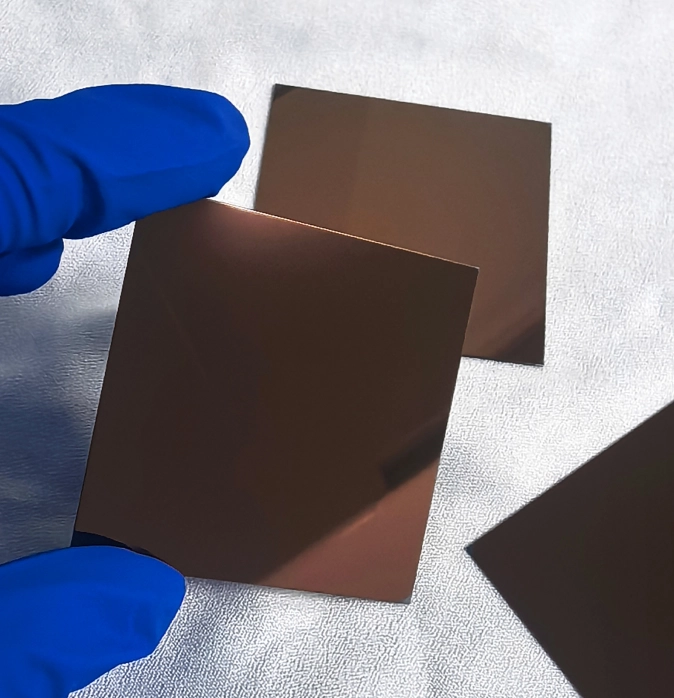
How Does Modern Spectroscopy Improve Predictive Maintenance and Quality Control?
Spectroscopy once confined itself to laboratories with experts in protective gear. That has changed. Advances in detector tech and small mechanical systems have integrated these tools directly into production areas. This shift alters quality management, transitioning from final inspections to ongoing checks.
Real-Time Industrial Online Monitoring Capabilities
Employing online NIR (near-infrared) sensors, plants can now oversee active lines. From assessing dampness in crops to verifying blends in material containers, these detectors deliver immediate results. Such capabilities support “predictive maintenance,” where early signs of quality changes indicate equipment issues before failures occur.
Integration of Chemometrics and Deep Learning Algorithms
Sensor data often appears intricate, like an unclear mechanism. To interpret it, specialists now apply deep learning and smart methods to examine spectral information. This aids in recognizing unfamiliar materials or sorting items accurately, for instance, separating plastic types or tracing product sources.
Adoption of Portable and Miniaturized Spectral Hardware
The shift to portable devices marks a key development. Compact spectrometers that fit easily enable field-level professional analysis. Growers can evaluate harvest readiness on-site, and storage supervisors can confirm chemical arrivals without lab referrals. This ease expands access for modest firms to advanced optical tools.
In the coming years, distinctions between “observing” and “evaluating” will fade further as these optical methods integrate more deeply.
What Future Trends will Shape the Evolution of Infrared Monitoring?
The upcoming ten years in infrared tech will focus on integration. Systems are evolving from single-function devices to combined sensing units that merge spectrum segments for a full environmental view.
Convergence of Multi-Modal Sensing and Artificial Intelligence
Future outputs extend beyond a single thermal view; they include overlays of visible data, gas insights, and AI-based pattern review. Gathering information across multiple bands simultaneously boosts reliability, reducing errors and providing users with a fuller grasp of scenes.
Expansion of Uncooled and Large-Format Focal Plane Arrays
Earlier high-level infrared detectors were large and costly due to cooling needs like liquid nitrogen. Yet uncooled tech improves annually, yielding compact, affordable, and efficient cameras. This drives infrared use into unexpected areas, such as home gadgets, mobile phones, and enhanced reality wearables.
Global Demand Growth in Emerging Economic Markets
Although markets in Europe and the U.S. remain strong, expansion occurs in developing areas like China and Latin America. As factory growth accelerates there, demand for contactless monitoring rises sharply. Firms like Bodian Optical stand central, supplying precise parts that enable this worldwide change.
FAQ
Q1: What is the difference between a long-pass filter and a bandpass filter in infrared systems?
A: A long-pass filter (like the ILP series) permits all wavelengths beyond a certain “cut-on” point to transmit while stopping shorter ones. A bandpass filter proves more targeted; it allows only a defined “segment” of wavelengths through, excluding those above and below that span.
Q2: Can thermal infrared cameras see through glass?
A: Usually, no. Common optical glass blocks long-wave infrared energy. Thus, thermal cameras rely on dedicated bases like Germanium, Silicon, or Zinc Selenide, which permit heat waves to pass freely.
Q3: Why is deep cut-off (like OD6) important for industrial filters?
A: The “OD” or Optical Density indicates blocking strength for unwanted light. A strong cut-off like OD6 ensures the filter effectively eliminates out-of-range interference. In precise operations such as laser oversight or health evaluations, minor leaks of incorrect light could spoil results, making deep cut-off vital for exactness.