English
 Afrikaans
 Albanian
 Amharic
 Arabic
 Armenian
 Azerbaijani
 Basque
 Belarusian
 Bengali
 Bosnian
 Bulgarian
 Catalan
 Cebuano
 Chichewa
 Chinese (Simplified)
 Chinese (Traditional)
 Corsican
 Croatian
 Czech
Czech Danish
 Dutch
Dutch Esperanto
 Estonian
 Filipino
 Finnish
 French
 Frisian
 Galician
 Georgian
 German
 Greek
Greek Gujarati
 Haitian Creole
 Hausa
Hausa Hawaiian
 Hebrew
 Hindi
Hindi Hmong
Hmong Hungarian
 Icelandic
 Igbo
Igbo Indonesian
 Irish
Irish Italian
 Japanese
 Javanese
 Kannada
 Kazakh
 Khmer
Khmer Korean
 Kurdish (Kurmanji)
 Kyrgyz
 Lao
Lao Latin
Latin Latvian
 Lithuanian
 Luxembourgish
 Macedonian
 Malagasy
 Malay
Malay Malayalam
 Maltese
 Maori
Maori Marathi
 Mongolian
 Myanmar (Burmese)
 Nepali
 Norwegian
 Pashto
 Persian
 Polish
 Portuguese
 Punjabi
 Romanian
 Russian
 Samoan
 Scottish Gaelic
 Serbian
 Sesotho
 Shona
Shona Sindhi
 Sinhala
 Slovak
 Slovenian
 Somali
 Spanish
 Sundanese
 Swahili
 Swedish
 Tajik
Tajik Tamil
Tamil Telugu
 Thai
Thai Turkish
 Ukrainian
 Urdu
Urdu Uzbek
Uzbek Vietnamese
 Welsh
Welsh Xhosa
Xhosa Yiddish
 Yoruba
 Zulu
Zulu


Outdoor security setups now run around the clock, usually in spots where light shifts fast and weather stays hard to predict. Cameras placed on streets, factory sites, storage buildings, and home zones have to keep delivering sharp pictures despite rain, mist, warmth, or low light. For that reason, infrared optical parts have turned into a main piece of current watch tech.
Infrared filters matter a great deal in outdoor watch gear. They manage which wavelengths get to the image sensor, so the setup can zero in on helpful infrared signals and cut out extra visible light. Makers like Bodian Optical create focused optical filters that hold firm spectral work even in rough outdoor spots. Their long-wave pass infrared filters see broad use in security cameras, movement spotters, and clever watch systems where steady imaging counts.

Why Are Infrared Filters Critical for Outdoor Security Monitoring Systems?
Outdoor watch tools deal with various tech hurdles that inside systems seldom face. Shifting sun rays, bounces from cars or structures, and quick light switches can readily upset image work. Here, infrared filters fill a vital spot.
To grasp these parts’ worth, it pays to see how they boost image sharpness and spotting steadiness. And this view shows their real impact on daily use.
Improved Night-Vision Imaging Stability
Night watching leans hard on infrared lighting. Lots of security cameras flip to infrared LEDs once the sun sets, letting them grab pictures when visible light fades away. Yet, lacking a solid filter, sensors might take in blended wavelengths that drop contrast and picture sharpness.
An infrared filter stops needless visible wavelengths and lets the sensor lock onto the infrared band that night-vision setups use. Thus, pictures come out sharper and firmer during night watches. Items like folks, cars, or critters turn easier to spot, which proves key for security tasks. In fact, this setup aids quick and sure responses.
Reduced Interference from Visible and Near-Infrared Light
Outdoor spots hold plenty of light origins. Road lights, vehicle beams, sun bounces, and screen glows can all spark bother. When such signals hit a sensor sans filtering, the camera might yield faded pictures or off movement spotting.
Infrared long-wave pass filters tackle this issue by halting shorter wavelengths and permitting only longer infrared signals to go through. This cutoff outcome cuts bother and keeps the image setup aimed at the right signal strip. Moreover, it ensures smoother operation in busy settings.
Enhanced Target Detection in Low-Light Environments
Security watching goes beyond just logging pictures; it also involves picking out motion and odd actions. In dim light, the gap between backdrop heat and moving items grows more vital than seen colors.
By singling out the proper infrared wavelength strip, optical filters let sensors grab clearer heat or infrared signals. And this step raises motion pickup and aids auto watch systems in spotting aims more sharply. Consequently, overall system trust rises in tough light.
How Do Long-Wave Pass Filters Improve Outdoor Surveillance Performance?
Long-wave pass filters find wide use in infrared watch systems since they let wavelengths over a set cut-on mark pass and block shorter ones. This build suits them well for security cameras and spotting sensors.
Grasping how this filter type functions clarifies why it has grown common in many outdoor watch tools. It ties directly to better daily results.
Selective Transmission of Long-Wave Infrared Signals
A long-wave pass filter gets built with thin-film coatings that handle spectral pass-through. Light under the cut-on wavelength gets bounced or soaked up, while longer infrared wavelengths head to the detector.
This picky pass-through lifts signal sharpness. When the image sensor takes in just the wanted infrared strip, backdrop noise drops and item spotting turns firmer. Therefore, the whole setup works more smoothly.
Better Signal-to-Noise Ratio for Thermal Detection
Heat spotting and infrared sensing bank on very small shifts in ray levels. Even minor bother from visible or short-wave infrared light can trim system sharpness.
Long-wave pass filters lessen this extra signal flow. With less unrelated wavelengths hitting the sensor, the signal-to-noise ratio grows stronger. This leads to sharper heat pictures and truer spotting outcomes. In practice, it means fewer false alerts.
Stable Imaging Under Changing Environmental Conditions
Outdoor cameras handle dawn, dusk, cloud shade, and man-made light shifts. In these passes, visible light strength can swing sharply.
Infrared filters steady the image flow because they target wavelengths that stay more even amid these outer changes. As such, watch systems hold firm monitoring work across day and night turns. This reliability cuts downtime in varied weather.
Which Bodian Optical Filters Are Suitable for Security Monitoring?
Varied watching tasks call for different infrared wavelength strips. Security cameras, motion sensors, and heat spotting devices might run in somewhat varied spectral bands.
A few infrared long-wave pass filters from Bodian Optical get made just for image and spotting systems in outdoor watching. They fit specific needs well.
ILP7700 Infrared Long Wave Pass Filter for Balanced Infrared Imaging
The ILP7700 Infrared Long Wave Pass Filter comes with a cut-on wavelength near 7700 nm, so it fits tasks needing even infrared pass-through and noise cutback.
In numerous outdoor watch cameras, this filter strikes a fair balance between signal sharpness and sensor feel. It halts visible light well and lets useful infrared signals through. Due to this evenness, the filter often serves in night-vision cameras and clever watch systems.
The thin-film coating in this filter also builds for lasting strength. Even facing heat shifts or outdoor dampness, its spectral traits stay firm. This holds up over long use.
ILP8200 Infrared Long Wave Pass Filter for Motion Sensors and Smart Detection
The ILP8200 Infrared Long Wave Pass Filter stands as another fix used broadly in infrared spotting devices.
With a bit longer cut-on wavelength, this filter suits motion sensors and smart watch gear nicely. Setups like edge alarms, factory safety watching, and clever watch platforms often need filters that lock on set infrared strips for spotting sharpness.
The ILP8200 filter trims backdrop light bother and aids sensors in noting small changes in infrared rays. This skill raises spotting trust, above all in tricky outdoor spots. It supports better overall security.
ILP10600 Infrared Long Wave Pass Filter for Deep Infrared Monitoring
For tasks needing deeper infrared spotting, the ILP10600 Infrared Long Wave Pass Filter offers a longer wavelength answer.
This filter gets planned for systems running in deeper infrared bands, like special watch gear or heat watch devices. It lets longer infrared wavelengths pass and blocks shorter signals that might spark bother.
In spots where true heat spotting or far-off watching matters, this filter kind aids sensors in grabbing firmer data. Thus, it fits advanced needs.
What Makes Infrared Filters Reliable in Harsh Outdoor Environments?
Outdoor watch systems might meet fierce sun, cold chills, dust gales, or hard rain. Optical parts in these systems have to endure such spots while keeping firm optical work.
Various build factors add to the trust of today’s infrared filters. They ensure long-term performance.
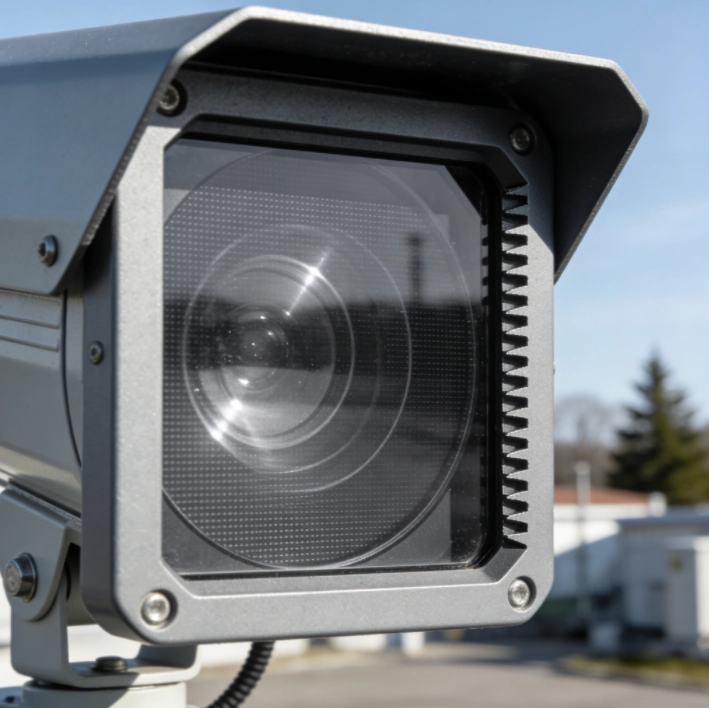
Durable Thin-Film Coatings for Temperature Stability
Infrared filters usually get made via multilayer thin-film coatings laid on optical bases. These coatings rule the pass-through and bounce traits of the filter.
When the coating step gets handled with care, the filter holds firm spectral work even as heat varies. This firmness proves vital for watch cameras that stay on all year. It prevents shifts in tough weather.
Resistance to Humidity, Dust, and Environmental Stress
Outdoor gear must stand against outer contact. Optical filters built for security watching often employ shield coatings and fine bases that lower corrosion or face harm risks.
This lasting power lets filters keep running in damp airs, dusty factory zones, or shore areas where salt touch might happen. Hence, they suit wide setups.
Consistent Spectral Performance Over Long-Term Operation
With time, some optical parts may see moves in spectral work if stuff wears down. Top infrared filters get shaped to dodge this snag.
Makers like Bodian Optical apply fresh coating tech and tight quality checks to hold long-term firmness. Thus, watch systems keep yielding trusty image results for years. This cuts upkeep needs.
How Can Security System Designers Choose the Right Infrared Filter?
Picking the true infrared filter rests on factors like sensor feel, watch reach, and outer conditions. System builders often weigh the whole optical line before selecting a filter. And this careful pick leads to better fits.
Matching Cut-On Wavelength with Sensor Sensitivity
Each image sensor owns its spectral reply curve. Choosing a filter with the right cut-on wavelength lets the sensor grab the mightiest signal possible.
When the filter and sensor traits line up well, the camera or spotting device yields sharper pictures and truer watch data. This match boosts efficiency.
Considering Application Scenarios such as Cameras or PIR Sensors
Varied devices employ infrared tech in distinct ways. Watch cameras eye image sharpness, while PIR sensors spot motion via infrared ray shifts.
Selecting the proper filter kind for each device aids the watch system in working better under real conditions. It ensures targeted performance.
Partnering with Specialized Manufacturers
Teaming with skilled optical filter makers can ease the build flow. Firms that focus on infrared optical parts often supply filters shaped for set watch wants.
By giving a spread of long-wave pass filters and tweaked coating answers, makers aid system builders in crafting watch gear that runs firmly in outdoor spots. This partnership speeds reliable outcomes.
FAQ
Q1: What is an infrared long-wave pass filter used for in security cameras?
A: An infrared long-wave pass filter blocks shorter wavelengths such as visible light while allowing longer infrared wavelengths to pass. This improves night-vision performance and reduces interference from surrounding light sources.
Q2: Why do outdoor monitoring systems need weather-resistant optical filters?
A: Outdoor cameras face rain, dust, humidity, and temperature changes. Weather-resistant filters maintain stable optical performance in these conditions, helping surveillance systems keep producing clear images.
Q3: How do different cut-on wavelengths affect infrared monitoring performance?
A: The cut-on wavelength determines which infrared signals reach the sensor. Shorter cut-on wavelengths capture broader infrared signals, while longer wavelengths focus on deeper infrared bands used in specialized detection or thermal monitoring. Choosing the right value depends on the sensor type and the monitoring application.