English
 Afrikaans
 Albanian
 Amharic
 Arabic
 Armenian
 Azerbaijani
 Basque
 Belarusian
 Bengali
 Bosnian
 Bulgarian
 Catalan
 Cebuano
 Chichewa
 Chinese (Simplified)
 Chinese (Traditional)
 Corsican
 Croatian
 Czech
Czech Danish
 Dutch
Dutch Esperanto
 Estonian
 Filipino
 Finnish
 French
 Frisian
 Galician
 Georgian
 German
 Greek
Greek Gujarati
 Haitian Creole
 Hausa
Hausa Hawaiian
 Hebrew
 Hindi
Hindi Hmong
Hmong Hungarian
 Icelandic
 Igbo
Igbo Indonesian
 Irish
Irish Italian
 Japanese
 Javanese
 Kannada
 Kazakh
 Khmer
Khmer Korean
 Kurdish (Kurmanji)
 Kyrgyz
 Lao
Lao Latin
Latin Latvian
 Lithuanian
 Luxembourgish
 Macedonian
 Malagasy
 Malay
Malay Malayalam
 Maltese
 Maori
Maori Marathi
 Mongolian
 Myanmar (Burmese)
 Nepali
 Norwegian
 Pashto
 Persian
 Polish
 Portuguese
 Punjabi
 Romanian
 Russian
 Samoan
 Scottish Gaelic
 Serbian
 Sesotho
 Shona
Shona Sindhi
 Sinhala
 Slovak
 Slovenian
 Somali
 Spanish
 Sundanese
 Swahili
 Swedish
 Tajik
Tajik Tamil
Tamil Telugu
 Thai
Thai Turkish
 Ukrainian
 Urdu
Urdu Uzbek
Uzbek Vietnamese
 Welsh
Welsh Xhosa
Xhosa Yiddish
 Yoruba
 Zulu
Zulu


In the field of infrared optics, accuracy and steadiness are key. From heat imaging to health checks, the pick of stuff for filters affects not just picture clearness but also lasting trust. Among options like silicon, zinc selenide, and more, germanium shines as the best pick for infrared filters. At Bodian Optical, germanium forms the core of many infrared long-wave pass filters. It gives top-notch work in areas that rely on infrared spotting and viewing.
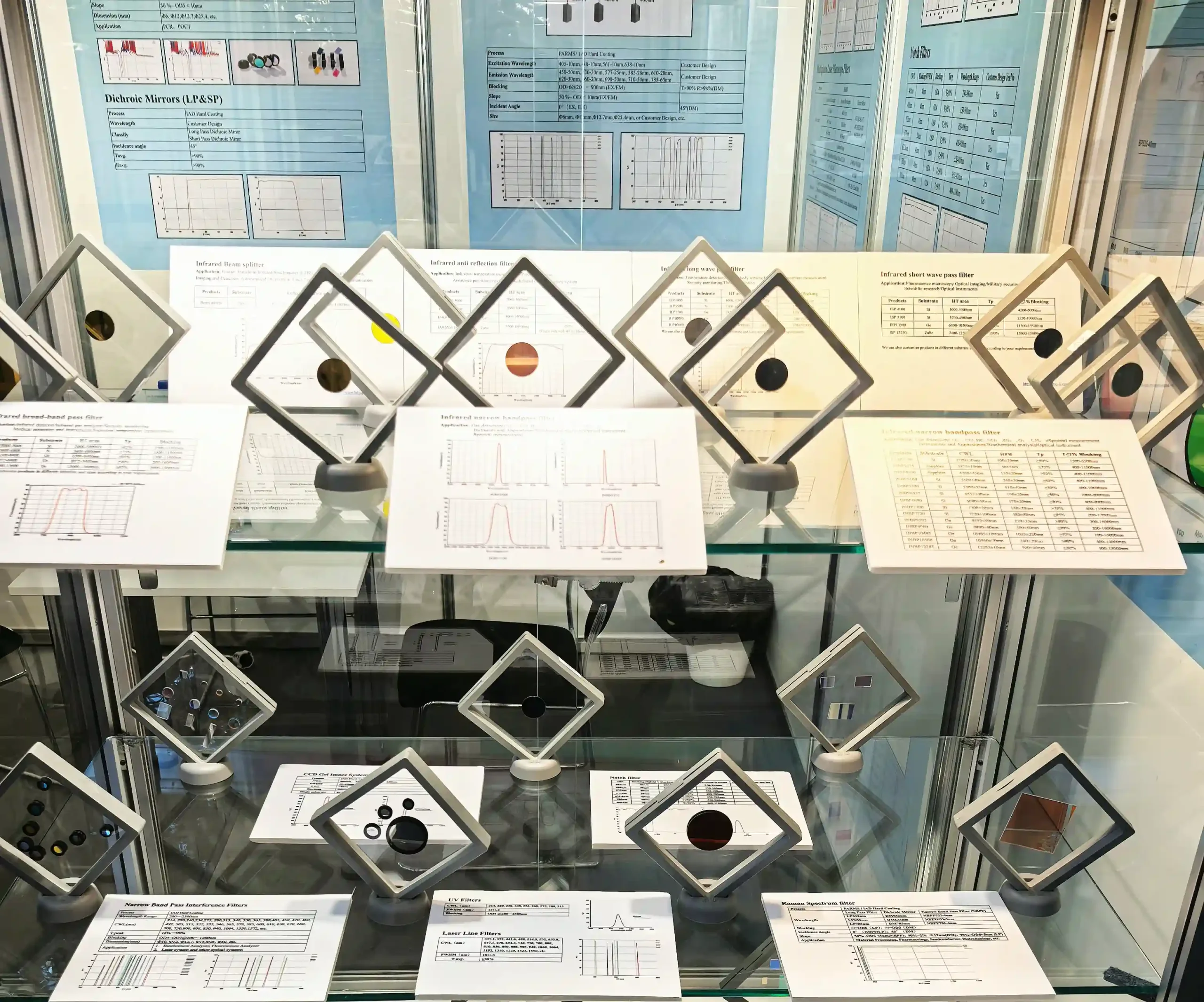
What Makes Germanium Unique in Infrared Optical Applications?
Before looking at uses, let’s see what sets germanium apart. Its basic traits and light features make it different from most infrared stuff.
High Refractive Index and Excellent Transmission Range
Germanium has a natural high refractive index, about 4.0. It lets infrared light pass well from 2 µm up to 14 µm. This wide pass area suits it for long-wave infrared (LWIR) tasks like night sight, temp sensing, and infrared studies. Filters with germanium bases can split or let through certain waves without mess. This gives infrared systems sharp, clear outcomes even in hard spots.
Exceptional Thermal and Mechanical Stability
Infrared setups often deal with big temp shifts, mainly in work or outside places. Germanium’s thick build and good heat flow help it keep steady light work even in hot or cold times. Its strong build also stops bending or breaking. This can happen fast with softer stuff.
Compatibility with Advanced Thin-Film Coatings
Due to its firm surface traits, germanium works well for many-layer thin-film covers. Bodian Optical uses modern magnetron sputtering and vacuum evaporation ways to make covers that boost pass-through and cut back glare. This results in filters that last long and stay light-accurate.
How Does Germanium Improve Infrared Filter Performance?
In top-level light systems, every bit of light pass counts. Germanium aids these systems to do their best with a few main pluses.
Enhanced Infrared Transparency and Signal Accuracy
Filters made from germanium bases show high pass and low loss in the infrared zone. This leads to clearer views and more right sensing info. It matters a lot in setups like gas checkers and health tools. There, even a tiny wave mistake can change results.
Superior Reflection Control in Long-Wave Applications
For instance, Bodian Optical’s ILP-series filters aim for strong stop performance with deep light density—often OD4 or higher. This lets only the wanted wave through.
Resistance to Environmental and Thermal Stress
Germanium filters are not just light-good but also made to endure. Their fight against damp, warmth, and hard knocks suits them for defense, space, and outside watch systems. These run under ongoing nature strain.
Why Is Germanium Preferred over Silicon or Zinc Selenide?
Silicon and zinc selenide are usual other choices. But they have downsides. Germanium beats both in some vital spots.
Broader Transmission Window (2–14 μm)
Unlike silicon, which turns dark past 8 µm, germanium stays clear through the long-wave area. This fits it for heat imaging systems and other tasks in far-infrared settings.
Lower Dispersion and Higher Density
Germanium’s light spread is fairly low. So, it keeps steady focus over waves. Its higher thickness also makes it tougher. This cuts the chance of small shape changes under cover or heat steps.
Greater Durability in Harsh Industrial Environments
While zinc selenide gives lower thickness and less weight, it’s also easier to scratch and break from wet. In contrast, germanium keeps its surface whole much better. This makes it good for tough tasks like infrared checkers or defense-level sensors.
How Are Germanium-Based Infrared Filters Designed and Manufactured?
The plan process for germanium filters mixes exact building and thin-film skills.
Precision Coating Techniques (Magnetron Sputtering, Vacuum Evaporation)
Bodian Optical uses high-level deposit tools like Leybold Syrus 1350 and Helios800 systems. These give close control of cover thickness. As a result, even layers shape the filter’s wave traits.
Multi-Layer Thin-Film Structures for Optimized Transmission
These layers set how light goes or bounces in the stuff. The firm’s ILP series—ILP3000, ILP10000, and ILP10600—show cases where tuned layer plans reach high pass and deep stop work.
Rigorous Spectral and Environmental Testing Standards
Every filter goes through wave checks with Agilent Cary5000 or PerkinElmer Spectrum3 tools. This confirms its transmittance (T), reflectance (R), and absorbance (ABS) marks. Nature tests, like temp shifts and damp fight, also promise lasting trust.
What Are the Key Applications of Germanium Infrared Filters?
The all-around nature of germanium fits it for many infrared setups.
Infrared Imaging and Sensing Systems
People use germanium filters a lot in heat cameras, watch setups, and car night sight. Their exact wave control boosts spot sensitivity and full picture sharpness.
Medical and Scientific Instrumentation
In areas like wave studies, glow spotting, and health checks, germanium filters allow right wave split. They are key in tools for illness spotting, chem tests, and nature checks.
Aerospace, Defense, and Security Monitoring
From space sensors to infrared aim systems, germanium filters get trust for their steadiness under stress. Bodian Optical’s filters already serve in various space and army-level light groups.
How Does Bodian Optical Ensure High Performance and Reliability?
As a leader with more than four decades in work, Bodian Optical has earned a solid name in optical thin-film tech.
Over 40 Years of Optical Coating Expertise
Starting from the Beijing Film Machinery Research Institute, Bodian Optical has done optical coating since 1978. The group has joined over 20 country study projects. And they keep pushing coating know-how limits.
Advanced Equipment and Quality Management
The firm’s make lines have brought-in cover machines and high-accuracy wave checkers. With ISO 9001 mark and tight quality rules, every filter hits or tops field standards for rightness and lasting.
Customization Capability and Fast Delivery Cycle
Bodian Optical gives bendy custom choices for wave, size, and film build. Be it for small study groups or big make runs, the firm offers quick sample times—often in two weeks.
Which Bodian Optical Germanium Infrared Filters Are Recommended?
ILP10000 Infrared Long Wave Pass Filter
Made for long-wave infrared viewing, this filter gives high pass and OD4 deep stop. It suits well for defense and science study tasks.
ILP3000 Infrared Long Wave Pass Filter
Suited for mid-infrared spotting and heat check, ILP3000 offers exact wave control. It keeps steady work even in rough spots.
ILP10600 Infrared Long Wave Pass Filter
Planned for CO₂ laser setups and high-temp work watching, this type holds light steadiness and high stop work at 10.6 µm.
FAQs
Q1: What wavelength range do Bodian Optical germanium filters cover?
A: They usually let through infrared light from 2 µm to 14 µm. This covers both mid- and long-wave infrared areas good for viewing, spotting, and checks.
Q2: Can Bodian Optical customize germanium filters for specific wavelengths?
A: Yes. Bodian Optical gives custom wave plans, sizes, and cover setups based on user needs. This works for work, health, and defense tasks.
Q3: How do germanium filters compare in durability to glass or ZnSe filters?
A: Germanium filters last much better. They have stronger fight to scratches, higher thickness, and top work under temp changes. This makes them great for long, hard use.