Building advanced optical setups depends on reliable parts. The results from your Infrared Beam Splitters set the accuracy for the whole task. Tasks in gas check, heat view, or health exams call for items that direct light routes without big waste or color wobble. Choosing a maker with strong tech roots proves key for steady work in tough areas. BoDian Optical shines in making fine gear. It holds over 40 years of skill in light layer tech and thin sheet growth. Using top German and Japanese lay-down setups like Leybold Syrus and Optorun OTFC, the company delivers exact answers that match strict world rules. This able industrial infrared beam splitters supplier stresses solid tech workers and outside check tools. Such steps help optical plans hit top marks.

How to Choose Infrared Beam Splitters for Industry
Picking the correct piece starts with the work setting and the clear span of base items. Systems might need plate or cube shapes, based on space needs and light entry angle. In factory settings, base strength and chem resistance matter most to face rough air states. Users should also look at the block area and high pass area. This confirms the splitter handles only the aimed waves well.
Shape and size of the piece rank as another key point. Factory tasks often demand made-to-order sizes for tight sensors or big watch gear. When thinking about how to choose infrared beam splitters for industry, bases like Silicon or Zinc Sulfide stand out for their good heat and light traits in IR bands. These stuffs give the needed toughness for long outside or shop floor runs.
Best Infrared Beam Splitters for Industrial Use
The best infrared beam splitters for industrial use hold shared features: dense pack and setting steadiness. Sharp fields like LiDAR and bio health demand splitters with high pass, usually above 90%, and firm cut at OD6 or higher. Modern build ways like spin spray break the open pillar build in plain films. This blocks damp entry and color jumps.
Build firmness sets top optics apart from basic ones. Dense pack keeps the bend index steady. So, gear skips often reset as wet shifts. Picking parts from active steps ensures the light setup holds firm amid temp and damp changes in shops or open spots.
Infrared Beam Splitters Wavelength Selection Guide
The infrared beam splitters wavelength selection guide ties IR light rules to the set base. IR light runs a broad span from 0.75 $\mu$m to 1000 $\mu$m. It breaks into near, mid, and far parts.
Near-Infrared (NIR): Runs from 633 nm to 850 nm suit laser tools, health quick tests, or care gear. The BS633-850 Beamsplitter suits this band. It offers the exactness for clinic chem checks and machine view.
Mid-to-Far Infrared (MIR/FIR): Bands from 2 $\mu$m to 16 $\mu$m need special stuff like Silicon or Zinc Sulfide. These let long-wave rays pass. Such traits aid heat views and gas spot.
Wrong band picks can spark too much soak or wrong bounces. In mid-IR, plain glass loses clearness. Then, crystal bases step in with broader clear spans.
BS2000-16000 Infrared Beam Splitter Uses
Wide light band tasks gain from the BS2000-16000 Beamsplitter. It brings broad fit. The part fits hard factory and science spot needs. Many BS2000-16000 infrared beam splitter uses appear.
Gas Analyzers and Detection: It guides light to spot chem marks in the setting.
Thermal Imaging Systems: It lets many finders share one light route for car night drives or factory watch.
Environmental Monitoring: It splits signs for multi-gas checks in air clean tools for setting guard.
Aerospace and Military: It gives solid work in far spot and defense watch.
Industrial Temperature Measurement: It helps no-touch heat spot in hot make spots.
This line’s broad band skill makes it a base for labs and plants. They use one light build to cover many IR parts.
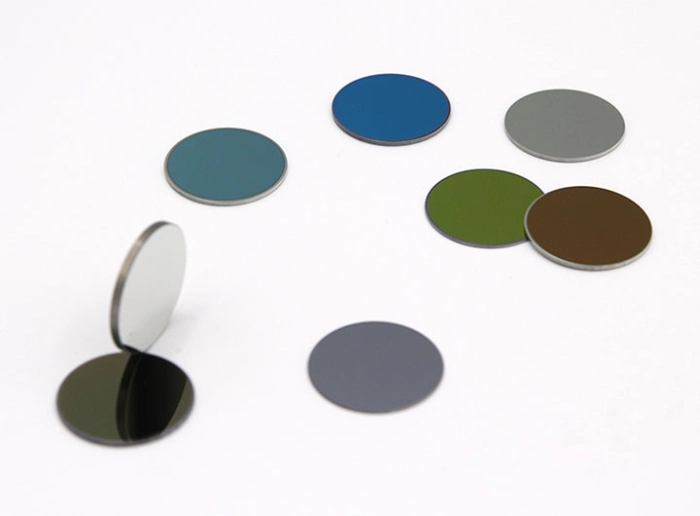
Coating Quality for Infrared Beam Splitters
A light piece’s main strength sits in its thin layers. Coating quality for infrared beam splitters comes from exact build work. It draws on vacuum tools and computer plan aid. Fine layers use ion-help lay-down to firm the sheet. That lowers pull strain and boosts hold to the base.
Outside gear like Leybold Syrus 1350 or Helios 800 spin spray setups helps makers get even and steady films. This stops usual flaws like spits or face splits that spark light spread and sign loss. A top layer lifts light work. It also guards the base from high heat and wet. Thus, it fits spans from -50°C to 200°C.
Industrial Infrared Beam Splitters Supplier Service
A skilled maker goes beyond parts supply. It provides tech mix aid and custom work. Top makers open doors to extra perks like light plan talks and pick help. They cover custom for size, wave, and layer form to match project maps.
Solid makers keep short test runs, as low as 1 to 2 weeks for small lots. This lets quick move from study to make stages. Pro ways show in firm check steps. These include light output reads with Agilent or PerkinElmer tools, setting age tests, and strength checks. Big runs and local chains cut costs. So, they beat many global rivals on price value.
Funding solid Infrared Beam Splitters picks long system life and read sharpness. Stressing layer density and tech skill helps dodge usual traps like light drift and face fade in factory tasks.
FAQ
Q: How do I distinguish between a narrowband and a broadband infrared filter or splitter?
A: Trade rules rest on center wave. Half-width under 6% of center tags it narrowband. Over that, it falls as broadband.
Q: Why does the spectral peak of my optical component shift when I move it from the lab to a humid environment?
A: Damp pull into open films sparks this often. Water packs spaces in the pillar sheet form. That changes its bend index and grows the light thick. So, it moves to longer waves.
Q: What are the main indicators of Infrared Beam Splitters quality I should look for?
A: Look at light traits like pass and reflect over the aimed band. Plus, face signs matter, such as size fit via small measures, face state for splits or chipped sides under lens, and setting steadiness. These prove key for factory trust.

 Afrikaans
 Albanian
 Amharic
 Arabic
 Armenian
 Azerbaijani
 Basque
 Belarusian
 Bengali
 Bosnian
 Bulgarian
 Catalan
 Cebuano
 Chichewa
 Chinese (Simplified)
 Chinese (Traditional)
 Corsican
 Croatian
 Czech
Czech Danish
 Dutch
Dutch English
 Esperanto
 Estonian
 Filipino
 Finnish
 French
 Frisian
 Galician
 Georgian
 German
 Greek
Greek Gujarati
 Haitian Creole
 Hausa
Hausa Hawaiian
 Hebrew
 Hindi
Hindi Hmong
Hmong Hungarian
 Icelandic
 Igbo
Igbo Indonesian
 Irish
Irish Italian
 Japanese
 Javanese
 Kannada
 Kazakh
 Khmer
Khmer Korean
 Kurdish (Kurmanji)
 Kyrgyz
 Lao
Lao Latin
Latin Latvian
 Lithuanian
 Luxembourgish
 Macedonian
 Malagasy
 Malay
Malay Malayalam
 Maltese
 Maori
Maori Marathi
 Mongolian
 Myanmar (Burmese)
 Nepali
 Norwegian
 Pashto
 Persian
 Polish
 Portuguese
 Punjabi
 Romanian
 Russian
 Samoan
 Scottish Gaelic
 Serbian
 Sesotho
 Shona
Shona Sindhi
 Sinhala
 Slovak
 Slovenian
 Somali
 Spanish
 Sundanese
 Swahili
 Swedish
 Tajik
Tajik Tamil
Tamil Telugu
 Thai
Thai Turkish
 Ukrainian
 Urdu
Urdu Uzbek
Uzbek Vietnamese
 Welsh
Welsh Xhosa
Xhosa Yiddish
 Yoruba
 Zulu
Zulu