English
 Afrikaans
 Albanian
 Amharic
 Arabic
 Armenian
 Azerbaijani
 Basque
 Belarusian
 Bengali
 Bosnian
 Bulgarian
 Catalan
 Cebuano
 Chichewa
 Chinese (Simplified)
 Chinese (Traditional)
 Corsican
 Croatian
 Czech
Czech Danish
 Dutch
Dutch Esperanto
 Estonian
 Filipino
 Finnish
 French
 Frisian
 Galician
 Georgian
 German
 Greek
Greek Gujarati
 Haitian Creole
 Hausa
Hausa Hawaiian
 Hebrew
 Hindi
Hindi Hmong
Hmong Hungarian
 Icelandic
 Igbo
Igbo Indonesian
 Irish
Irish Italian
 Japanese
 Javanese
 Kannada
 Kazakh
 Khmer
Khmer Korean
 Kurdish (Kurmanji)
 Kyrgyz
 Lao
Lao Latin
Latin Latvian
 Lithuanian
 Luxembourgish
 Macedonian
 Malagasy
 Malay
Malay Malayalam
 Maltese
 Maori
Maori Marathi
 Mongolian
 Myanmar (Burmese)
 Nepali
 Norwegian
 Pashto
 Persian
 Polish
 Portuguese
 Punjabi
 Romanian
 Russian
 Samoan
 Scottish Gaelic
 Serbian
 Sesotho
 Shona
Shona Sindhi
 Sinhala
 Slovak
 Slovenian
 Somali
 Spanish
 Sundanese
 Swahili
 Swedish
 Tajik
Tajik Tamil
Tamil Telugu
 Thai
Thai Turkish
 Ukrainian
 Urdu
Urdu Uzbek
Uzbek Vietnamese
 Welsh
Welsh Xhosa
Xhosa Yiddish
 Yoruba
 Zulu
Zulu


In the fine field of optical thin films, experts usually put their skills on detailed layer plans, top laydown tools, and tight steps like vacuum strength or laydown speeds. But even with leading tools, getting steady work in big groups stays a main hurdle. The true block often rests in a part often viewed as basic gear: the precision of custom coating fixtures. Dealing with touchy infrared materials such as Silicon (Si) or Zinc Selenide (ZnSe) makes the fixture the hidden guide. It sets if a filter hits its color goal or turns into a pricey scrap.
Teaming with a pro who grasps these build fine points matters a lot for your job’s win. BoDian Optical holds as a key player in this spot. It builds on a history of light coat study and build that goes back to 1978. They do more than supply. They work as build partners offering fit light fixes, from quick models to full output for health, factory, and defense fields. Linking strong fixturing with new watch tools, they make sure each part, from INBP narrow bandpass filters to IWBP broadband filters, gains top exactness and setting toughness.

Why is Precision Fixturing Critical for Infrared Material Integrity?
The worth of an infrared part comes not just from the film mix. It stems from the base’s clear spot setup in the wild space of a vacuum chamber. Custom fixtures matter because they fix this spot with full sureness. Positioning errors directly degrade spectral consistency between runs, the light traits planned will not show in the real item.
High Fragility and Thermal Sensitivity of Infrared Substrates
Breakable infrared materials call for special grip all through the build cycle. Unlike regular glass, items like Zinc Selenide have a set toughness. This opens them to side chips or tiny breaks if hold forces spread unevenly. A weak build fixture can add strains that hide right after laydown. But they cause big loose layers or base fails when the item goes to work spots.
Thermal Expansion Mismatch Between Fixtures and Substrates
Infrared coating usually needs warming bases from 150°C to 300°C. This secures top film pack and stick. A key danger in this heat round is the “Coefficient of Thermal Expansion” (CTE) gap. If a basic steel fixture grows at a rate far from your Silicon base, the build strain can bend layers or break the soft stuff. Smart build calls for selecting fixture materials with matched thermal expansion coefficients (CTE) of the light part.
Impact of Positioning Errors on Spectral Performance
In exact light work, spot sets the laydown speed and evenness. For a strong filter, a thick shift of only 1% can move the main wave a good deal. This makes the item unfit for gas checks or health spot jobs. Better fixtures keep the base in the best steam thick area all through the full laydown step.
How Does Advanced Fixture Design Solve Uniformity Challenges?
Evenness marks the sign of pro-level build. Fixtures need to offset the basic rules of steam, where items usually follow an uneven cosine pattern.
Curved and Tilting Profiles for Evaporation Flow Compensation
Items in a vacuum do not lay in flat sheets. They spread from the point. To fight this, strong fixtures use “calotte” or round builds. These ball faces keep every base spot at a steady reach and tilt from the point.
Dynamic Masking to Neutralize Edge Effects
“Side thinning” stands as a usual flaw where steam flow blocks near fixture holds. This gets fixed by adding fit mask sheets to the fixture group. These masks shape to stop extra items in set spots, lets builders hit coating thickness uniformity within ±0.5% over the whole light opening. The result brings steady light work over the full item. It proves key for big image setups.
Optimized Rotation Radii for Large Batch Consistency
Repeat exactness tops the list for big output. Exact fixtures use figured turn reaches. So each base in a group goes through same steam areas at once. This build steadiness makes every piece in a chip run a clear color match to the next.
What Specialized Clamping Techniques Protect Brittle Substrates?
The hold way for a base counts as much as its spot. Stiff metal grips on infrared materials make stress spots that often spark fails.
Elastic Multi-Point Clamping Systems
New fixtures use multi-spot bendy “grips” over strong single holds. These setups spread the load even around the item’s edge. This bend lets the fixture fit size changes in warm and cool rounds without strong push to chip soft sides.
Integration of Soft Protective Liners
To skip hard-on-hard touch, strong fixtures often add heat-safe pads from items like polyimide or Teflon. These serve as a shield, guarding the smooth faces of your infrared materials from build scrapes in load steps.
Friction Reduction with Technical Surface Coatings
The fixtures may get special covers like Diamond-Like Carbon (DLC) layers. These low-rub faces let the base sit right in its spot without catches. Cutting build rub keeps the item’s whole form and lowers tiny bits in the chamber. These bits cause main holes and spread loss.
Which Solutions Benefit from High-Precision Fixturing?
Picking a build partner who stresses these build points shows clear outcomes in the hold and output of end filters.
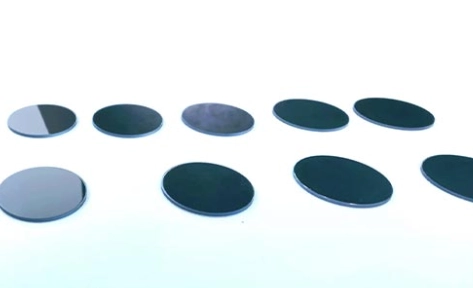
For spot systems needing top main wave (CWL) hold, the infrared narrow bandpass filter fits best. These parts depend on super-exact thick control to keep work across changing run heats. Exact fixturing makes them reach the high top pass and tight bands needed for pro gas spot and check tools.
Likewise, big image systems for green watch or safety need an infrared broadband pass filter with no color twist over the face. Using exact turning calottes alone yields the steady evenness and group-to-group trust for strong heat image gear.
Linking strong fixture build with high-power laydown beats the break risk of many infrared materials and hits fresh heights of light work. If your use needs top infrared fixes that stress toughness and exactness, rpartnering with BoDian Optical for custom fixture precision coating solutions to make your setup work just as meant.
Contact BoDian Optical today to learn how our custom fixture-enabled coating processes improve your filter yield, uniformity, and long-term stability.
FAQ
Q: Why is fixture precision considered an “invisible determinant” in IR coating?
A: Layer plans show clear on charts. Yet the fixture sets the base’s real build space in the chamber. Even small spot flaws can cause uneven thick and main wave moves that hide until end tests.
Q: How do fixtures protect brittle infrared materials during the process?
A: Fit fixtures use bendy multi-spot holds and soft pads (like polyimide) to spread push evenly and fit heat grow. This stops side chips and breaks usual in items like Silicon or ZnSe.
Q: Can custom fixturing improve the batch yield of narrow bandpass filters?
A: Yes. CNC-machined custom fixtures with optimized rotation radii ensure every substrate in a batch sees identical deposition conditions, significantly reducing wavelength shift and improving batch yield for INBP narrow bandpass filters.