English
 Afrikaans
 Albanian
 Amharic
 Arabic
 Armenian
 Azerbaijani
 Basque
 Belarusian
 Bengali
 Bosnian
 Bulgarian
 Catalan
 Cebuano
 Chichewa
 Chinese (Simplified)
 Chinese (Traditional)
 Corsican
 Croatian
 Czech
Czech Danish
 Dutch
Dutch Esperanto
 Estonian
 Filipino
 Finnish
 French
 Frisian
 Galician
 Georgian
 German
 Greek
Greek Gujarati
 Haitian Creole
 Hausa
Hausa Hawaiian
 Hebrew
 Hindi
Hindi Hmong
Hmong Hungarian
 Icelandic
 Igbo
Igbo Indonesian
 Irish
Irish Italian
 Japanese
 Javanese
 Kannada
 Kazakh
 Khmer
Khmer Korean
 Kurdish (Kurmanji)
 Kyrgyz
 Lao
Lao Latin
Latin Latvian
 Lithuanian
 Luxembourgish
 Macedonian
 Malagasy
 Malay
Malay Malayalam
 Maltese
 Maori
Maori Marathi
 Mongolian
 Myanmar (Burmese)
 Nepali
 Norwegian
 Pashto
 Persian
 Polish
 Portuguese
 Punjabi
 Romanian
 Russian
 Samoan
 Scottish Gaelic
 Serbian
 Sesotho
 Shona
Shona Sindhi
 Sinhala
 Slovak
 Slovenian
 Somali
 Spanish
 Sundanese
 Swahili
 Swedish
 Tajik
Tajik Tamil
Tamil Telugu
 Thai
Thai Turkish
 Ukrainian
 Urdu
Urdu Uzbek
Uzbek Vietnamese
 Welsh
Welsh Xhosa
Xhosa Yiddish
 Yoruba
 Zulu
Zulu


In the field of infrared imaging, creating clear thermal views relies on careful spectral handling rather than chance alone. Many builders pay close attention to the sensor’s point count or the program’s power. However, the real strength of a thermal picture often gets set well before the info hits the handler. That happens right at the lens point. To gain sharp, clean, and heat-true images, one must handle the filtering of infrared rays well.
For builders facing the tough parts of the Long-Wave Infrared (LWIR) range, BoDian Optical acts as a key build ally. Set up in 1978, the firm has put over forty years into study and making of top optical thin-film items. They joined over twenty country study tasks. This setup gives their site strong German Leybold and Japanese Optorun laydown setups. If one builds health check tools, safety watch setups, or science gas checkers, their skill in exact fixturing and strong laydowns makes sure thermal imaging gear hits its full mark.

Why is Spectral Purity Essential for Lifelike Thermal Imaging?
Suppression of Background Noise and Stray Radiation
To gain a sharp thermal picture, one needs to pull out the set rays given off by the aim. At the same time, it blocks extra infrared mess from the surroundings. Strong filters give the steep sides and full stops needed. Thus, only key light bits hit the catcher.
Optimization of High Transmittance for Signal Strength
Clear details call for a good signal-to-mess balance. This works only if the filter lets over 90% of the aim infrared light through. New multi-item laydowns cut soak and spread loss. As a result, they keep the weak heat marks of the aim.
Thermal Stability in Challenging Industrial Environments
Picture catchers often run in changing heats. Such shifts can move the color range in basic filters. Exact fixturing and item matching in the laydown step make sure the clear view stays steady from -50°C to 200°C.
How Do Long-Pass Filters Enhance Infrared Vision?
Elimination of Short-Wavelength Interference
A long-pass filter works like a color door. It lets infrared rays over a set start wave through. Meanwhile, it fully stops shorter waves. This keeps clear and close-infrared light from fading the heat sharp in the picture.
Application of the ILP8200 for LWIR Precision
The ILP8200 Infrared Long Pass Filter gets built for the 8-14μm air window. By setting the start at 8200nm just right, it smooths the feed for heat catchers in safety and factory watch.
Superior Blocking Depth for Image Contrast
To reach a clear view, the filter must give full stop (OD3 or more) in the no-go area. This stop level makes sure dark spots in the heat chart truly show heat gaps, not light leaks.
What Makes Broadband Filters Vital for Complex Sensing?
Broad Spectral Coverage for Multi-Target Imaging
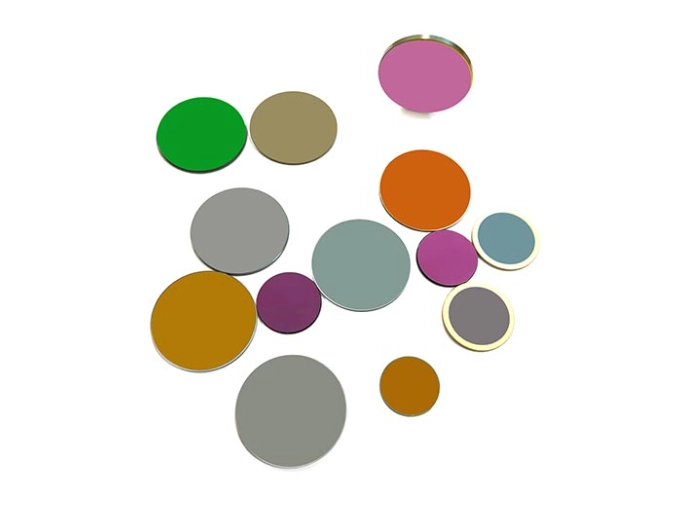
Broadband filters get made to let a wide set of waves through. This suits setups that must catch many heat marks at once. Such flex proves main for green catchers and sky watch where a broad clear slot matters.
Implementation of the IWBP8075-9400 Solution
The IWBP8075-9400 Infrared Broadband Filter gives a steady pass area from 8075nm to 9400nm. This set range fits well for strong-pass heat pictures and gas catch. It makes sure small heat steps get held with true marks.
Uniformity Across Large Optical Apertures
New fixturing ways make the film thick stay even over the full face of a broadband filter. This evenness stops wave moves at lens sides. Therefore, it keeps a steady thermal camera view from middle to edge.
Can Precision Fixturing Solve Infrared Material Challenges?
Protection of Brittle and Delicate Substrates
Infrared items like Silicon (Si) and Zinc Selenide (ZnSe) open to side chips and tiny breaks under build push. Fit fixtures use multi-spot bend holds and soft pads to keep base wholeness in the high-heat laydown step.
Compensation for Non-Uniform Evaporation Flow
Items in a vacuum space follow a clear spot spread. This can cause uneven laydown thick. New round fixtures offset this rule. They hold main wave (CWL) moves in a tight ±0.5% limit for pro-level work.
Matching Thermal Expansion to Prevent Delamination
Laydown means warming bases to 300°C. A gap in heat grow between the tool and item can break the base. Picking CTE-fit items like titanium mixes in fixture build cuts this hidden risk to output rates.
Why Choose a Specialized Partner for Thermal Solutions?
Access to Comprehensive Optical Design Consultation
Building a clear thermal camera takes more than getting a filter. It means fitting the right color fix into one’s own setup. Build teams add worth in filter picks to ease link troubles.
Reliable High-Volume Production and Fast Sampling
Factory and health fields rely on steady group-to-group worth and quick model rounds. Pro making makes sure models arrive in 1-2 weeks. This shifts the job from study to sales fast.
Global Technical Support and Direct Contact
For fit infrared needs that call for toughness and exactness, BoDian Optical gives straight build help. One can link with their pro group via the main site to get fit filters that change thermal picture worth.
Contact Us
Ready to elevate your optical precision? Contact BoDian Optical today through our online inquiry form or via email. Our technical experts are standing by to provide tailored infrared solutions.
FAQ
Q: How does a long-pass filter improve thermal camera clarity?
A: It stops shorter waves that would make light mess. Thus, the catcher locks on the aimed long-wave infrared rays for better sharp.
Q: Why is fixturing precision considered a “hidden” factor in filter quality?
A: The fixture sets the base’s clear spot. Even a ±0.5mm flaw can move the main wave and spoil the color exact needed for clear pictures.
Q: What materials are typically used for high-performance infrared filters?
A: Laydowns often use items like Zinc Sulfide (ZnS), Silicon (Si), or Calcium Fluoride (CaF₂). These get picked for their set clear slots in the infrared range.