English
 Afrikaans
 Albanian
 Amharic
 Arabic
 Armenian
 Azerbaijani
 Basque
 Belarusian
 Bengali
 Bosnian
 Bulgarian
 Catalan
 Cebuano
 Chichewa
 Chinese (Simplified)
 Chinese (Traditional)
 Corsican
 Croatian
 Czech
Czech Danish
 Dutch
Dutch Esperanto
 Estonian
 Filipino
 Finnish
 French
 Frisian
 Galician
 Georgian
 German
 Greek
Greek Gujarati
 Haitian Creole
 Hausa
Hausa Hawaiian
 Hebrew
 Hindi
Hindi Hmong
Hmong Hungarian
 Icelandic
 Igbo
Igbo Indonesian
 Irish
Irish Italian
 Japanese
 Javanese
 Kannada
 Kazakh
 Khmer
Khmer Korean
 Kurdish (Kurmanji)
 Kyrgyz
 Lao
Lao Latin
Latin Latvian
 Lithuanian
 Luxembourgish
 Macedonian
 Malagasy
 Malay
Malay Malayalam
 Maltese
 Maori
Maori Marathi
 Mongolian
 Myanmar (Burmese)
 Nepali
 Norwegian
 Pashto
 Persian
 Polish
 Portuguese
 Punjabi
 Romanian
 Russian
 Samoan
 Scottish Gaelic
 Serbian
 Sesotho
 Shona
Shona Sindhi
 Sinhala
 Slovak
 Slovenian
 Somali
 Spanish
 Sundanese
 Swahili
 Swedish
 Tajik
Tajik Tamil
Tamil Telugu
 Thai
Thai Turkish
 Ukrainian
 Urdu
Urdu Uzbek
Uzbek Vietnamese
 Welsh
Welsh Xhosa
Xhosa Yiddish
 Yoruba
 Zulu
Zulu


Infrared technology has advanced well past basic detection. Now, current systems must provide steady signals, clear data, and dependable operation in settings that are typically warm, gritty, or chemically harsh. Right at the heart of this stands a subtle yet vital decision: picking the right materials. From common optical glass to sophisticated crystalline bases and metal coatings, the evolution of infrared absorption materials mirrors the actual needs of today’s sensing, imaging, and measurement setups.
Grasping how various materials respond to infrared light is no mere technical note anymore. Instead, it directly impacts system precision, durability, and expense management. As infrared uses keep growing, advances in material science and thin-film techniques have grown closely intertwined, influencing filter creation and overall system effectiveness in practical scenarios. Firms such as Bodian Optical emphasize this equilibrium, providing long wave pass filters built on thoughtfully chosen bases and coating methods to address everyday working demands.

Understanding Infrared Absorption Across the Spectrum
Prior to examining materials, it pays to review how infrared light acts over diverse wavelength bands. Infrared radiation covers a far broader area than visible light does, and substances that succeed in one band might totally underperform in another. For this reason, absorption, transmission, and blocking traits always need to be considered within their specific context.
Near Infrared, Mid Infrared, and Long Wave Infrared Explained
Near infrared generally includes wavelengths right after visible light, and it finds broad use in sensing, spectroscopy, and alignment tools. Mid infrared shifts to areas where molecular vibrations take charge, which makes it vital for chemical evaluation and gas sensing. Long wave infrared functions at much longer wavelengths, and it links closely to thermal imaging plus temperature gauging.
As wavelengths lengthen, numerous materials that appear clear to the human eye start to soak up light intensely. This change happens abruptly rather than smoothly. Consequently, a substance that functions smoothly in near infrared could turn murky or unreliable in long wave infrared. Such a fact pushes the requirement for varied bases and coating approaches throughout the spectrum.
The Role of Material Transparency Windows
Each optical material possesses something called a transparency window. In that span, light travels through with little loss. Beyond it, absorption climbs quickly. For instance, optical glass performs nicely in visible light and sections of near infrared, yet it falls off steeply as wavelengths grow.
Recognizing these windows proves essential when crafting infrared filters. Rather than trying to make one material handle all tasks, current setups pick bases that naturally fit the desired wavelength band, and then they enhance results using thin-film coatings.
Glass-Based Materials: The Foundation of Infrared Optics
Optical glass has served as the baseline for infrared parts for a long time. Its reliability, easy access, and affordability draw interest, particularly in near infrared uses where demands are strong but straightforward.
Optical Glass and Its Infrared Limitations
Regular optical glass delivers solid uniformity and physical steadiness. In near infrared setups, it aids smooth transmission and expected patterns. However, when wavelengths extend further into the infrared, absorption grows, and heat-related effects show up more clearly.
Heat accumulation can alter optical traits, while excess absorption dims signal sharpness. These boundaries do not render glass outdated, but they plainly outline its suitable and unsuitable applications.
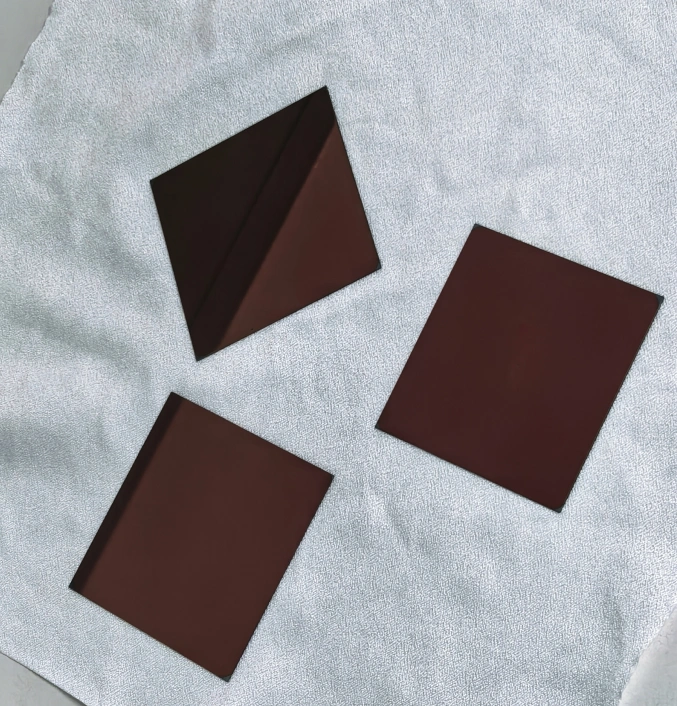
High-Purity Glass Manufacturing for Infrared Performance
Progress in glass making has boosted infrared capabilities more than folks often notice. Strict oversight of starting materials, melting processes, and cooling steps cuts down internal strain and absorption differences. Uniformity counts a lot, particularly in laser-based near infrared uses, where minor flaws might appear as interference or shifts.
Such production gains stretch the effective span of glass, yet basic physics sets a boundary. Past specific wavelengths, alternative materials become necessary.
When Glass Still Makes Sense in Infrared Systems
Glass continues as a sensible option for near infrared filtering, alignment lenses, and setups where expense and quantity play key roles. When combined with smartly planned coatings, it yields reliable outcomes without added hassle. The main point is recognizing limits before overextending it.
Crystal and Semiconductor Materials for Enhanced Infrared Absorption
When infrared setups advance to extended wavelengths, crystalline and semiconductor substances come forward. These bases provide broader transparency spans and firmer engagement with infrared rays.
Silicon as a Near Infrared Absorptive and Filtering Material
Silicon sees wide application in near infrared optics because of its firm build and foreseeable absorption patterns. It copes with greater heat pressures better than typical glass and enables bolder coating plans.
For filtering tasks, silicon bases permit crisper spectral shifts and better suppression outside the pass area. This quality renders them handy in sensing and factory measurement tools, where distinguishing signals is crucial.
Germanium for Long Wave Infrared Performance
In long wave infrared, germanium ranks among the top picks. Its elevated refractive index and robust infrared reaction suit it for thermal imaging and sensing systems.
Nevertheless, germanium demands precision. It needs meticulous surface treatment and shielding coatings to handle outside conditions. When managed properly, it offers top-tier results in areas where glass fails to function.
From Dielectrics to Metals: Advanced Infrared Absorption Strategies
Selecting materials by itself falls short. Thin-film coatings determine how infrared light gets filtered, stopped, or taken in. Today’s infrared filters depend on exact layer setups that blend dielectric and metallic properties.
Metal and Metal-Oxide Coatings in Infrared Control
Metal and metal-oxide films add managed absorption and reflection. Within infrared setups, these coatings assist in curbing undesired wavelengths and cutting background noise. They also contribute to heat steadiness, particularly in long wave uses.
Finding the right mix poses a challenge. Excess absorption generates warmth. Insufficient amounts weaken blocking strength. Here, expertise in coatings truly stands out.
Multi-Layer Thin Film Structures for Spectral Precision
Through layering several films with precise depths and refractive values, filters gain keen cut-on points and profound blocking zones. These builds let infrared setups zero in on essentials and overlook irrelevants.
Evenness over the surface holds great importance. Tiny depth changes might alter spectral outcomes, so cutting-edge oversight and deposition management remain vital in making.
Infrared Long Wave Pass Filters as Practical Absorption Solutions
Long wave pass filters merge base choice and thin-film planning into one working piece. They serve widely to eliminate shorter wavelengths, all while letting longer infrared rays pass smoothly.
Why Long Wave Pass Filters Are Critical in Infrared Systems
In actual settings, infrared sensors frequently deal with blended inputs. Visible and near infrared rays might disrupt readings meant for longer bands. Long wave pass filters address this by halting unwanted light prior to sensor contact.
As a result, they boost contrast, lessen interference, and guard delicate sensors from excess input.
ILP3000 Infrared Long Wave Pass Filter for Near Infrared Applications
Bodian Optical’s ILP3000 long wave pass filter targets systems running beyond 3000 nm. It provides managed transmission and solid blocking of briefer wavelengths, which suits it for near infrared sensing and testing devices.
Constructed via accurate coating methods, it holds firm performance amid temperature shifts and extended runtime, unlike cheaper filters that start to wander.
ILP7700 Infrared Long Wave Pass Filter for Mid Infrared Systems
For mid infrared tasks, the ILP7700 filter aims at a taller cut-on wavelength, yet it keeps firm blocking underneath. This fits well for factory oversight, heat gauging, and infrared imaging tools that require pure spectral divides.
Its build shows thoughtful pairing of base and coating, which cuts strain and lifts lasting dependability.
ILP10600 Infrared Long Wave Pass Filter for Long Wave Infrared Detection
The ILP10600 long wave pass filter suits long wave infrared spots where heat rays prevail. It supplies high blocking power below the cut-on and steady transmission in the aimed band.
This filter often appears in thermal imaging, gas sensing, and tough factory environments where steady output proves essential.
How Bodian Optical Integrates Material Science With Thin Film Engineering
Bodian Optical views infrared filtering as a full-system issue, not a quick fix. Base picking, coating planning, and method oversight all connect as parts of one job.
Substrate Selection Based on Infrared Absorption Requirements
Every task begins with wavelength demands, working heat, and outside risks. From that point, fitting bases get chosen to align natural absorption with setup aims. This lightens the load on coatings and boosts total toughness.
Tailoring holds a big part, so filters can adapt to varied optical designs without losing quality.
Precision Coating Processes for Infrared Stability
Coating evenness and depth oversight shape filter worth. Bodian Optical uses guided deposition and ongoing checks to maintain spectral results within narrow bounds. This care appears in consistency, above all for big runs or ongoing supply efforts.
Choosing the Right Infrared Absorption Material for Your Application
Picking materials ought to match true working states. Wavelength band, heat pressure, moisture, and physical strain all shape how a filter acts over time.
Setups planned with these elements in view usually endure longer and work more steadily. Weighing quality, toughness, and price involves smart picks rooted in how infrared light truly engages with materials, rather than skimping.
Conclusion
The move from glass to crystal and metal options echoes the rising intricacy of infrared tasks. As setups call for purer signals and broader wavelength reach, material science turns into a hands-on matter, not just theory.
Infrared long wave pass filters highlight this progress by wedding base traits with cutting-edge thin-film builds. Offering a wide array of answers for near, mid, and long wave infrared, Bodian Optical backs infrared setups needing firm output, sharp spectral handling, and trustworthy standards in everyday conditions.
FAQ
Q1: What determines whether glass or crystal materials should be used in an infrared filter?
A: Key factors include wavelength band and heat settings. Glass suits near infrared nicely, whereas crystal materials fit better for longer wavelengths and greater heat pressures.
Q2: Why are long wave pass filters important in infrared detection systems?
A: They stop unwanted shorter wavelengths that might disrupt infrared sensors, thus enhancing signal sharpness and reading precision.
Q3: Can infrared filters be customized for specific systems?
A: Yes. Choices like base type, cut-on wavelength, dimensions, and coating plans can all adjust to fit various optical and outside needs.