English
 Afrikaans
 Albanian
 Amharic
 Arabic
 Armenian
 Azerbaijani
 Basque
 Belarusian
 Bengali
 Bosnian
 Bulgarian
 Catalan
 Cebuano
 Chichewa
 Chinese (Simplified)
 Chinese (Traditional)
 Corsican
 Croatian
 Czech
Czech Danish
 Dutch
Dutch Esperanto
 Estonian
 Filipino
 Finnish
 French
 Frisian
 Galician
 Georgian
 German
 Greek
Greek Gujarati
 Haitian Creole
 Hausa
Hausa Hawaiian
 Hebrew
 Hindi
Hindi Hmong
Hmong Hungarian
 Icelandic
 Igbo
Igbo Indonesian
 Irish
Irish Italian
 Japanese
 Javanese
 Kannada
 Kazakh
 Khmer
Khmer Korean
 Kurdish (Kurmanji)
 Kyrgyz
 Lao
Lao Latin
Latin Latvian
 Lithuanian
 Luxembourgish
 Macedonian
 Malagasy
 Malay
Malay Malayalam
 Maltese
 Maori
Maori Marathi
 Mongolian
 Myanmar (Burmese)
 Nepali
 Norwegian
 Pashto
 Persian
 Polish
 Portuguese
 Punjabi
 Romanian
 Russian
 Samoan
 Scottish Gaelic
 Serbian
 Sesotho
 Shona
Shona Sindhi
 Sinhala
 Slovak
 Slovenian
 Somali
 Spanish
 Sundanese
 Swahili
 Swedish
 Tajik
Tajik Tamil
Tamil Telugu
 Thai
Thai Turkish
 Ukrainian
 Urdu
Urdu Uzbek
Uzbek Vietnamese
 Welsh
Welsh Xhosa
Xhosa Yiddish
 Yoruba
 Zulu
Zulu


In the field of optical engineering, night vision technology remains one of the most intriguing areas. It transforms what we cannot see into something visible, enabling sight in complete darkness by detecting infrared radiation that human eyes typically overlook. Central to these devices are infrared filters. These compact, slender parts handle the flow of light through a lens, ensuring that only appropriate wavelengths arrive at the sensor. Without such filters, a night vision tool would suffer from excessive interference, leading to fuzzy or entirely ineffective pictures.

I. Why Is Infrared Filter Essential for Night Vision?
Fundamental Principles of Infrared Optical Components
Many folks view night vision simply as “green glow,” yet the underlying physics runs far deeper. Any object warmer than absolute zero gives off infrared radiation. Infrared filters operate through the interaction of light waves. By applying several layers of dielectric or metal coatings onto a base material, they reflect certain spectrum portions while permitting others to proceed. This goes beyond mere light obstruction; it involves exact management on a tiny scale, so the sensor picks up distinct thermal or reflected patterns.
Role of Filters in Altering Light Transmission
A filter’s primary task in a night vision arrangement is to refine the input. Environments often contain abundant stray light that disrupts infrared sensors. These filters serve as careful overseers. They feature tailored transmission properties, which allow them to permit just a slim range of light—such as from a laser beam or a person’s body heat—to pass. This careful selection delivers the strong contrast and defined outlines in current night vision, helping security teams or scientists tell a human from foliage amid total dark.
Integration of Substrates and Multi-Layer Optical Films
Crafting a superior filter poses a significant engineering task. It begins with selecting a suitable substrate. Next follows the coating procedure, frequently conducted in controlled vacuum settings. Firms such as Bodian Optical employ automated, precise tools for these applications. Individual layers may measure just nanometers in thickness, but combined, they form a robust shield. When the substrate aligns well with the optical film, the filter reaches peak efficiency, offering the toughness and reliability required for rugged outdoor deployment.
II. How Does Night Vision Technology Benefit from Specific Filters?
Enhancing Contrast in Night Surveillance Systems
A major issue in surveillance involves light interference or “bloom.” During nighttime perimeter checks, a close streetlight or the moon’s glow can overwhelm the view. Infrared filters address this by excluding the visible light range and concentrating solely on infrared. Consequently, they produce greater distinction between key subjects and their surroundings. By directing the camera’s focus to particular wavelengths where objects stand out most, these filters boost the dependability of surveillance setups for extended-range observation.
Filtering Radiation Based on Object Temperatures
Given that infrared radiation links directly to warmth, filters enable detection of heat variations. This proves crucial for thermal imaging. Various filters suit different needs, whether spotting subtle warmth from a gas escape or strong heat from machinery. Through defined cutoff levels, a filter assists the system in disregarding ambient heat and targeting the precise thermal mark of an item. As a result, this approach proves invaluable for tasks from factory checks to rescue operations.
Broad Applications in Security and National Defense
These optical elements appear not only in cameras but also in diverse advanced equipment. They feature in automotive night-driving aids, where they assist drivers in spotting walkers at night, and in military tools like star trackers and target locators. The accuracy from premium filters guarantees that defense systems perform consistently. From basic motion lights to intricate satellite views, the skill to control infrared light forms a key pillar of today’s security setups.
III. Which Long Wave Pass Filters Should You Choose?
High Efficiency of Bodian ILP Series Products
Selecting appropriate components requires care, and the ILP series from Bodian Optical stands out prominently. These long wave pass filters permit extended wavelengths to advance while halting shorter ones. They boast excellent transmission in the allowed area and profound suppression in the restricted zone. Thus, users receive a pure signal free from disruptive light. For setups emphasizing the far-infrared band, these items deliver the steadfastness derived from extensive specialized production.
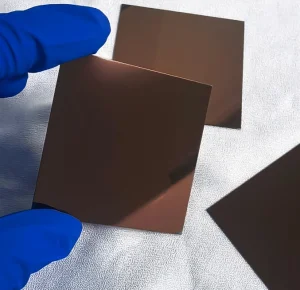
ILP10000 Filter for Precise Long-Wave Selection
The ILP10000 serves as a dedicated device for operations in the long-wave infrared (LWIR) area. It excels in thermal imaging and gas detection where wavelengths near 10,000nm matter. Due to its fine construction, it offers a clear shift from blocked to allowed states, ideal for advanced sensors. This filter suits industrial contexts prioritizing exact heat detection, ensuring sensor data remains dependable and useful.
ILP5500 Filter for Versatile Mid-Infrared Transmission
For efforts in the mid-infrared domain, the ILP5500 provides a reliable option. It begins transmission at 5500nm, fitting numerous detection roles. Often applied in ecological oversight and health assessments, it targets the spectrum range where many biological and chemical traces appear clearly. Its sturdiness suits mobile gear exposed to rough handling, maintaining steady output amid varying conditions.
IV. What Are the Recommended Short Wave Pass Filters?
Deep Cutoff Performance of ISP Series Filters
Contrasting long wave filters, the ISP short wave pass types perform the reverse function: they allow brief wavelengths through and obstruct extended ones. The “deep cutoff” in their design holds great value, as it indicates strong prevention of excess heat or infrared disturbance reaching the sensor. For arrangements requiring thermal control or emphasis on near-infrared, the ISP series supplies the vital protection to preserve sharp, unclouded images.
ISP12750 Filter for Targeted Short-Wave Passage
The ISP12750 suits particular technical demands effectively. It permits passage up to the 12750nm limit, serving as a broad barrier for short and medium IR light while excluding very extended waves. This proves handy in elaborate optical arrangements with several sensors, where avoiding signal overlap is essential. As a robust filter, it meets the rigors of lab studies and premium industrial detection without issue.
ISP5100 Filter for Optimized Infrared Detection
Those using sensors attuned to the 5.1-micron level and shorter should consider the ISP5100 strongly. It fits well for near-infrared (NIR) and short-wave infrared (SWIR) uses. By excluding prolonged thermal waves, it stops sensors from saturation by surrounding warmth, a frequent challenge in daytime outdoor monitoring or warm settings. Therefore, it upholds the light signal’s quality, acting as a solid part for rapid imaging and accurate spotting.
V. What Makes Bodian Optical a Leading Provider?
Advanced Technical Expertise and Decades of Research
Bodian Optical did not emerge suddenly. Over many years, they have explored thin-film optics thoroughly. Their experts grasp infrared wavelength behaviors and material interactions. This profound insight lets them create filters that exceed basic standards, tailoring solutions to night vision and infrared detection hurdles. They convert intricate optical calculations into practical items that aid specialists worldwide.
High-Precision Imported Coating and Testing Equipment
Quality hinges on production tools. Bodian Optical has committed resources to precise, automated coating systems and evaluation devices. This setup confirms that each filter satisfies rigorous criteria for light passage and wavelength precision. Handling unseen light demands more than visual checks; advanced detectors verify functionality. Through elite machinery, they assure uniform excellence rare in the market.
Flexible Customization Capabilities for Diverse Fields
Projects vary widely. Off-the-shelf filters may not match exact fittings or cutoff needs. Here, Bodian Optical excels. They provide adjustments in dimensions, forms, and optical traits. Whether for compact handheld sensors or expansive telescope lenses, they adapt processes to client specs. Such adaptability has established them as a dependable ally in areas like environmental care, farming, and defense.
FAQs
Q1: What is the difference between a long wave pass and a short wave pass filter?
A: A long wave pass (LWP) filter functions like a selector that permits longer wavelengths to proceed while halting shorter ones. A short wave pass (SWP) filter reverses this, allowing shorter wavelengths and blocking longer ones. In night vision applications, selection depends on the infrared spectrum segment your sensor targets.
Q2: Can these filters be customized for specific sizes?
A: Yes, customization forms a core service at Bodian Optical. As cameras and sensors differ in lens sizes and shapes, filters can be produced to precise measurements. This covers not only circular or rectangular forms but also substrate thickness to integrate into compact modern devices.
Q3: Why is “deep blocking” important in a night vision filter?
A: Deep blocking describes the filter’s effectiveness in rejecting undesired light. Weak blocking permits unwanted light seepage, causing distortion or haze in images. Strong blocking ensures the sensor detects only the intended infrared input, yielding superior sharpness.