English
 Afrikaans
 Albanian
 Amharic
 Arabic
 Armenian
 Azerbaijani
 Basque
 Belarusian
 Bengali
 Bosnian
 Bulgarian
 Catalan
 Cebuano
 Chichewa
 Chinese (Simplified)
 Chinese (Traditional)
 Corsican
 Croatian
 Czech
Czech Danish
 Dutch
Dutch Esperanto
 Estonian
 Filipino
 Finnish
 French
 Frisian
 Galician
 Georgian
 German
 Greek
Greek Gujarati
 Haitian Creole
 Hausa
Hausa Hawaiian
 Hebrew
 Hindi
Hindi Hmong
Hmong Hungarian
 Icelandic
 Igbo
Igbo Indonesian
 Irish
Irish Italian
 Japanese
 Javanese
 Kannada
 Kazakh
 Khmer
Khmer Korean
 Kurdish (Kurmanji)
 Kyrgyz
 Lao
Lao Latin
Latin Latvian
 Lithuanian
 Luxembourgish
 Macedonian
 Malagasy
 Malay
Malay Malayalam
 Maltese
 Maori
Maori Marathi
 Mongolian
 Myanmar (Burmese)
 Nepali
 Norwegian
 Pashto
 Persian
 Polish
 Portuguese
 Punjabi
 Romanian
 Russian
 Samoan
 Scottish Gaelic
 Serbian
 Sesotho
 Shona
Shona Sindhi
 Sinhala
 Slovak
 Slovenian
 Somali
 Spanish
 Sundanese
 Swahili
 Swedish
 Tajik
Tajik Tamil
Tamil Telugu
 Thai
Thai Turkish
 Ukrainian
 Urdu
Urdu Uzbek
Uzbek Vietnamese
 Welsh
Welsh Xhosa
Xhosa Yiddish
 Yoruba
 Zulu
Zulu


Infrared cameras and thermal cameras often come up in discussions, particularly in fields such as security, industrial checks, research imaging, and automation. People sometimes view them as identical, but in actual optical setups, the distinction is quite significant. From the range of wavelengths to the core imaging methods, these technologies fulfill distinct roles. Grasping their operations, along with the way optical filters affect their results, assists engineers and system builders in picking the best option for particular uses.
Bodian Optical specializes in infrared optical filters that ensure exact wavelength management. Such parts are vital for the effectiveness of infrared cameras in everyday settings.
What Is An Infrared Camera?
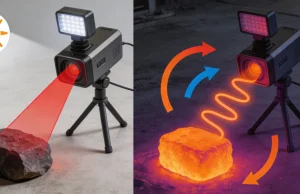
Infrared cameras capture reflected infrared light instead of visible light. This reflected energy acts in ways that differ from heat radiation, and that’s where confusion often starts. Before exploring uses, it is useful to grasp the fundamental ideas behind infrared imaging.
Infrared Camera Basic Principles
An infrared camera picks up infrared radiation that bounces off objects after an outside source, like sunlight, IR LEDs, or lasers, lights them up. Unlike thermal cameras, these devices do not depend on heat output. Instead, they rely on how surfaces bounce back certain infrared wavelengths.
Most infrared cameras function in the near-infrared, short-wave infrared, or mid-wave infrared ranges. These areas are responsive to material traits, surface finishes, and moisture levels. Since reflected IR follows reliable patterns, infrared cameras find broad use in situations where detail, contrast, and material distinction are important.
For proper operation, infrared cameras need careful optical management. Without filtering, excess wavelengths lessen image sharpness and add unwanted interference.
How Infrared Filters Influence Camera Performance
Infrared filters are placed right in front of the camera sensor, and they decide which wavelengths can get through. This filtering process is essential. It boosts contrast, strengthens the signal, and stops stray visible or excess infrared light.
Long wave pass filters, for instance Bodian Optical’s ILP10000 and ILP5500, let infrared wavelengths beyond a specific cutoff reach the sensor. These are commonly applied when all visible light needs to be stopped, as in surveillance or scientific imaging.
Short wave pass filters such as ISP12750 and ISP5100 work the other way around. They stop longer infrared wavelengths but allow shorter bands to pass. This method suits SWIR systems where clear spectral division is key. Thus, by choosing the appropriate filter, an infrared camera gains better stability, greater reliability, and simpler calibration.
Application Areas Of Infrared Imaging
Infrared cameras see wide application in machine vision, night monitoring with active lighting, semiconductor checks, material sorting, and lab analysis. In these areas, the aim is not to detect heat but to uncover details that standard visible cameras overlook.
In factory settings, infrared imaging can point out flaws, surface variations, or impurities that stay hidden under regular lighting. In research environments, it aids in gathering controlled spectral information with consistent outcomes. These uses depend a great deal on filter precision, so optical quality and coating uniformity stand out as major purchase considerations.
What Is A Thermal Camera?
Whereas infrared cameras rely on reflected light, thermal cameras operate on an entirely separate basis. This key difference accounts for why thermal imaging performs differently in dim light or complete darkness. Knowing about thermal cameras clears up mix-ups when selecting imaging tools.
Thermal Camera Detection Mechanism
Thermal cameras sense long-wave infrared radiation that objects release directly because of their warmth. Any object warmer than absolute zero emits heat radiation, and thermal sensors turn this energy into a visual display.
Since they require no outside light, thermal cameras function just as well in daylight or at night. However, they fail to show fine surface details. Rather, they reveal differences in temperature.
Thermal cameras usually work in the 8–14 micrometer band and use special sensors like microbolometers. These setups differ sharply from typical infrared cameras, and they employ unique optical materials.
Differences Between Thermal And Infrared Imaging
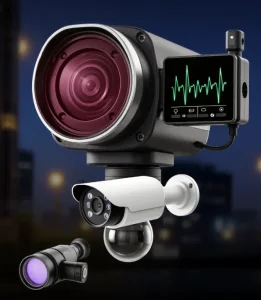
The primary difference is in the measurement target. Infrared cameras gauge reflected infrared light, whereas thermal cameras gauge emitted heat.
Infrared images generally appear crisper and more like visible photos, particularly when matched with suitable optical filters. Thermal images look softer and more abstract, as they emphasize heat patterns over physical structure.
For this reason, thermal cameras excel at spotting living creatures, heat escapes, or hot machinery, but they fall short for material examination or detailed checks.
Main Uses Of Thermal Technology
Thermal cameras find common use in firefighting, boundary security, structure assessments, and upkeep predictions. Here, temperature contrasts outweigh visual sharpness.
Yet, thermal systems provide limited options for wavelength choice. Unlike infrared cameras, they do not employ swappable optical filters similarly, which cuts down flexibility in certain technical scenarios.
How Do Infrared Cameras Work In Practice?
In practical systems, infrared cameras hinge on precise wavelength handling to produce workable images. This is where optical filters take a central role in effectiveness. Examining wavelength choice more closely sheds light on this connection.
Infrared Wavelengths And Camera Sensitivity
Camera sensors react variably across the infrared spectrum. Certain sensors handle shorter wavelengths better, while others do well with longer infrared areas.
When undesired wavelengths hit the sensor, image contrast falls and interference rises. Consequently, this complicates calibration and harms consistency, especially in factory systems. Fitting filters correctly lets the camera operate in its peak response area.
Role Of Long Wave Pass Filters (ILP10000 / ILP5500)
Long wave pass filters from Bodian Optical, including ILP10000 and ILP5500, aim to stop visible and shorter infrared wavelengths while passing longer infrared bands.
The ILP10000 filter fits applications needing deep infrared passage and firm visible light cutoff. It serves well in research imaging, spectroscopy aids, and sophisticated sensing arrangements.
The ILP5500 filter provides a milder cutoff, so it works in systems seeking a mix of sensitivity and contrast. This adaptability makes it favored in factory vision and oversight systems.
Both filters feature durable coatings and steady cutoff precision, which supports reliable results in extended manufacturing.
Role Of Short Wave Pass Filters (ISP12750 / ISP5100)
Short wave pass filters like ISP12750 and ISP5100 target systems focused on shorter infrared wavelengths. The ISP5100 often appears in near-infrared and short-wave infrared tasks where visible light blocking remains necessary, yet longer infrared wavelengths need exclusion.
The ISP12750 aids specialized SWIR systems requiring strict spectral handling. These filters commonly aid inspection, sorting, and scientific imaging where wavelength division boosts precision.
Therefore, combining the proper short wave pass filter with the camera sensor enables system designers to obtain clearer images and stronger consistency.
Why Choose Specific Optical Filters For Infrared Imaging?
Not every infrared filter behaves identically, even if their cutoff figures seem alike in specs. Everyday conditions reveal variations in coating durability and steadiness. Selecting the correct filter influences ongoing system output.
Enhancing Signal Clarity With Long Wave Pass Filters
Long wave pass filters boost clarity by halting stray visible and near-infrared light. As a result, this cuts down on flare and ghosting within the optical setup.
In managed imaging environments, this brings steadier contrast and fewer adjustment problems over time. Superior coatings, such as those from Bodian Optical, keep their passage traits stable despite shifts in temperature.
Improving Contrast With Short Wave Pass Filters
Short wave pass filters heighten contrast by eliminating longer wavelength interference. This proves vital in SWIR systems, where thermal background radiation might disrupt imaging. Precise cutoff management aids in emphasizing surface traits and material variances without excessive image adjustment.
Matching Filters To Camera Sensor Types
Each sensor prefers a certain wavelength band. Aligning filters to sensor responsiveness prevents signal loss and raises efficiency.
Bodian Optical crafts its infrared filters to pair with typical factory and research sensors, thus helping builders reduce development time.
Which Bodian Optical Products Are Best For Infrared Imaging?
Bodian Optical offers a targeted selection of infrared filters built for actual applications, beyond mere lab trials.
Each item backs a unique imaging objective.
ILP10000 – Long Wave Pass Filter
The ILP10000 suits systems demanding robust long-wave infrared passage and total visible light exclusion. It aligns perfectly with advanced imaging, spectroscopy-linked setups, and high-end research infrared cameras.
ILP5500 – Long Wave Pass Filter
The ILP5500 delivers a well-rounded cutoff that matches numerous factory and monitoring systems. It ensures dependable infrared passage without undue filtering, rendering it a sensible pick for steady production areas.
ISP12750 And ISP5100 – Short Wave Pass Filters
The ISP12750 and ISP5100 back short-wave infrared imaging where spectral handling is essential. These filters routinely serve in inspection, machine vision, and scientific imaging systems that depend on pure wavelength division.
FAQ
Q1: What is the main difference between infrared and thermal cameras?
A: Infrared cameras detect reflected infrared light, while thermal cameras detect heat emitted by objects. This difference affects image detail, application range, and system design.
Q2: Do infrared cameras always need optical filters?
A: Yes. Without proper infrared filters, unwanted wavelengths reduce image clarity and sensor stability. Filters define what the camera actually sees.
Q3: Why choose Bodian Optical for infrared filters?
A: Bodian Optical focuses on stable coatings, accurate cutoff control, and products designed for real industrial and scientific use, making them suitable for long-term imaging systems.