English
 Afrikaans
 Albanian
 Amharic
 Arabic
 Armenian
 Azerbaijani
 Basque
 Belarusian
 Bengali
 Bosnian
 Bulgarian
 Catalan
 Cebuano
 Chichewa
 Chinese (Simplified)
 Chinese (Traditional)
 Corsican
 Croatian
 Czech
Czech Danish
 Dutch
Dutch Esperanto
 Estonian
 Filipino
 Finnish
 French
 Frisian
 Galician
 Georgian
 German
 Greek
Greek Gujarati
 Haitian Creole
 Hausa
Hausa Hawaiian
 Hebrew
 Hindi
Hindi Hmong
Hmong Hungarian
 Icelandic
 Igbo
Igbo Indonesian
 Irish
Irish Italian
 Japanese
 Javanese
 Kannada
 Kazakh
 Khmer
Khmer Korean
 Kurdish (Kurmanji)
 Kyrgyz
 Lao
Lao Latin
Latin Latvian
 Lithuanian
 Luxembourgish
 Macedonian
 Malagasy
 Malay
Malay Malayalam
 Maltese
 Maori
Maori Marathi
 Mongolian
 Myanmar (Burmese)
 Nepali
 Norwegian
 Pashto
 Persian
 Polish
 Portuguese
 Punjabi
 Romanian
 Russian
 Samoan
 Scottish Gaelic
 Serbian
 Sesotho
 Shona
Shona Sindhi
 Sinhala
 Slovak
 Slovenian
 Somali
 Spanish
 Sundanese
 Swahili
 Swedish
 Tajik
Tajik Tamil
Tamil Telugu
 Thai
Thai Turkish
 Ukrainian
 Urdu
Urdu Uzbek
Uzbek Vietnamese
 Welsh
Welsh Xhosa
Xhosa Yiddish
 Yoruba
 Zulu
Zulu


Smart sensing devices depend on clean optical signals before they depend on smart algorithms. High-Transmittance Infrared Filters help more useful infrared energy reach the detector while reducing unwanted wavelengths that can disturb measurement accuracy. For buyers working on gas detection, security imaging, thermal sensing, medical instruments, industrial monitoring, or compact sensor modules, the filter is not a small accessory. It directly affects signal strength, data reliability, and system integration.
BoDian Optical specializes in optical thin-film components and infrared filter products for sensing and detection systems. The company’s infrared filter portfolio includes infrared narrow bandpass filters, infrared anti-reflection filters, infrared long pass filters, infrared short pass filters, and broadband infrared filters. For next-generation sensing devices, two product directions are especially relevant: narrowband filters for accurate wavelength selection, and anti-reflection filters for improving infrared transmission through optical surfaces.

Why Do Smart Sensing Devices Need High-Transmittance Infrared Filters?
Infrared sensing often works with weak, invisible, or easily disturbed signals. A detector may be sensitive enough, but if the incoming light is reflected, scattered, absorbed, or mixed with unwanted wavelengths before reaching the sensing element, the final output can still become unstable. This is why infrared filters for smart sensing devices must be selected as part of the whole optical path, not treated as a late-stage component.
More Usable Infrared Signal Before the Detector
High transmission means more target infrared energy can pass through the optical path. In non-contact measurement, gas sensing, infrared imaging, and sensor-based monitoring, this gives the detector a stronger useful signal to process.
The infrared range covers a broad spectrum, from near-infrared to far-infrared. Different devices only need a specific part of that spectrum. High-Transmittance Infrared Filters help pass the required wavelength range while controlling the rest of the spectrum. This is especially useful when the sensing device must work under low-light, outdoor, or variable background conditions.
Lower Noise from Unwanted Wavelengths
A smart sensing device does not only need more light. It needs the right light. If unwanted wavelengths enter the detector, the system may produce false readings, blurred images, unstable baseline signals, or lower contrast.
This is where filter design becomes critical. A filter with suitable blocking performance can reduce the influence of background radiation, stray light, and nearby spectral bands. For a buyer, this means the filter should be evaluated together with the light source, detector response curve, working distance, and target material.
Better Stability in Low-Light and Non-Contact Detection
Many smart sensing systems are used where the object cannot be touched, opened, or physically sampled. Examples include infrared thermometry, gas monitoring, security detection, and industrial process sensing.
In these conditions, the optical filter helps define what the detector is allowed to “see.” A stable infrared signal makes later electronic processing and software recognition more reliable. This is one reason High-Transmittance Infrared Filters are becoming more important as sensing systems move toward smaller modules and faster data processing.
How Do Infrared Narrow Bandpass Filters Improve Sensing Accuracy?
A narrowband filter is useful when a device needs to isolate a target wavelength instead of collecting a wide infrared range. In BoDian Optical’s product knowledge, narrowband filters are generally distinguished by a half bandwidth within 6% of the center wavelength. That definition matters because it helps buyers separate true narrowband filtering from wider transmission designs.
Precise Target Wavelength Selection
BoDian Optical’s Infrared narrow bandpass filter is suitable for systems that need a defined center wavelength and controlled bandwidth. For example, gas detection instruments, infrared sensors, medical testing equipment, and scientific instruments often need to detect a narrow spectral feature rather than a broad infrared signal.
An infrared narrow bandpass filter for gas detection can help the system focus on a selected absorption band. The goal is not simply to pass more light, but to pass the wavelength range that carries useful information.
Stronger Background Light Suppression
In real devices, background radiation can come from ambient light, heated objects, optical windows, electronic components, or the sensing environment itself. If the filter allows too much nearby spectral energy to pass, the detector may receive a mixed signal.
A narrow bandpass design helps reduce this problem by limiting transmission to the intended band. For buyers, the key questions are practical: What center wavelength is required? How narrow should the bandwidth be? What blocking region is needed? What substrate material fits the operating wavelength?
Higher Signal Confidence for Smart Algorithms
Smart algorithms can classify, compare, or predict patterns, but they still rely on optical input. Cleaner spectral input can reduce the burden on later software correction. For devices using computer vision, infrared detection, or automated recognition, a well-matched filter can make the signal easier to interpret.
This is why High-Transmittance Infrared Filters should be discussed early in a project. If the filter is selected only after the optical module is already fixed, the buyer may have less room to adjust wavelength, size, substrate, and coating structure.
Where Do Infrared Anti-Reflection Filters Add the Most Value?
Not every infrared problem is about wavelength selection. Sometimes the main issue is loss at optical surfaces. Each window, lens, or filter surface can reflect part of the infrared energy. In compact devices or multi-lens systems, those small losses can add up and reduce the final signal reaching the detector.
Reduced Reflection Loss at Optical Surfaces
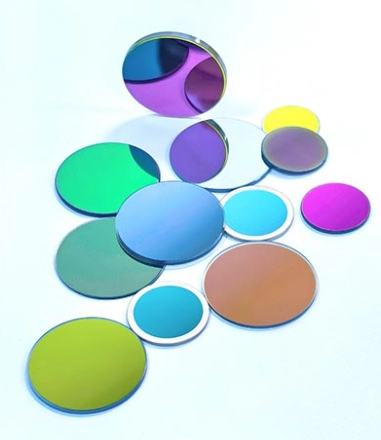
BoDian Optical’s infrared anti-reflection filter is designed for applications where infrared transmission efficiency needs to be improved across optical surfaces. This can be useful in infrared cameras, thermal imaging modules, sensor windows, lens assemblies, and measuring instruments.
An anti-reflection filter for infrared sensor modules helps reduce reflection-related loss, especially where the device has several optical interfaces. The result is a more efficient optical path and a cleaner signal before the detector stage.
Better Optical Efficiency in Compact Devices
Smart sensing devices are becoming smaller, but compact optical paths leave less margin for signal loss. If the module uses a small detector, a narrow optical aperture, or a limited light source, transmission efficiency becomes more sensitive.
Infrared anti-reflection treatment can help the system preserve more useful light. This does not replace correct detector selection or circuit design, but it helps reduce a preventable optical loss in the front-end structure.
More Reliable Performance in Multi-Lens Systems
In multi-lens or multi-window systems, reflection can create ghost images, signal fluctuation, or lower contrast. An infrared anti-reflection filter can be used as part of the optical stack to reduce these effects.
For thermal imaging optical filter applications, buyers should consider how the filter works with the lens material, detector window, and working wavelength. The better the optical surfaces are matched, the easier it becomes to maintain stable signal transfer.
| Project Need | More Suitable Product | Practical Reason |
| Target wavelength detection | Infrared narrow bandpass filter | Selects a defined infrared band and suppresses nearby interference |
| Higher infrared transmission through optical surfaces | infrared anti-reflection filter | Reduces reflection loss in lenses, windows, and sensor modules |
| Compact smart sensor design | Both products together | Supports cleaner spectral input and better optical efficiency |
What Specifications Should Buyers Check Before Choosing Infrared Filters?
A high-transmittance infrared filter selection process should not start with price or size alone. It should start with the function of the sensing device. The same filter may work well in one system and fail in another if the wavelength, substrate, bandwidth, or blocking region is not matched correctly.
Center Wavelength and Bandwidth Matching
Center wavelength is the first specification to confirm. It must match the detector response, target gas or object, light source, and measurement principle. Bandwidth should then be selected according to how much spectral information the system needs.
A narrow bandwidth can improve selectivity, but it may reduce total signal if the system requires more energy across a wider range. This is why buyers should share the intended application, working wavelength, and optical structure before finalizing a filter design.
Peak Transmittance and Cut-Off Depth
Peak transmittance tells buyers how much useful light can pass at the target wavelength. Cut-off depth describes how strongly the filter blocks unwanted wavelengths. BoDian Optical’s filter capabilities include high-precision optical indicators, with product information referencing high transmittance and deep cut-off requirements for demanding applications.
For High-Transmittance Infrared Filters, the buyer should not look at peak transmittance alone. A filter with good transmission but weak blocking may still allow noise into the detector. A balanced specification should consider both the transmission region and blocking region.
Substrate, Size, Surface Quality, and Optical Aperture
Infrared filters may use substrate materials such as silicon, germanium, sapphire, calcium fluoride, zinc sulfide, or zinc selenide, depending on the wavelength and application. The substrate must be compatible with the infrared band and mechanical structure of the device.
Surface quality, dimensional tolerance, polishing, coating uniformity, and optical aperture also affect integration. For custom infrared optical filters, buyers should provide drawings, target wavelengths, working angle, size limits, and environmental conditions as early as possible.
How Can BoDian Optical Support Custom Smart Sensing Projects?
Smart sensing projects often need more than a catalog part. Different systems may require different wavelength windows, filter sizes, substrates, optical apertures, coating designs, and testing requirements. BoDian Optical can support filter customization based on sample, drawing, or application requirements, which is useful for buyers developing new sensing modules or upgrading existing products.
Custom Infrared Filters for Different Detection Tasks
For targeted spectral detection, BoDian Optical can recommend an Infrared narrow bandpass filter. For improving transmission efficiency in optical windows and sensor modules, an infrared anti-reflection filter may be more suitable.
Some projects may require both: a narrowband filter to define the sensing wavelength and an anti-reflection filter to reduce optical loss. This combination can help smart sensing devices achieve cleaner signal capture without overcomplicating the system.
Coating, Testing, and Process Control Support
Infrared filter production involves coating design, substrate preparation, vacuum coating, polishing, and spectral testing. BoDian Optical’s technical background in optical thin-film products allows buyers to discuss performance from the perspective of transmittance, reflectance, absorbance, blocking region, and appearance quality.
This is useful when the buyer needs a filter that fits an instrument, not just a standard optical part.
Service and Contact for Project Evaluation
If your project involves weak infrared signals, unstable readings, unclear wavelength requirements, or module integration limits, prepare the center wavelength, detector type, substrate preference, size drawing, and blocking requirement before supplier communication. BoDian Optical can review these details and help match the filter structure to the sensing task. For project discussion, technical files, or procurement coordination, use the contact page to send the required information.
High-Transmittance Infrared Filters are small components, but they influence how much useful infrared signal reaches the detector and how much unwanted energy is kept away. For next-generation smart sensing devices, BoDian Optical’s infrared narrow bandpass filters and infrared anti-reflection filters can support cleaner wavelength selection, better optical efficiency, and more practical system integration.
FAQ
Q: What are High-Transmittance Infrared Filters used for?
A: High-Transmittance Infrared Filters are used in devices that need strong and controlled infrared signal transfer, such as gas detection instruments, thermal imaging modules, infrared sensors, medical instruments, industrial monitoring systems, and security imaging devices.
Q: Should I choose an infrared narrow bandpass filter or an infrared anti-reflection filter?
A: Choose an infrared narrow bandpass filter when your system needs to isolate a target wavelength. Choose an infrared anti-reflection filter when your main goal is to reduce reflection loss and improve infrared transmission through lenses, windows, or sensor surfaces.
Q: What information should I provide before ordering custom infrared optical filters?
A: Provide the center wavelength, bandwidth, expected transmission region, blocking requirement, substrate preference, size tolerance, working angle, surface requirement, and application background. These details help the supplier check whether the filter design fits your actual sensing system.