English
 Afrikaans
 Albanian
 Amharic
 Arabic
 Armenian
 Azerbaijani
 Basque
 Belarusian
 Bengali
 Bosnian
 Bulgarian
 Catalan
 Cebuano
 Chichewa
 Chinese (Simplified)
 Chinese (Traditional)
 Corsican
 Croatian
 Czech
 Danish
 Dutch
 Esperanto
 Estonian
 Filipino
 Finnish
 French
 Frisian
 Galician
 Georgian
 German
 Greek
 Gujarati
 Haitian Creole
 Hausa
 Hawaiian
 Hebrew
 Hindi
 Hmong
 Hungarian
 Icelandic
 Igbo
 Indonesian
 Irish
 Italian
 Japanese
 Javanese
 Kannada
 Kazakh
 Khmer
 Korean
 Kurdish (Kurmanji)
 Kyrgyz
 Lao
 Latin
 Latvian
 Lithuanian
 Luxembourgish
 Macedonian
 Malagasy
 Malay
 Malayalam
 Maltese
 Maori
 Marathi
 Mongolian
 Myanmar (Burmese)
 Nepali
 Norwegian
 Pashto
 Persian
 Polish
 Portuguese
 Punjabi
 Romanian
 Russian
 Samoan
 Scottish Gaelic
 Serbian
 Sesotho
 Shona
 Sindhi
 Sinhala
 Slovak
 Slovenian
 Somali
 Spanish
 Sundanese
 Swahili
 Swedish
 Tajik
 Tamil
 Telugu
 Thai
 Turkish
 Ukrainian
 Urdu
 Uzbek
 Vietnamese
 Welsh
 Xhosa
 Yiddish
 Yoruba
 Zulu



At an ordinary window, a long-wave thermal camera is usually looking at the glass and at reflections on its near side. Move the camera a little. A warm shape that slides across the image can be a reflection of something in the room, even when it appears to sit outdoors. For most LWIR cameras, ordinary window glass transmits too little of the target’s radiation to see through it.
The problem shows up on equipment housings as well. An enclosure cover can be clear enough to check the wiring by eye and block the view from a thermal module mounted right beside it. The replacement has to pass the wavelengths that module sees. Its dimensions matter once it’s in the housing.
Key Takeaways
- Match the window’s transmission curve to the detector response.
- Check the clear opening with the retaining ring fitted.
- Run a separate reference check if the camera reports temperatures.

What Does a Thermal Camera See Through Ordinary Glass?
Optical glass has a transmission window of its own. The visible range falls within it for ordinary clear glass. As wavelengths move beyond the material’s transmitting range, absorption rises. This is why judging a pane by eye tells you so little about its suitability for long-wave thermal imaging.
The Pane and Its Reflections
Take a motor inside a cabinet as an example. With the cover off, a hot bearing can stand out against the rest of the housing. Put an ordinary glass cover back in place. If a warm patch remains, check whether it stays on the same part of the glass as the viewing angle changes. Heat from the motor can warm the cover. Nearby equipment can also produce a reflection, with edges sharp enough to look like real detail.
The camera’s color scale can make a small temperature difference appear dramatic. Save the display range with the reference image so you can tell a change in the scene apart from a change in how the camera displays it.
Why a Near-Infrared Camera Can Behave Differently
Switch on the illuminator of an active near-infrared camera and the scene sends some of that light back to the lens. A pane can transmit that return and appear to work perfectly. A thermal channel in the same housing picks up emitted radiation in a different band. Approve the cover on each channel before specifying one part for both.
How to Specify a Thermal Camera Window
Start with the detector response and a minimum transmission requirement over the useful band. A peak value at one wavelength gives little assurance about the signal at the edges of that band. Ask for the transmission curve of the finished part at the intended thickness.
Match the Material to the Detector Band
Decide which materials will pass the detector band before asking for a coating. That short list gets even shorter once thickness and the housing temperature are known. BoDian Optical works with infrared substrates including germanium, silicon, zinc sulfide, and calcium fluoride. The material can be selected to suit the application, with polishing and finishing to meet the optical requirements. Screen these candidates against the detector band and the supplier’s data for the specific material grade. Germanium is a candidate for LWIR. Silicon can suit certain mid-wave infrared designs.
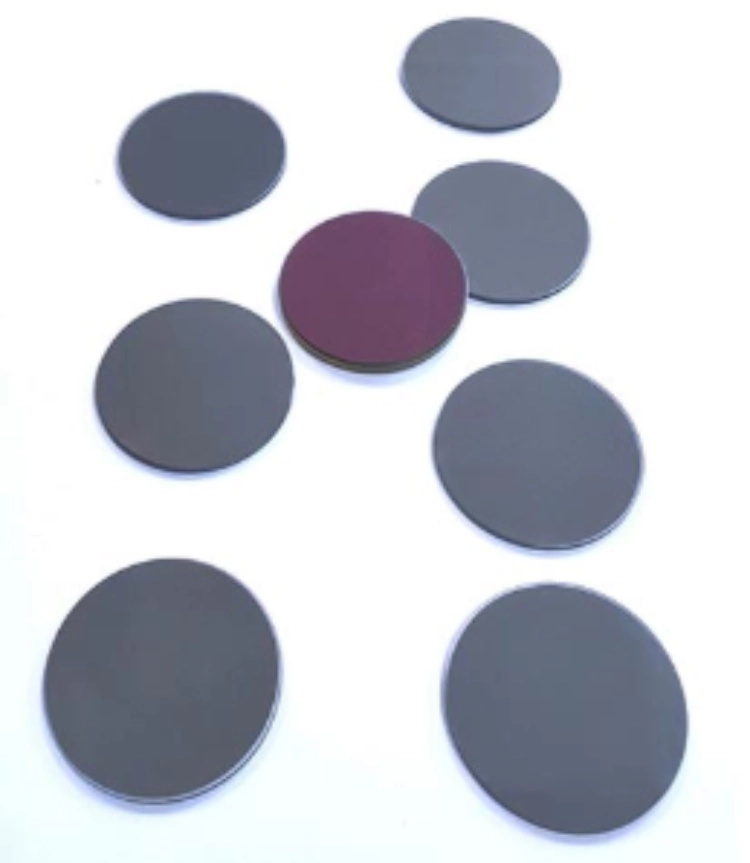
Separate the coating’s role from the base material’s role. An antireflection coating reduces surface losses where the substrate already transmits. The IAR3000-5000 antireflection filter illustrates a silicon component with a specified 3–5 µm transmission band. It is a reference for that spectral requirement. A housing window still needs its own mechanical and environmental acceptance criteria.
Review the Coating, Clear Aperture, and Mount
Call out the usable clear aperture and the outside dimensions independently. A retaining ring can cut into the useful beam even if the window meets the outside diameter on the drawing. Check the opening at the installed angle and across the full image. A tilted or recessed window can clear the central rays and clip those that serve the corners.
A round part can pass a diameter check and fail on the usable opening. Put both numbers on the drawing. Different sizes and shapes are part of BoDian’s custom work, and the optical aperture can be specified for the job. The same request can carry a substrate choice and a wavelength target for the coating. That drawing is useful again at incoming inspection. BoDian’s dimensional inspection uses calipers and micrometers to check size against the drawing tolerances. Surface inspection uses visual checks and microscopy. For a piece with polish required on both sides, the inspection also needs to account for broken edges and cracks.
How to Verify the Window in the Installed Camera
A window can look fine on the bench and vignette after the retainer goes on. Test the part with the mount fitted and leave room to compare it against the bare camera.
Compare the Same Target With and Without the Window
Start with the window out and a steady warm target against a cooler background. Save that frame. With the window fitted, take the second frame without touching focus, distance, or display range. Look at the boundary of the target in the middle of the frame and then near a corner. If a bright patch moves as a warm object beside the camera moves, investigate the reflection before changing the thermal settings.
BoDian handles substrate selection, coating and spectral testing within its production process. Its deposition equipment includes a Leybold Syrus 1350 evaporation system, a Helios 800 magnetron sputtering system and an Optorun OTFC-1300 coater. Measurements in the ultraviolet, visible and infrared can draw on Cary 5000 and Cary 7000 spectrometers and the PerkinElmer Spectrum 3. Ask which instrument and setup cover the band needed for the finished window.
A spectral performance review helps separate two kinds of loss. A low transmission curve tells you that less radiation gets through. Pair it with a reflectance curve to see how much of that loss comes from reflections. BoDian’s spectrometers can measure transmission, reflection, and absorption. The company develops optical thin films and makes infrared antireflection products for applications including thermal imaging and temperature measurement. A coated sample still needs to pass the test in its own housing.
Verify Temperature Readings Separately
The motor can have a sharp outline in both frames and give different temperature readings. Some of its signal was lost at the window, and the window itself radiates into the camera. Compare the two readings against a stable temperature reference. If the camera lets you enter a correction for external optics, set it for the installed window. Repeat the reference check once the window reaches the temperature expected in service.
There’s a practical way to start a quotation if the enclosure drawing is already fixed. Share the detector band and window drawing, with the smallest acceptable opening marked on it. BoDian takes on processing from customer drawings, samples, or supplied material. You can discuss the transmission target and the coating on the part you intend to mount.
Frequently Asked Questions
Does Tint or Tempering Make Ordinary Glass Suitable?
Treat a tinted or tempered pane like any other sample. Read its transmission curve at the thickness you plan to buy. Those labels tell you about the pane’s appearance or treatment. They don’t give you a measurement in the camera band.
Can an Anti-Reflection Coating Fix an Opaque Window?
Think of the loss inside the pane and the loss at its faces as two parts of the budget. An antireflection treatment deals with the faces. If the base material absorbs strongly in the detector band, change the base material first.
Is the Same Window Suitable for MWIR and LWIR?
A window can serve both only if its substrate and coating deliver the required transmission in both bands at the chosen thickness. Ask for curves covering the full response of each camera and run the installed check on both systems.