English
 Afrikaans
 Albanian
 Amharic
 Arabic
 Armenian
 Azerbaijani
 Basque
 Belarusian
 Bengali
 Bosnian
 Bulgarian
 Catalan
 Cebuano
 Chichewa
 Chinese (Simplified)
 Chinese (Traditional)
 Corsican
 Croatian
 Czech
Czech Danish
 Dutch
Dutch Esperanto
 Estonian
 Filipino
 Finnish
 French
 Frisian
 Galician
 Georgian
 German
 Greek
Greek Gujarati
 Haitian Creole
 Hausa
Hausa Hawaiian
 Hebrew
 Hindi
Hindi Hmong
Hmong Hungarian
 Icelandic
 Igbo
Igbo Indonesian
 Irish
Irish Italian
 Japanese
 Javanese
 Kannada
 Kazakh
 Khmer
Khmer Korean
 Kurdish (Kurmanji)
 Kyrgyz
 Lao
Lao Latin
Latin Latvian
 Lithuanian
 Luxembourgish
 Macedonian
 Malagasy
 Malay
Malay Malayalam
 Maltese
 Maori
Maori Marathi
 Mongolian
 Myanmar (Burmese)
 Nepali
 Norwegian
 Pashto
 Persian
 Polish
 Portuguese
 Punjabi
 Romanian
 Russian
 Samoan
 Scottish Gaelic
 Serbian
 Sesotho
 Shona
Shona Sindhi
 Sinhala
 Slovak
 Slovenian
 Somali
 Spanish
 Sundanese
 Swahili
 Swedish
 Tajik
Tajik Tamil
Tamil Telugu
 Thai
Thai Turkish
 Ukrainian
 Urdu
Urdu Uzbek
Uzbek Vietnamese
 Welsh
Welsh Xhosa
Xhosa Yiddish
 Yoruba
 Zulu
Zulu


A smart gate sensor can pass indoor testing and still fail outdoors. Direct sunlight, vehicle reflections, wet pavement, and changing installation angles may all enter the receiver path and weaken the real infrared signal. For parking barriers, automatic entrances, and access control gates, the infrared sensor filter is not just a small optical part. It helps decide whether the receiver reads the emitter clearly or reacts to background light.
BoDian Optical focuses on infrared optical filters and optical coating products for sensing, detection, instrumentation, and related optical systems. For outdoor smart gate projects, its work is useful because filter selection is not only about choosing a small glass part. Buyers also need to check wavelength matching, coating performance, substrate choice, mechanical size, and real installation conditions. BoDian Optical’s work in infrared filter development, coating, and optical testing is useful for projects where standard filter parts may not match the sensor module.

Why Does Sunlight Interference Affect Outdoor Smart Gate Sensors?
Outdoor gate sensors work in a less controlled optical environment than indoor sensors. The receiver is meant to read one controlled emitter signal, but outdoor light can enter through the same receiver window and reduce the contrast of that signal. This is why an infrared sensor filter for sunlight interference is often needed in smart gate designs.
Unwanted Infrared Energy From Sunlight
Sunlight contains visible light and infrared energy across a broad range. A receiver without proper optical filtering may capture both the useful emitter signal and unwanted background light. This raises the noise level around the receiver and makes it harder for the control system to judge whether an object is actually present.
Reflections and False Triggering
Smart gates are often installed near cars, metal frames, glass doors, wet pavement, or reflective signs. These surfaces can send stray light into the receiver from different angles. Once the receiver reads too much background light, the gate may open late, close too early, or report a blocked lane when no object is present.
How Does a Narrowband Infrared Filter Improve Sensor Stability?
In an infrared sensor, a narrowband filter works as a selective optical window. It allows the needed wavelength band to pass and keeps much of the surrounding light away from the receiver.
Target Wavelength Transmission
The filter should transmit the wavelength emitted by the infrared source. If the emitter wavelength and filter passband do not align, even a well-made filter can reduce useful signal strength. For a smart gate infrared sensor filter, wavelength matching should come before size confirmation or housing details.
Background Light Blocking
A narrowband structure helps reduce visible light and non-target infrared energy reaching the receiver. It cannot remove every possible disturbance, but it can lower the optical noise caused by sunlight, lamps, and reflected infrared energy. This is especially useful for outdoor entrances and parking lanes exposed to changing light during the day.
How to Choose an Infrared Sensor Filter for Smart Gate Applications?
An infrared sensor filter looks simple, but the selection is not. A filter may be small, yet it sits between a harsh outdoor environment and the receiver. The right choice depends on wavelength, bandwidth, blocking, angle, and mechanical fit.
Common 850 nm and 940 nm Reference Wavelengths
Many outdoor smart gate sensors use near-infrared emitter and receiver pairs. In practical sensor design, 850 nm and 940 nm are common reference wavelengths. This does not mean one wavelength is automatically better for every project. An 850 nm design may be considered when stronger receiver response is needed in some systems, while 940 nm may be considered when lower visible red glow is preferred.
The final decision should follow the emitter peak wavelength and the receiver sensitivity curve. For outdoor gates, buyers should also check sunlight exposure, detection distance, installation angle, and the optical window in front of the receiver.
Matching the Filter to the Emitter and Receiver
The center wavelength of the filter should match the infrared emitter, while the passband should fit the receiver’s useful response range. If the filter is shifted too far from the emitter wavelength, the receiver may lose signal. If the passband is too wide, more background light may enter. This balance is one of the most important points in selecting an infrared sensor filter.
Balancing Bandwidth, Blocking, and Installation Angle
A narrower passband can improve selectivity, but it may also be more sensitive to angle changes and assembly tolerance. In a gate sensor, light may not always enter the filter at a perfect normal angle. The filter design should consider real installation conditions, including sensor spacing, housing shape, receiver window position, and expected angle of incidence.
| Selection Point | Why It Matters | Risk if Ignored |
| Center Wavelength | Keeps the filter aligned with the emitter | Useful signal may be weakened |
| 850 nm / 940 nm Reference | Helps buyers start wavelength discussion | Wrong assumption may lead to poor receiver response |
| Bandwidth | Controls how much nearby light enters | Too wide may allow more interference; too narrow may reduce tolerance |
| Blocking Range | Reduces sunlight and ambient light | False triggering may continue outdoors |
| Angle of Incidence | Affects real passband behavior | Lab result may not match installed performance |
| Size and Shape | Fits the sensor module | Assembly redesign or leakage around the window may occur |
Common Filter Selection Mistakes
One common mistake is choosing a filter only by “IR wavelength” without checking the emitter peak wavelength. Another mistake is choosing the narrowest possible bandwidth without considering angle shift and assembly tolerance. For outdoor smart gates, a filter may perform poorly if the receiver window, front cover, and installation angle are ignored. Buyers should also avoid treating 850 nm and 940 nm as universal answers. The final selection should follow the actual emitter and receiver design.
What Should Buyers Confirm Before Customizing an Outdoor Infrared Sensor Filter?
A custom infrared sensor filter for outdoor devices is useful when the system has a fixed housing, non-standard window size, special working distance, or strict sunlight resistance requirement. Before ordering samples, buyers should prepare enough information for the supplier to judge the optical and mechanical feasibility.
Optical Parameters
The basic request should include center wavelength, bandwidth, transmission target, blocking range, and working angle. If these values are not clear, provide the emitter model, receiver type, and application description. A supplier can then help translate the sensor requirement into filter specifications.
Mechanical and Installation Requirements
The filter must physically match the device. If the filter sits behind a plastic or glass cover, the cover material may also affect signal strength. This is often missed during early design review.
Outdoor Reliability Requirements
Outdoor gates face heat, moisture, dust, vibration, and cleaning. The filter should be treated as part of the full sensor module, not as a loose optical part. Buyers should ask how the filter will be tested, how samples will be checked, and whether the same specification can be repeated in later batches.
Why Choose BoDian Optical for Custom Infrared Narrow Bandpass Filters?
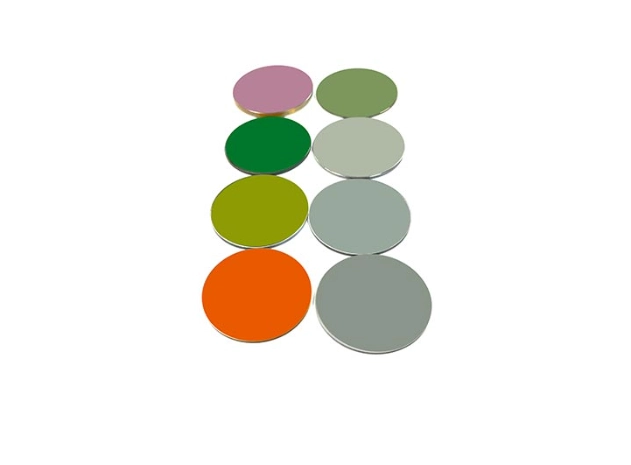
For projects that need an infrared sensor filter matched to a real outdoor application, BoDian Optical’s Custom infrared narrow bandpass filters are a practical product category to review. They fit projects where the receiver must focus on a controlled infrared band rather than accept broad outdoor light.
Custom Filter Design for Real Sensor Layouts
A smart gate project may need a specific wavelength, compact size, special shape, or filter matched to a receiver cavity. BoDian Optical can support customized infrared filter requirements based on wavelength, size, and application needs. This helps equipment manufacturers keep the filter aligned with an existing sensor housing instead of redesigning the full module.
Optical Coating and Testing Support
Filter selection should not stop at a drawing. The spectral curve, passband, blocking region, and surface quality all need checking. BoDian Optical’s optical coating and testing support helps buyers compare the requested specification with real measured performance before moving from samples to production.
For outdoor smart gates, automatic doors, and parking barrier sensors, BoDian Optical’s infrared narrow bandpass filter series is more suitable when the sensor already has a fixed emitter wavelength and the main issue is sunlight or reflected light entering the receiver. It is a better starting point than a general optical cover when the project needs controlled wavelength transmission.
Conclusion and Contact
A narrowband infrared sensor filter is worth considering when an outdoor smart gate works well indoors but becomes unstable under sunlight, vehicle reflections, or changing installation angles. If the main issue is weak emitter power, poor receiver position, or unstable circuit design, the filter can reduce optical noise but should not be treated as the only fix. Share the emitter wavelength, receiver model, filter size, installation angle, and working environment with BoDian’s team for a more accurate review.
FAQ
Q: What does an infrared sensor filter do in a smart gate system?
A: In a smart gate system, the filter sits in front of the receiver and helps cut out light the sensor does not need. The main job is simple: let the useful IR signal pass and reduce sunlight, lamp light, or reflected light from cars and wet ground. For a smart gate infrared sensor filter, the key is not only the size, but whether the passband matches the emitter and the real outdoor working angle.
Q: Should I choose 850 nm or 940 nm for an infrared sensor filter for sunlight interference?
A: Both 850 nm and 940 nm are common in near-infrared sensing, but neither one should be picked just because it is common. Check the emitter first, then check the receiver response. Some projects use 850 nm because the receiver side can get a stronger signal. Some use 940 nm because the visible red glow is lower. For outdoor gates, also check sunlight direction, detection distance, front cover material, and installation angle before confirming the filter.
Q: How do buyers know how to choose an infrared sensor filter for an outdoor gate project?
A: Start with the emitter wavelength, receiver model, target distance, filter size, and working environment. Then check bandwidth, blocking range, and angle of incidence. A narrowband filter can help if the main issue is sunlight or reflected light entering the receiver. If the housing size is fixed or the normal filter does not match the module, a custom infrared sensor filter for outdoor devices is usually easier to work with than forcing a standard part into the design.