English
 Afrikaans
 Albanian
 Amharic
 Arabic
 Armenian
 Azerbaijani
 Basque
 Belarusian
 Bengali
 Bosnian
 Bulgarian
 Catalan
 Cebuano
 Chichewa
 Chinese (Simplified)
 Chinese (Traditional)
 Corsican
 Croatian
 Czech
Czech Danish
 Dutch
Dutch Esperanto
 Estonian
 Filipino
 Finnish
 French
 Frisian
 Galician
 Georgian
 German
 Greek
Greek Gujarati
 Haitian Creole
 Hausa
Hausa Hawaiian
 Hebrew
 Hindi
Hindi Hmong
Hmong Hungarian
 Icelandic
 Igbo
Igbo Indonesian
 Irish
Irish Italian
 Japanese
 Javanese
 Kannada
 Kazakh
 Khmer
Khmer Korean
 Kurdish (Kurmanji)
 Kyrgyz
 Lao
Lao Latin
Latin Latvian
 Lithuanian
 Luxembourgish
 Macedonian
 Malagasy
 Malay
Malay Malayalam
 Maltese
 Maori
Maori Marathi
 Mongolian
 Myanmar (Burmese)
 Nepali
 Norwegian
 Pashto
 Persian
 Polish
 Portuguese
 Punjabi
 Romanian
 Russian
 Samoan
 Scottish Gaelic
 Serbian
 Sesotho
 Shona
Shona Sindhi
 Sinhala
 Slovak
 Slovenian
 Somali
 Spanish
 Sundanese
 Swahili
 Swedish
 Tajik
Tajik Tamil
Tamil Telugu
 Thai
Thai Turkish
 Ukrainian
 Urdu
Urdu Uzbek
Uzbek Vietnamese
 Welsh
Welsh Xhosa
Xhosa Yiddish
 Yoruba
 Zulu
Zulu


Smart homes increasingly use thermal sensing to identify unusual heat, monitor occupied spaces, and support safer appliance control. Far-Infrared Filters sit in front of the detector and limit the radiation that reaches it. A correctly matched filter preserves the thermal band the sensor needs while reducing unrelated light that may weaken contrast or disturb calibration. The filter does not make the system intelligent by itself; it makes the optical input more controlled.

Why Do Smart Homes Need Spectral Control for Heat Monitoring?
A thermal sensor receives infrared radiation from a target and converts that energy into an electrical signal. The reading is shaped by target temperature, emissivity, viewing angle, lens, protective window, detector package, electronics, and calibration. A smart home thermal monitoring system therefore cannot be designed around the detector specification alone.
Thermal Signals Are Mixed with Unwanted Radiation
Every object above absolute zero emits infrared radiation, but the useful part depends on the detector and task. A module watching an electrical panel may need to recognize a developing hotspot against a stable background. A kitchen sensor may need to separate normal heating from a persistent abnormal rise.
Radiation outside the calibrated region can also reach the detector. Reflections from lamps, nearby warm surfaces, windows, and internal optical parts may alter the baseline. Far-infrared filters work as spectral gates: they transmit a selected thermal range and suppress wavelengths that do not support the measurement.
The Filter Defines the Detector’s Working Window
A broadband filter does not simply “let more infrared through.” Its passband must overlap the detector response and the transmission ranges of the lens and window. A wider band can increase received energy, but it can also admit more background. The correct balance depends on whether the module measures temperature, detects relative heat contrast, or only triggers an alert.
BoDian Optical develops thin-film components for ultraviolet, visible, and infrared systems, including broadband, narrowband, long wave pass, short wave pass, and anti-reflection designs. Its work covers substrate selection, coating, dimensional inspection, and spectral measurement of transmittance, reflectance, and absorbance.
How Do Far-Infrared Filters Improve Detection Reliability?
The main value of far-infrared filters for smart home heat monitoring is controlled energy collection. The filter should help the detector receive enough useful radiation while keeping the response inside a defined spectral window.
More Useful Thermal Energy Reaches the Detector
Thermal imaging and passive heat detection usually require a broader band than gas sensing or active near-infrared control. Broadband or long wave pass structures are therefore common directions. BoDian Optical’s Infrared Broad-Band Pass Filters include several passband options for infrared detectors, security monitoring, and temperature-related systems. The category is a starting point rather than a final selection; detector response and optical geometry still control the choice.
Out-of-Band Radiation Is Reduced
An infrared broadband pass filter for thermal sensors uses multilayer thin films to create transmission and blocking regions. The coating changes how selected wavelengths are transmitted, reflected, or absorbed. Proper blocking reduces energy that does not belong in the calibrated channel.
This matters for an infrared filter for overheating detection. A false alarm may come from changing background heat rather than a component fault. A missed alarm may occur when useful contrast is weakened by low throughput, an undersized clear aperture, contamination, or a mismatched passband. The filter reduces one part of this risk, but it cannot correct wrong emissivity settings, reflected heat, poor field-of-view control, or a target smaller than the measurement spot.
The Complete Optical Path Determines Performance
The filter, lens, window, housing, detector, and calibration form one measurement chain. A curve measured at normal incidence may not represent the installed result. If the filter is tilted or used in a converging beam, its response can shift toward shorter wavelengths. Wide fields of view therefore need an angle-of-incidence review.
Mechanical details also matter. Chipped edges, coating non-uniformity, contamination, or a restricted clear aperture can lower throughput. Acceptance checks should cover spectral performance, dimensions, surface condition, and clear aperture.
Where Can Heat Monitoring Add Value in Smart Homes?
The same optical principle can serve several household systems, but each application needs its own alarm logic and thermal range. Selection should begin with the fault or condition the module must recognize.
Electrical and Battery Overheating
Wall-mounted energy equipment, charging modules, power adapters, distribution boxes, and battery enclosures may develop localized heat before obvious failure. A thermal channel can monitor the area without touching live components. The expected hotspot must fill enough of the field of view, and alarm limits should account for normal load cycles.
HVAC and Indoor Thermal Distribution
HVAC controls can use thermal information to identify room temperature patterns or confirm whether occupied zones are receiving heat. A sensor near an outlet may read supply airflow instead of the room. A unit facing a sunlit window may also see a different background at night. These conditions should be reproduced during prototype testing.
Kitchens, Appliances, and Safety Monitoring
Ovens, cooking surfaces, heating elements, and compact appliances can benefit from non-contact thermal supervision. A module may detect persistent heating after a control command or check whether a surface has cooled. Far-infrared filters help define the received band, but the system must still separate a normal operating cycle from a fault.
| Smart Home Task | Optical Priority | Main Integration Risk |
| Electrical hotspot monitoring | Stable thermal contrast | Target too small in the field of view |
| HVAC feedback | Repeatable room-level response | Airflow or window background dominates |
| Appliance overheating detection | Controlled passband and calibration | Normal heat cycle mistaken for a fault |
| Privacy-friendly presence sensing | Body-to-background contrast | Stationary occupants or warm objects |
How Should Buyers Select Far-Infrared Filters for a Sensor Module?
Thermal sensor filter selection should move from the assembled system back to the optical component. Ordering only by a broad label such as “far-infrared filter” leaves too many conditions undefined.
Match the Passband to the Detector
Begin with the detector response curve, target temperature, lens and window transmission, and required function. Then define the useful passband, minimum in-band transmission, blocking interval, and acceptable leakage. For procurement, the exact spectral range matters more than the general wavelength label.
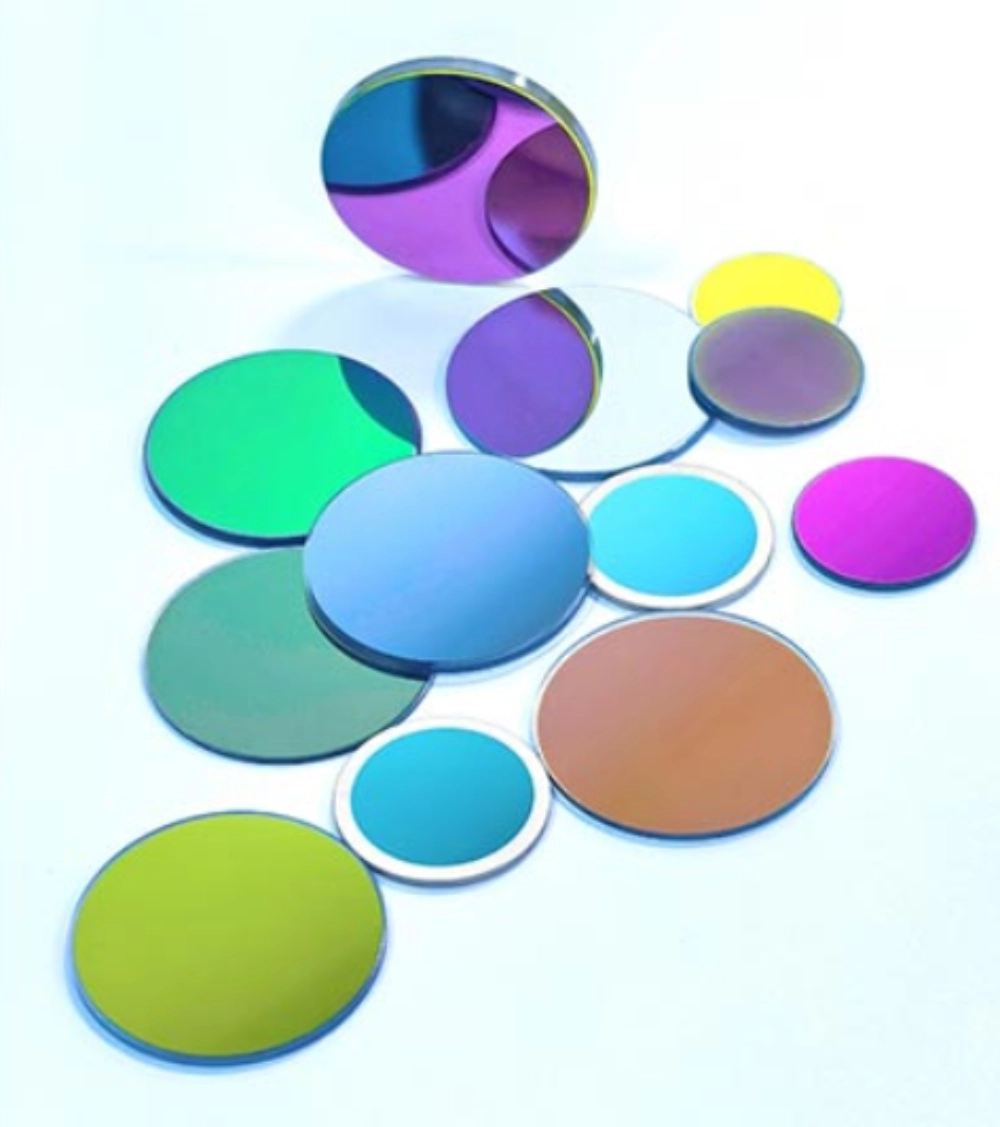
The IWBP8075-9400-Infrared broad-band pass filter uses a Ge substrate, has a listed high-transmission area of 8075–9400 nm, peak transmittance of at least 90%, and a stated blocking range of 200–16000 nm. Its applications include infrared detectors, security monitoring, and industrial temperature measurement. It is relevant only when the detector and system are designed around that band; it is not a universal smart home filter.
Review Optical and Mechanical Specifications Together
A purchase drawing should define passband limits, blocking limits, test angle, operating temperature, dimensions, clear aperture, coating side, and surface requirements. Germanium, silicon, sapphire, calcium fluoride, zinc sulfide, and zinc selenide cover different infrared windows, so they are not interchangeable.
Buyers should also state whether blocking is an average value or a maximum at every wavelength. Peak transmission alone does not describe transmission across the whole working band. These details affect calibration, signal margin, and production acceptance.
Validate the Filter in the Assembled Module
Prototype approval should include spectral inspection and installed testing. Compare the measured curve with detector and lens data, then test the module under expected temperature, angle, background, and mounting conditions. Check signal level, baseline stability, spatial uniformity, and calibration shift.
A poorly matched filter can lead to repeated calibration, electronics changes, holder redesign, rejected assemblies, or field replacement. Far-Infrared Filters should therefore be approved as part of the complete optical chain, not as an isolated coated part.
For projects with uncertain passband limits, detector matching questions, or compact mounting constraints, share the detector curve, lens and window data, angle range, target temperature, drawing, and acceptance method with BoDian Optical. Its engineering team can review these inputs before prototype production. Use the project contact page to organize the discussion around measurable requirements rather than a general product name.
FAQ
Q1. What Do Far-Infrared Filters Do in a Smart Home Thermal Sensor?
- They define which infrared wavelengths reach the detector. This can preserve the band used for heat contrast or temperature measurement while reducing unrelated radiation. They do not replace correct calibration, field-of-view design, or alarm logic.
Q2. Is a Wider Infrared Passband Always Better for Heat Monitoring?
- No. A wider passband may deliver more signal, but it can also admit more background radiation. The passband should match the detector, lens, window, target temperature, and required function.
Q3. Is IWBP8075-9400 Suitable for Every Smart Home Heat Sensor?
- No. Its 8075–9400 nm high-transmission area and Ge substrate must match the detector and optical system. It is useful for modules designed around that band, while other systems may require a different broadband or long wave pass design.