English
 Afrikaans
 Albanian
 Amharic
 Arabic
 Armenian
 Azerbaijani
 Basque
 Belarusian
 Bengali
 Bosnian
 Bulgarian
 Catalan
 Cebuano
 Chichewa
 Chinese (Simplified)
 Chinese (Traditional)
 Corsican
 Croatian
 Czech
Czech Danish
 Dutch
Dutch Esperanto
 Estonian
 Filipino
 Finnish
 French
 Frisian
 Galician
 Georgian
 German
 Greek
Greek Gujarati
 Haitian Creole
 Hausa
Hausa Hawaiian
 Hebrew
 Hindi
Hindi Hmong
Hmong Hungarian
 Icelandic
 Igbo
Igbo Indonesian
 Irish
Irish Italian
 Japanese
 Javanese
 Kannada
 Kazakh
 Khmer
Khmer Korean
 Kurdish (Kurmanji)
 Kyrgyz
 Lao
Lao Latin
Latin Latvian
 Lithuanian
 Luxembourgish
 Macedonian
 Malagasy
 Malay
Malay Malayalam
 Maltese
 Maori
Maori Marathi
 Mongolian
 Myanmar (Burmese)
 Nepali
 Norwegian
 Pashto
 Persian
 Polish
 Portuguese
 Punjabi
 Romanian
 Russian
 Samoan
 Scottish Gaelic
 Serbian
 Sesotho
 Shona
Shona Sindhi
 Sinhala
 Slovak
 Slovenian
 Somali
 Spanish
 Sundanese
 Swahili
 Swedish
 Tajik
Tajik Tamil
Tamil Telugu
 Thai
Thai Turkish
 Ukrainian
 Urdu
Urdu Uzbek
Uzbek Vietnamese
 Welsh
Welsh Xhosa
Xhosa Yiddish
 Yoruba
 Zulu
Zulu


A security camera can use a good sensor and lens, yet still show daytime color shift or weak night images if the wrong light reaches the detector. Infrared Filters help control this problem at the optical level. For security camera designers, module suppliers, and procurement teams, the real question is not only whether a filter can block or pass infrared light. The filter must match the camera’s day-night imaging mode, sensor response, illumination source, size limit, and outdoor working conditions.
BoDian Optical manufactures optical thin-film components and infrared filter products for imaging, detection, instruments, security, and surveillance applications. Its product range includes infrared short pass filter, infrared long pass filter, infrared broadband filter, infrared narrowband filter, and infrared anti-reflection products. The company also supports customized infrared filters based on special wavelength, size, and frame requirements. For ordinary CCTV day-night switching, this makes BoDian Optical more relevant as a custom filter supplier than as a one-size-fits-all camera accessory vendor.

Why Do Security Cameras Need Infrared Control?
Day-night CCTV cameras work across two very different lighting states. During the day, the camera needs accurate visible-light imaging. At night, the same device may rely on near-infrared illumination to see objects in low light. Without the right filter design, one mode can interfere with the other.
Daytime Color Shift From Infrared Leakage
Most image sensors can respond to more than visible light. If unwanted infrared light enters during daytime imaging, green plants, dark clothing, vehicle paint, or wall surfaces may look different from their real colors. For monitoring tasks such as identity checking, vehicle recognition, or entrance control, poor color reproduction can make footage less useful.
Night Vision Needs Controlled Infrared Entry
At night, the camera often needs infrared illumination to capture a usable black-and-white image. The filter system must allow the useful near-infrared band to reach the sensor while keeping the optical path clean. This is why infrared filters for day and night imaging must be selected based on the actual camera design, not only by product name.
Filter Choice Affects Image Processing
Software can sharpen edges or adjust brightness, but it cannot fully remove optical errors created before the light reaches the sensor. If the wrong spectral band enters the camera, the image may already contain color bias, haze, or background noise. Good optical filtering gives the image processor cleaner source data.
How Do Infrared Filters Improve Day and Night Imaging?
For buyers searching for infrared filters for security cameras, it helps to separate two tasks: daytime visible imaging and night infrared imaging. A day-night camera may need a switching mechanism, a fixed IR-blocking design, or a custom filter combination depending on the final product.
Visible-Light Protection in Day Mode
In day mode, the camera usually needs to limit infrared light so that the visible image remains natural. This is where an IR-cut or infrared blocking design becomes useful. A custom IR-cut filter solution can be designed around the required visible-light transmission range and infrared blocking range, helping the camera reduce color shift in normal daylight operation.
Infrared Transmission in Night Mode
In night mode, the system may allow a near-infrared illumination band to reach the sensor. The goal is not to pass every infrared wavelength. The better approach is to pass the useful band and reduce unnecessary spectral interference. For some night-vision applications, buyers may also evaluate high transmittance infrared filters for night vision systems, especially when the camera has strict low-light image requirements.
Cleaner Contrast in Mixed Lighting
Security scenes often include street lamps, vehicle lights, reflective glass, and infrared fill light at the same time. If the filter does not control the spectrum properly, the camera may produce glare, uneven brightness, or weak object edges. A suitable filter helps improve contrast before digital processing starts.
Which BoDian Optical Product Direction Fits CCTV Day-Night Switching?
BoDian Optical’s standard infrared product categories can support different imaging needs, but ordinary CCTV day-night switching should be treated carefully. It is better to discuss the actual camera mode and spectral target first, then decide whether a standard product category or a customized design is more suitable.
Infrared Short Wave Pass Filter for Blocking Longer Infrared Interference
BoDian Optical offers an infrared short wave pass filter category. This type of filter is designed to pass shorter wavelengths within its target range while blocking longer-wavelength infrared interference. For security imaging projects, it may be useful when the camera or optical module needs to reduce unwanted longer infrared components before they reach the detector.
This product direction is more suitable for infrared imaging modules, optical instruments, or special security imaging systems than for every common CCTV camera. Buyers should check the filter curve against the sensor response before using it in a standard camera project.
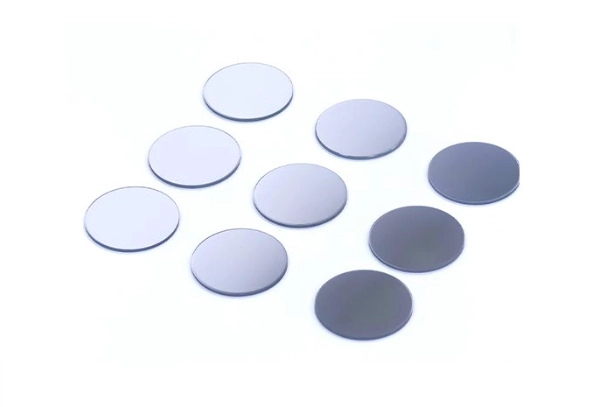
Custom IR-Cut Filter Solution for Daytime Color Accuracy
For ordinary CCTV cameras, the more direct product direction is a custom IR-cut filter solution. BoDian Optical states that it can customize infrared filters according to special wavelength, size, and frame requirements. This matters because camera modules differ in lens structure, sensor type, mechanical space, and switching mechanism.
A custom IR-cut filter should be discussed around visible-light transmission, near-infrared blocking, coating durability, size tolerance, and assembly method. If the camera must switch between day and night modes, the filter design also needs to work with the mechanical switching structure.
Custom Infrared Filters for Security Imaging Systems
Some projects do not fit a standard CCTV structure. Examples include compact surveillance modules, outdoor monitoring units, smart access cameras, industrial perimeter cameras, and low-light imaging devices. In these cases, custom infrared filters for security imaging systems can help the buyer match the filter to the actual optical path instead of forcing a generic part into the design.
What Should Buyers Check Before Selecting Infrared Filters?
A filter that works in one camera may fail in another. Before placing an order, buyers should ask for technical details that connect the filter to the real device, not just the filter category.
Sensor Response and Light Source Match
The first step is to check the sensor response curve and night illumination wavelength. If the filter blocks the useful wavelength, the night image may become weak. If it passes too much unwanted light, daytime color or nighttime contrast may suffer.
Transmission, Blocking, and Cutoff Position
For infrared optical filters for security camera modules, transmission and blocking must be reviewed together. High transmission helps signal strength, while strong blocking reduces unwanted interference. The cutoff position must match the camera’s visible and infrared working ranges.
Size, Coating, and Working Environment
Security cameras may be used outdoors, near roads, in factories, or around building entrances. The filter should match the module size and survive the expected working environment. Buyers should confirm surface quality, coating side, thickness, mounting method, and long-term stability requirements before mass production.
| Selection Need | Better Product Direction | Main Reason |
| Daytime color accuracy | Custom IR-cut filter solution | Blocks unwanted infrared light during visible imaging |
| Night infrared visibility | Infrared pass or matched custom filter | Allows useful near-infrared signal to reach the sensor |
| Special security imaging | Infrared short wave pass filter or custom design | Controls selected infrared bands for cleaner imaging |
| Compact camera module | Custom size and coating design | Fits mechanical and spectral limits together |
How Can BoDian Optical Support Security Camera Filter Projects?
Security camera projects often move from prototype testing to repeated production. That means buyers need more than a product name. They need a filter curve that fits the optical system and a supplier that can discuss both coating and integration requirements.
Thin-Film Design Based on Imaging Requirements
BoDian Optical works with infrared thin-film coating products across multiple filter categories. For camera projects, this supports wavelength control, interference reduction, and imaging clarity when the filter design is matched properly.
Custom Size and Spectral Requirements
If a standard infrared short wave pass filter does not match the CCTV design, a customized IR-cut or infrared blocking filter may be more suitable. Buyers should prepare the target cutoff wavelength, transmission range, blocking range, size drawing, and installation structure.
Service Support for Project Matching
A good filter selection process starts with the camera’s real working conditions. Share whether the system is for indoor CCTV, outdoor monitoring, access control, industrial surveillance, or special infrared imaging. This helps narrow the choice between standard Infrared Filters and a custom coating design.
If your team is comparing a standard infrared short wave pass filter, a custom IR-cut filter solution, or another filter curve for a camera module, prepare the sensor response curve, target day-night mode, drawing size, and working environment notes before you contact BoDian Optical. These details make the discussion more useful for both engineering and purchasing teams.
FAQ
Q: What Do Infrared Filters Do in Security Cameras?
A: Infrared Filters control how infrared light enters the camera sensor. In day mode, they can help reduce infrared leakage that causes color shift. In night mode, they can support useful infrared imaging when matched with the illumination source and sensor.
Q: Are Infrared Short Wave Pass Filters the Same as CCTV IR-Cut Filters?
A: No. An infrared short wave pass filter passes shorter wavelengths in its designed range and blocks longer infrared interference. A CCTV IR-cut filter is usually designed to block infrared light during daytime visible imaging. For ordinary CCTV day-night switching, a custom IR-cut filter solution is usually more directly relevant.
Q: How Should I Choose Infrared Filters for Security Cameras?
A: Start with the sensor response curve, day-night working mode, infrared illumination wavelength, required blocking range, and module size. For standard camera modules, custom IR-cut design may be needed. For special infrared security imaging, an infrared short wave pass filter or another custom infrared filter may be more suitable.