English
 Afrikaans
 Albanian
 Amharic
 Arabic
 Armenian
 Azerbaijani
 Basque
 Belarusian
 Bengali
 Bosnian
 Bulgarian
 Catalan
 Cebuano
 Chichewa
 Chinese (Simplified)
 Chinese (Traditional)
 Corsican
 Croatian
 Czech
Czech Danish
 Dutch
Dutch Esperanto
 Estonian
 Filipino
 Finnish
 French
 Frisian
 Galician
 Georgian
 German
 Greek
Greek Gujarati
 Haitian Creole
 Hausa
Hausa Hawaiian
 Hebrew
 Hindi
Hindi Hmong
Hmong Hungarian
 Icelandic
 Igbo
Igbo Indonesian
 Irish
Irish Italian
 Japanese
 Javanese
 Kannada
 Kazakh
 Khmer
Khmer Korean
 Kurdish (Kurmanji)
 Kyrgyz
 Lao
Lao Latin
Latin Latvian
 Lithuanian
 Luxembourgish
 Macedonian
 Malagasy
 Malay
Malay Malayalam
 Maltese
 Maori
Maori Marathi
 Mongolian
 Myanmar (Burmese)
 Nepali
 Norwegian
 Pashto
 Persian
 Polish
 Portuguese
 Punjabi
 Romanian
 Russian
 Samoan
 Scottish Gaelic
 Serbian
 Sesotho
 Shona
Shona Sindhi
 Sinhala
 Slovak
 Slovenian
 Somali
 Spanish
 Sundanese
 Swahili
 Swedish
 Tajik
Tajik Tamil
Tamil Telugu
 Thai
Thai Turkish
 Ukrainian
 Urdu
Urdu Uzbek
Uzbek Vietnamese
 Welsh
Welsh Xhosa
Xhosa Yiddish
 Yoruba
 Zulu
Zulu


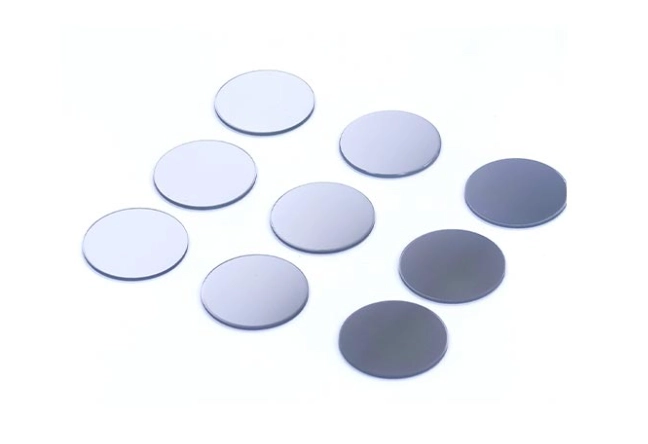
A sensor can only make a reliable decision after it receives the right optical signal. In security cameras, gas detectors, thermal modules, and factory monitoring devices, wrong wavelength input can lead to weak images, unstable readings, or repeated calibration problems. Infrared Filters help control what reaches the detector before software, AI, or a control board starts processing the data. For buyers, the real question is not whether a filter is needed, but which filter matches the device function, target signal, working environment, and mechanical design.

Why Do IoT Security and Industrial Devices Need Better Optical Sensing Accuracy?
Many IoT and industrial devices work outside ideal lab conditions. They may face sunlight, heat sources, reflective metal parts, dust, moisture, vibration, or mixed gas environments. A detector without proper wavelength control may collect too much unwanted radiation. The result can be poor contrast, noisy signals, or unstable measurements.
BoDian Optical manufactures optical thin-film components for infrared, visible, and other spectral applications. Its infrared product range includes narrow bandpass filters, long wave pass filters, short wave pass filters, broadband filters, anti-reflection filters, and custom designs. For buyers developing IoT detection modules, security monitoring equipment, gas analyzers, or industrial temperature systems, the useful value is not only a standard part number. The filter must match wavelength, substrate, size, coating design, detector response, and installation space.
Controlled Wavelength Bands Before Data Processing
Software can classify and compare data, but it cannot recover optical information that was not captured correctly. The detector must first receive a controlled wavelength band. A suitable infrared filter helps reduce unwanted light before it becomes an electrical signal.
Compact Sensor Designs Need Early Filter Matching
For infrared filters for IoT sensors, the selection should start from the emitter wavelength, detector response, available mounting space, and angle of incidence. A small door sensor, smart gate module, or compact factory device may not have enough space for a catalog filter unless the optical path is planned early.
How Do Optical Filters Improve Security and Smart Monitoring Systems?
Security devices often work under unstable lighting. Vehicle headlights, street lamps, direct sun, infrared LEDs, and reflective surfaces can all affect the image sensor. A filter does not replace the camera module or algorithm, but it can help the system receive a cleaner signal before image processing.
Lower Background Light Interference
For infrared filters for security cameras, the goal is to limit unwanted light while keeping the useful sensing band. This is especially helpful in perimeter monitoring, smart parking entrances, warehouse doors, and outdoor detection systems.
Better Input for Recognition Algorithms
AI-based recognition depends on stable input. If image contrast changes heavily between morning, night, and strong backlight, the algorithm may need more correction. A matched infrared filter helps reduce part of that variation at the optical level.
Custom Design Instead of Forced Product Matching
Security camera projects should not copy a gas-detection filter into the imaging path. The filter normally needs to match the illumination wavelength, sensor response, lens structure, and outdoor light conditions. For this type of project, a custom infrared filter design is often more practical.
How Can Infrared Filters Support Industrial Gas Detection?
Gas detection is one of the strongest use cases for narrow bandpass filters. Many gas sensors depend on absorption at a selected wavelength. If the passband is not matched properly, the detector may receive nearby signals from other gases or background radiation. That can make the reading less stable, especially after the device moves from bench testing to field use.
Target Wavelength Isolation for Gas Sensors
For infrared filters for gas detection, buyers should confirm the target gas, absorption band, center wavelength, bandwidth, peak transmittance, blocking range, substrate, and detector response. The filter should also fit the module without creating alignment or sealing problems.
INBP10560 for SF₆ Detection Systems
For SF₆ detection modules, INBP10560 is a suitable reference product. It is an infrared narrow bandpass filter using GE substrate, with CWL 10560±70 nm, HPB 240±20 nm, Tp ≥90%, and blocking from 400-14000 nm with T<1%. These details are important because SF₆ detection needs a defined passband and controlled out-of-band transmission, not a general infrared window.
INBP10485 for C₂H₄, O₃, and VOCs Monitoring
For C₂H₄, O₃, or VOCs monitoring projects, INBP10485 is more relevant. It uses GE substrate, with CWL 10485±100 nm, HPB 1035±220 nm, Tp ≥90%, and blocking from 100-16000 nm with T<1%. This wider half bandwidth makes it useful for selected gas-monitoring designs where the device needs suitable coverage around the specified infrared band.
Which Filter Direction Fits Temperature and Thermal Sensing?
Temperature measurement and thermal sensing do not work the same way as gas detection. In many thermal applications, the useful signal comes from emitted long-wave infrared radiation. A narrow gas filter may reduce too much useful energy if the device actually needs broader long-wave transmission.
Long-Wave Infrared Signal Selection
An infrared long pass filter allows longer infrared wavelengths to pass while blocking shorter wavelengths. This helps thermal devices improve signal-to-noise performance in temperature measurement, heat source detection, night monitoring, and industrial inspection.
ILP10000 for Industrial Temperature Measurement
For thermal detection projects, ILP10000 is the better direction among the listed products. It is positioned for industrial temperature measurement and long-wave infrared applications. If the device needs an infrared long pass filter for temperature measurement, ILP10000 is more suitable than INBP10560 or INBP10485 because the system needs long-wave passage rather than a narrow gas absorption band.
Harsh Conditions Need Mechanical Confirmation
Industrial temperature devices may work near hot equipment, moving lines, enclosed housings, or dusty production areas. Before sampling, buyers should confirm detector type, filter diameter, thickness, coating side, mounting method, working temperature, and whether the filter needs extra protection inside the module.
How Should Buyers Choose the Right Filter for IoT and Industrial Devices?
A good filter choice starts from the device function, not from the product category name. A gas analyzer, security camera, and thermal module may all use infrared technology, but each one needs a different optical path.
| Device Requirement | Suitable Filter Direction | Recommended BoDian Optical Product | Check Before Sampling |
| SF₆ gas detection | Narrow bandpass around the target gas signal | INBP10560 | Target gas, detector response, optical path length, blocking range |
| C₂H₄, O₃, or VOCs monitoring | Narrow bandpass for selected gas bands | INBP10485 | Gas type, cross-interference risk, calibration method, module space |
| Industrial temperature measurement | Long-wave infrared transmission | ILP10000 | Temperature range, detector type, working environment, mounting structure |
| Security camera or IoT sensor | Custom wavelength and size matching | Custom infrared filter | Emitter wavelength, lens structure, angle of incidence, outdoor light |
| Prototype sensing module | Custom thin-film design support | Custom infrared filter | Drawing, substrate, diameter, thickness, tolerance, coating need |
Clear Selection Logic for Different Devices
For a gas detection module, start with the target gas and its absorption band. INBP10560 is more suitable when the project is built around SF₆ detection, while INBP10485 fits projects related to C₂H₄, O₃, or VOCs monitoring. For temperature measurement or thermal sensing, ILP10000 is the better direction because the system needs long-wave infrared transmission instead of a narrow gas absorption window.
Key Specifications to Review Together
For infrared filters for industrial sensing, center wavelength, bandwidth, transmittance, and blocking range should be reviewed as one group. A filter with high transmittance but weak blocking may still cause unstable readings. A filter with the correct wavelength but unsuitable size may create assembly issues. Substrate choice also matters, especially in mid- and long-wave infrared systems.
Common Selection Mistakes to Avoid
One common mistake is choosing a filter only by wavelength name without checking detector response and blocking range. In gas detection, this may allow nearby infrared signals to enter the sensor and reduce reading stability. In thermal sensing, choosing a narrow bandpass filter when the device needs broader long-wave transmission can weaken useful signal. In compact IoT devices, mechanical fit is another risk. Diameter, thickness, edge treatment, and installation angle should be checked early, especially when the filter sits close to the lens or detector package.
How Can BoDian Optical Support Custom Infrared Filter Projects?
Many IoT and industrial projects need more than a standard product page. The detector, light source, lens, housing, and working environment all affect the final filter choice. A custom filter may be needed when the device has a special wavelength, non-standard size, strict blocking need, or limited installation space.
Before sending a filter request, prepare the target wavelength, allowed tolerance, bandwidth, transmittance target, blocking range, filter size, substrate preference, and working environment. If the device is already designed, a simple optical layout or mechanical drawing will help the supplier check whether a standard part is enough or a custom coating design is needed.
If your project is at the design, sampling, or replacement stage, share the target wavelength, detector type, available filter space, and application description through the contact page. Clear project details make it easier to match the right filter, compare standard and custom options, and avoid delays caused by unclear optical requirements.
FAQ
Q: How Do Infrared Filters Improve Optical Sensing Accuracy?
A: Infrared Filters improve optical sensing accuracy by controlling which wavelength band reaches the detector. This helps reduce unwanted light before image processing, gas calculation, thermal reading, or IoT data analysis begins.
Q: Should I Choose a Narrow Bandpass Filter or a Long Pass Filter?
A: Choose a narrow bandpass filter when the device must detect a selected wavelength range, such as gas absorption. INBP10560 and INBP10485 fit this type of use. Choose a long pass filter when the system needs longer infrared wavelengths for thermal detection or temperature measurement, where ILP10000 is more suitable.
Q: What Information Should I Provide Before Ordering Infrared Filters?
A: Provide the target wavelength, bandwidth, transmittance requirement, blocking range, substrate preference, filter size, thickness, working environment, and application. For compact IoT modules or industrial devices, also provide the detector type, light source, and available mounting space.