English
 Afrikaans
 Albanian
 Amharic
 Arabic
 Armenian
 Azerbaijani
 Basque
 Belarusian
 Bengali
 Bosnian
 Bulgarian
 Catalan
 Cebuano
 Chichewa
 Chinese (Simplified)
 Chinese (Traditional)
 Corsican
 Croatian
 Czech
Czech Danish
 Dutch
Dutch Esperanto
 Estonian
 Filipino
 Finnish
 French
 Frisian
 Galician
 Georgian
 German
 Greek
Greek Gujarati
 Haitian Creole
 Hausa
Hausa Hawaiian
 Hebrew
 Hindi
Hindi Hmong
Hmong Hungarian
 Icelandic
 Igbo
Igbo Indonesian
 Irish
Irish Italian
 Japanese
 Javanese
 Kannada
 Kazakh
 Khmer
Khmer Korean
 Kurdish (Kurmanji)
 Kyrgyz
 Lao
Lao Latin
Latin Latvian
 Lithuanian
 Luxembourgish
 Macedonian
 Malagasy
 Malay
Malay Malayalam
 Maltese
 Maori
Maori Marathi
 Mongolian
 Myanmar (Burmese)
 Nepali
 Norwegian
 Pashto
 Persian
 Polish
 Portuguese
 Punjabi
 Romanian
 Russian
 Samoan
 Scottish Gaelic
 Serbian
 Sesotho
 Shona
Shona Sindhi
 Sinhala
 Slovak
 Slovenian
 Somali
 Spanish
 Sundanese
 Swahili
 Swedish
 Tajik
Tajik Tamil
Tamil Telugu
 Thai
Thai Turkish
 Ukrainian
 Urdu
Urdu Uzbek
Uzbek Vietnamese
 Welsh
Welsh Xhosa
Xhosa Yiddish
 Yoruba
 Zulu
Zulu


Infrared Optical Filters sit in front of a sensor, but their job is not small. In gas detection, thermal sensing, security imaging, and optical instruments, the detector does not automatically know which part of the infrared signal is useful. It receives light, heat-related radiation, stray wavelengths, and sometimes noise from the optical path. The filter decides what reaches the detector first.
BoDian Optical works on thin-film optical filters for infrared detection, imaging, measurement, and instrument use. For buyers, the point is not to buy a filter with a familiar product name. The filter must match the target wavelength, blocking need, substrate, size, and actual working condition. INBP10485, infrared short wave pass filter, and infrared long wave pass filter all serve different detection tasks. Mixing them up can lead to weak signals, unstable data, or repeat sample testing.

Why Do Invisible Infrared Signals Need Optical Filtering Before Detection?
Infrared signals are useful because they carry information the eye cannot see. But useful information is often mixed with unwanted light. If that mixture enters the detector without control, the final data may look active but still be unreliable.
Infrared Radiation as Hidden Measurement Information
Infrared radiation may come from gas absorption, object heat, material response, or the monitored environment. In a gas analyzer, the useful part may sit in a narrow infrared band. In a temperature sensing module, the useful signal may come from a longer infrared region linked to thermal radiation.
This is why infrared optical filters for gas detection are not selected the same way as filters for thermal sensing. One project may need a narrow band. Another may need long-wave transmission. The application decides the filter, not the other way around.
Signal Selection Before Sensor Interpretation
A filter works before the circuit and software. It lets selected wavelengths pass and reduces the wavelengths that should not take part in the reading.
For a gas detection module, this helps the detector focus on the target absorption band. For an imaging system, it helps define the infrared range that forms the image. For engineers buying Infrared Optical Filters, the filter should be checked together with the light source, lens, detector response, and target signal.
Better Signal Quality Through Controlled Blocking
Transmission alone is not enough. If out-of-band light leaks into the detector, the reading can drift or repeat poorly. Blocking range and blocking depth should be reviewed before sample approval.
A common issue in infrared projects is blaming the sensor too early. Sometimes the sensor is acceptable, but the filter allows too much unwanted radiation into the optical path. The result is data that looks usable in one test but changes when the surrounding light or temperature changes.
Which Detection Applications Benefit Most from Infrared Optical Filters?
The applications that benefit most are the ones where wavelength control directly affects the result. Gas detection, thermal measurement, infrared imaging, and optical instruments all depend on separating useful infrared signals from interference.
Gas Detection and Environmental Monitoring
Gas detection is a strong match for narrowband infrared filtering. Many gases absorb infrared energy in specific regions. A filter helps isolate that region before the detector reads the signal.
For this type of system, INBP10485 is the product worth placing first. BoDian Optical lists it as a C₂H₄, O₃, and VOCs gas detection filter. Its listed specifications include GE substrate, CWL 10485±100nm, HPB 1035±220nm, Tp ≥90%, and Blocking 100–16000nm with T<1%. These details give engineers a clear starting point when checking whether the filter fits a gas detection channel, especially for an infrared narrow bandpass filter for VOC detection.
Temperature Sensing and Thermal Radiation Measurement
Temperature sensing usually follows another logic. The system may need to keep long-wave infrared energy and cut off shorter wavelengths that disturb the reading. In this case, an infrared long wave pass filter is more suitable than a narrow bandpass filter.
This type of filter can be used in industrial temperature measurement, thermal radiation sensing, heat detection, and other long-wave infrared monitoring tasks. Buyers should check the transmission side, blocking side, detector response, and substrate before choosing a sample.
Imaging, Security, and Optical Instruments
Infrared imaging and optical instruments often need band separation. A camera or instrument may need one side of the spectrum to pass while the other side is suppressed. If too much unwanted light enters the path, image contrast may drop, or the sensor may report false signals.
Short pass and long pass filters are useful here. The decision depends on a simple engineering question: should the system keep the shorter infrared band or the longer infrared band?
How Should Engineers Match Filter Type to Detection Goals?
Start from the signal you need to measure. Then decide the wavelength range, blocking side, substrate, and size. This avoids a common purchasing mistake: choosing a filter category first and checking the real optical need later.
| Detection Need | Filter Direction | Recommended Product |
| Target gas absorption | Narrow bandpass selection | INBP10485 |
| Removing longer-wavelength interference | Short pass filtering | infrared short wave pass filter |
| Preserving heat-related long-wave signal | Long pass filtering | infrared long wave pass filter |
INBP10485 for Target Gas Signal Isolation
INBP10485 fits projects that need a defined infrared band for gas signal isolation. Its GE substrate, center wavelength, half bandwidth, peak transmittance, and blocking range are listed clearly enough for early engineering comparison.
It is more suitable for gas analyzers, environmental detection modules, and instrument designs that require infrared optical filters for gas detection rather than broad infrared transmission.
Infrared Short Wave Pass Filters for Removing Long-Wave Interference
An infrared short wave pass filter is used when shorter wavelengths need to pass and longer-wavelength infrared interference needs to be reduced. It can fit optical instruments, imaging paths, and detection modules where long-wave radiation may disturb the selected signal range.
Before ordering, buyers should ask for the transmission range, blocked range, substrate, size, and coating requirement. The category name alone is not enough for a working design.
Infrared Long Wave Pass Filters for Heat and Long-Wave Signal Detection
An infrared long wave pass filter is used when the useful signal sits in the long-wave infrared region. It is more relevant for thermal radiation measurement, temperature sensing, heat detection, and long-wave infrared monitoring.
This product category should not be treated as a replacement for INBP10485. The two solve different problems. If the project depends on heat radiation instead of a narrow gas absorption band, long pass filtering is usually the better direction.
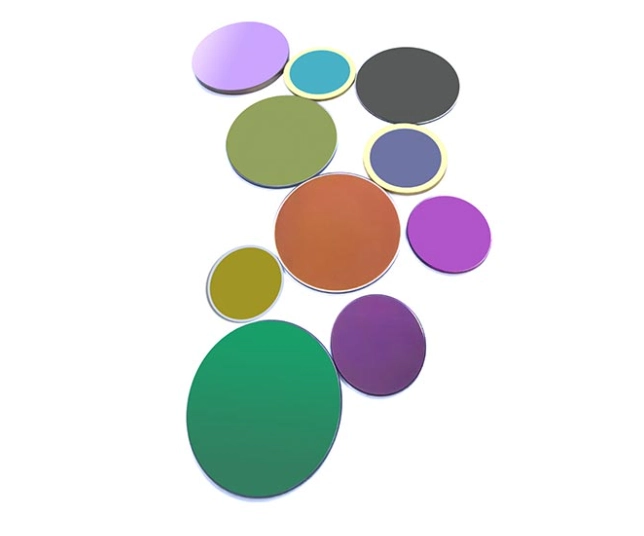
What Specifications Should Buyers Check Before Choosing Infrared Optical Filters?
A filter can look right on paper but fail in the device. The optical path, detector, light source, working temperature, and installation method all affect the final result. Specification review should come before sample ordering.
Center Wavelength and Half Bandwidth
Center wavelength shows where the filter works. Half bandwidth shows how wide the passband is. A narrow passband can improve selectivity, but it also needs better matching with the target signal.
For gas detection, buyers should confirm the gas type, wavelength region, light source, detector response, and whether the passband fits the absorption feature.
Transmittance and Blocking Depth
Transmittance affects how much useful signal reaches the detector. Blocking affects how much unwanted light is kept out. A filter with good passband transmission but weak blocking may still cause unstable detection data.
For custom infrared filter selection, these two values should be checked together. Strong blocking is often what keeps the reading clean.
Substrate, Shape, and Integration Needs
Substrate choice affects infrared transmission and assembly. GE, silicon, zinc selenide, sapphire, calcium fluoride, and zinc sulfide may be considered depending on wavelength range and structure.
Buyers should also confirm diameter, thickness, coating side, mounting method, and working conditions. These small details often decide whether the filter can move from test sample to production.
Why Work With BoDian Optical for Custom Infrared Optical Filter Projects?
Many infrared projects need more than a standard catalog item. The supplier should help match the filter to the target signal and system structure, not only provide a product list.
Product Matching Instead of Generic Filter Selection
BoDian Optical can support different filter directions for different detection goals. INBP10485 fits target gas signal isolation. The short wave pass category helps reduce longer-wavelength interference. The long wave pass category supports heat and long-wave signal detection.
This matching process helps reduce wrong samples and saves time during device testing.
Thin-Film Coating, Testing, and Customization Support
Filter performance depends on coating design, material selection, film control, and spectral testing. A small mismatch in wavelength or blocking range may change the final reading.
For Infrared Optical Filters, the coating defines the signal window. Before bulk purchasing, buyers should review the optical path, target wavelength, detector type, operating temperature, and expected interference source.
Service, Samples, and Contact for Application-Specific Filters
If your project already has a target wavelength, drawing, detector model, or failed sample issue, send those details through BoDian Optical’s contact page. Clear technical information helps the team judge whether INBP10485, an infrared short wave pass filter, or an infrared long wave pass filter is the better starting point. With the right Infrared Optical Filters, invisible radiation becomes cleaner detection data before it reaches the sensor.
FAQ
Q: What Are Infrared Optical Filters Used for in Detection Systems?
A: Infrared Optical Filters are used to select useful infrared wavelengths and block unwanted light before the signal reaches a detector. They are used in gas detection, thermal sensing, infrared imaging, security monitoring, and optical instruments.
Q: Is INBP10485 Suitable for Every Infrared Detection Project?
A: No. INBP10485 is suitable for projects that need a narrow infrared band around its listed center wavelength for C₂H₄, O₃, and VOCs gas detection. If the project focuses on heat radiation or broad band separation, a long wave pass or short wave pass filter may be more suitable.
Q: How Do I Choose Between an Infrared Short Wave Pass Filter and an Infrared Long Wave Pass Filter?
A: Choose an infrared short wave pass filter when the system needs to transmit shorter wavelengths and reduce longer-wavelength interference. Choose an infrared long wave pass filter when the useful signal is in the longer infrared region, such as heat radiation or temperature sensing.