English
 Afrikaans
 Albanian
 Amharic
 Arabic
 Armenian
 Azerbaijani
 Basque
 Belarusian
 Bengali
 Bosnian
 Bulgarian
 Catalan
 Cebuano
 Chichewa
 Chinese (Simplified)
 Chinese (Traditional)
 Corsican
 Croatian
 Czech
Czech Danish
 Dutch
Dutch Esperanto
 Estonian
 Filipino
 Finnish
 French
 Frisian
 Galician
 Georgian
 German
 Greek
Greek Gujarati
 Haitian Creole
 Hausa
Hausa Hawaiian
 Hebrew
 Hindi
Hindi Hmong
Hmong Hungarian
 Icelandic
 Igbo
Igbo Indonesian
 Irish
Irish Italian
 Japanese
 Javanese
 Kannada
 Kazakh
 Khmer
Khmer Korean
 Kurdish (Kurmanji)
 Kyrgyz
 Lao
Lao Latin
Latin Latvian
 Lithuanian
 Luxembourgish
 Macedonian
 Malagasy
 Malay
Malay Malayalam
 Maltese
 Maori
Maori Marathi
 Mongolian
 Myanmar (Burmese)
 Nepali
 Norwegian
 Pashto
 Persian
 Polish
 Portuguese
 Punjabi
 Romanian
 Russian
 Samoan
 Scottish Gaelic
 Serbian
 Sesotho
 Shona
Shona Sindhi
 Sinhala
 Slovak
 Slovenian
 Somali
 Spanish
 Sundanese
 Swahili
 Swedish
 Tajik
Tajik Tamil
Tamil Telugu
 Thai
Thai Turkish
 Ukrainian
 Urdu
Urdu Uzbek
Uzbek Vietnamese
 Welsh
Welsh Xhosa
Xhosa Yiddish
 Yoruba
 Zulu
Zulu


You spend a lot of your budget on high-end sensors, but sometimes the results still come back messy. Why does this happen? The problem usually is not the sensor hardware itself. When your Infrared Detector picks up too much background noise, the actual signal gets completely buried. This happens a lot in industrial gas sensing and thermal imaging setups. You need a practical way to block the junk light before it ever reaches the sensor surface.
It is hard to find a manufacturer that delivers reliable thin-film coatings without constant shipping delays. If you’re also fed up with this hassle, consider BoDian Optical. They do not just sell off-the-shelf glass. They build custom optical filters that actually hold up in harsh industrial environments. If your project involves matching filter specifications to exact gas absorption lines or specific thermal bands, they are a highly reliable partner to work with. They know the science, and they know how to scale production for your specific needs.

What Limits Your Infrared Detector Accuracy
High Background Noise Interference
In a factory or field testing setup, stray light is simply everywhere. Machine heat, sunlight, and other broad radiation sources flood your system constantly. If your optical setup lets this broad-spectrum noise pass right through, the machine cannot tell the difference between the target gas and a hot pipe nearby. You have to stop this noise before it hits the Infrared Detector.
Poor Target Signal Transmission
Sometimes the issue goes the other way. The optical component blocks the noise but also cuts down the good signal you actually want to measure. If the transmittance rate drops too low, the sensor struggles to read anything useful. You lose system sensitivity very fast, which makes your entire device look broken or poorly designed.
Wavelength Drift in Extreme Environments
Heat changes physical materials. When temperatures spike in a facility, poor-quality coatings expand and warp. This shifts the center wavelength of your optics. Suddenly, your system misses the target absorption peak entirely.
Here is a quick look at how different substrate materials handle physical stress in these environments.
| Material Type | Useful Transmission Range | Typical Application | Moisture Resistance |
| Silicon (Si) | 1.2 to 8.0 µm | Short to Mid-wave IR systems | High |
| Sapphire (Al2O3) | 0.17 to 5.5 µm | High temperature, harsh impact | Very High |
| Zinc Selenide (ZnSe) | 0.6 to 15.0 µm | Broad IR applications | Medium |
How Can the ILP8200 Long Pass Filter Block Unwanted Radiation
Let’s say you have an Infrared Detector meant to look at long-wave data. Any shortwave radiation hitting the sensor will mess up your readings. You need a specific tool to cut that out.
Steep Edge Transitions Cut Shortwave Noise
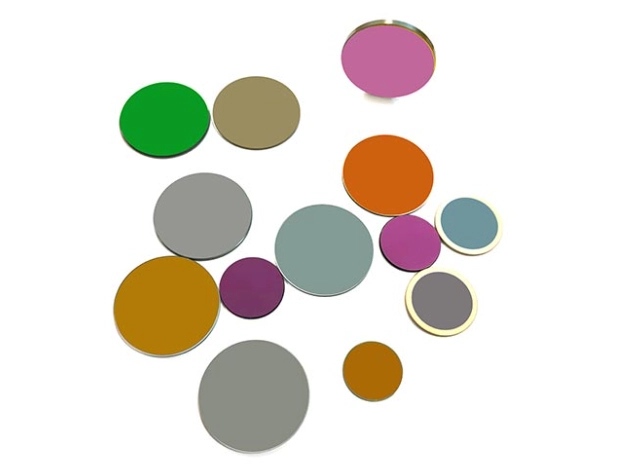
You can use the ILP8200 to fix this problem directly. It acts like a strict physical barrier. It cuts off light below 8200nm. The transition edge is very steep, meaning it does not gradually block light—it stops it sharply. This keeps the shortwave noise entirely out of your data pool.
Deep Blocking Depth Boosts Detection Precision
Blocking depth matters a lot. We measure this in Optical Density (OD). If a component has an OD4 rating, it only lets 0.01% of the unwanted light pass. This deep blocking is what actually gives your system a high signal-to-noise ratio.
Take a look at how Optical Density translates to actual light transmission in the table below.
| Optical Density (OD) | Transmittance (%) | Real-World Blocking Efficiency |
| OD 1 | 10% | Low (Lets too much noise in) |
| OD 2 | 1% | Basic |
| OD 3 | 0.1% | Standard Industry Level |
| OD 4 | 0.01% | High Precision |
| OD 5 | 0.001% | Extreme Precision |
Durable Coatings Resist Thermal Fluctuation
The thin film coated on the glass has to stick permanently. Cheap coatings peel or shift when the temperature drops at night and spikes during the day. A solid long pass filter maintains its spectral curve regardless of the weather outside. You do not have to worry about replacing parts every few months.
Why Is the IWBP8075-9400 Ideal for Targeted Thermal Analysis
Precise Bandwidth Captures Specific Target Signatures
Sometimes you do not want all the long waves coming in. You just want one specific window of data. The IWBP8075-9400 isolates the exact band from 8075nm to 9400nm. This is exactly where certain thermal signatures and chemical compounds show up best.
High Transmittance Across the 8075 to 9400nm Range
Inside that specific window, you need maximum light. This wide bandpass component pushes a high volume of the target signal through the glass. It feeds the Infrared Detector exactly what it needs. Your machine receives a strong, clear picture without struggling to amplify a weak input.
Consistent Optical Performance Secures System Stability
When you install these items in industrial monitors, they need to run for years without constant maintenance. Stable optical performance keeps the Infrared Detector reading accurately over time. This means you do not have to recalibrate your field machines, saving your maintenance team a massive amount of labor.
Dealing with signal interference and thermal drift costs you time and money. We can provide spectral transmission data sheets, and custom design suggestions, so you can lock in the exact specifications for your project. Just share your target gas or operating environment with us. Feel free to contact our engineering team to get the right components for your Infrared Detector system.
FAQ
Q What is the main difference between a long pass and a wide bandpass filter?
A A long pass cuts off short wavelengths and lets everything above a certain point pass freely. A wide bandpass only lets light through a specific, fixed window while blocking everything else.
Q How do I match a bandpass filter to my specific Infrared Detector?
A You need to look at the spectral response curve of your sensor hardware. The filter’s high transmittance range must overlap perfectly with the sensor’s peak sensitivity.
Q Can these optical coatings handle high humidity environments?
A Yes. Quality thin-film coatings are sealed and tested against moisture. This stops the layers from degrading or peeling when used in outdoor or damp factory settings.