English
 Afrikaans
 Albanian
 Amharic
 Arabic
 Armenian
 Azerbaijani
 Basque
 Belarusian
 Bengali
 Bosnian
 Bulgarian
 Catalan
 Cebuano
 Chichewa
 Chinese (Simplified)
 Chinese (Traditional)
 Corsican
 Croatian
 Czech
Czech Danish
 Dutch
Dutch Esperanto
 Estonian
 Filipino
 Finnish
 French
 Frisian
 Galician
 Georgian
 German
 Greek
Greek Gujarati
 Haitian Creole
 Hausa
Hausa Hawaiian
 Hebrew
 Hindi
Hindi Hmong
Hmong Hungarian
 Icelandic
 Igbo
Igbo Indonesian
 Irish
Irish Italian
 Japanese
 Javanese
 Kannada
 Kazakh
 Khmer
Khmer Korean
 Kurdish (Kurmanji)
 Kyrgyz
 Lao
Lao Latin
Latin Latvian
 Lithuanian
 Luxembourgish
 Macedonian
 Malagasy
 Malay
Malay Malayalam
 Maltese
 Maori
Maori Marathi
 Mongolian
 Myanmar (Burmese)
 Nepali
 Norwegian
 Pashto
 Persian
 Polish
 Portuguese
 Punjabi
 Romanian
 Russian
 Samoan
 Scottish Gaelic
 Serbian
 Sesotho
 Shona
Shona Sindhi
 Sinhala
 Slovak
 Slovenian
 Somali
 Spanish
 Sundanese
 Swahili
 Swedish
 Tajik
Tajik Tamil
Tamil Telugu
 Thai
Thai Turkish
 Ukrainian
 Urdu
Urdu Uzbek
Uzbek Vietnamese
 Welsh
Welsh Xhosa
Xhosa Yiddish
 Yoruba
 Zulu
Zulu


Creating strong thermal cameras or gas catch tools calls for pulling out certain infrared signs from messy back light. For a good sign-to-noise level, the setup counts on Precision Narrowband IR Filters. These light parts stop extra waves. They let just the goal heat mark hit the sensor.
If one builds forward watch gear, part quality sets the end good’s site trust. At BoDian Optical, the build group sees thin-layer plan as the base of the light path. With more than 40 years of tech build in light acts, we run a full auto layer site in the Beijing Economic Development Zone. We handle better magnetron spray and ion-help put-down steps to give steady, high-out light parts. Working with us opens straight reach to tech pros. They match hard layer plans with the set hardware wants. This keeps output lines going without flaws.

How Do Precision Narrowband IR Filters for Thermal Imaging Revolutionize the Industry?
Thermal watch rests on catching set light bursts. In making these setups, splitting the real goal heat from air mix sets the win. Picking the right precision narrowband IR filters for thermal imaging rules if the camera shows a clear form or a fuzzy mark.
Overcoming Environmental Noise in Harsh Industrial Scenarios
Sun light and big machines make wide-range infrared mix. Without good screen, the catch tool gets blind from this back power. Solid light screens cut this air mess. Then, the setup can spot clear heat marks even in strong day light or high-heat plant spots.
Enhancing Detector Accuracy for High-End Infrared Cameras
The sensor group needs clean facts to make true heat maps. By cutting the in light to a set wave range, one cuts color mix and sign cross that often fuzz heat lines. This firm wave split makes the picture sharp a lot. It gives very clear heat pics.
Improving Thermal Sensitivity with Narrowband IR Filters
A catch tool’s feel ties much to the gap in in light. The main rules of improving thermal sensitivity with narrowband IR filters turn on raising the sign-to-noise level. These parts pull off back power. They raise the gap of the goal burst. This lets the camera find heat gaps as low as 0.01°C.
Why Do Engineers Demand High Transmission Precision Narrowband IR Filters?
Getting high gap is just part of the task. The screened sign must also hold enough power for the catch tool to read without too much electric boost. By adding high transmission precision narrowband IR filters to the light path, one grabs max light bits.
Maximizing Signal Capture from Faint Thermal Sources
In checking far or low-heat items, the back infrared power stays weak by nature. Top screens reach top pass over 90%. This high open-path work lets more of the key sign hit the focus plane group. It lifts the full check range and clear of the gear.
Reducing Power Demands for Portable Equipment
Battery-run hand-held heat scopes must hold electric pull low. If a screen lets just 70% of light through, the setup handler must push hard to boost the weak electric sign. This drains the battery quick. A high-pass light path cuts the need boost. It grows site run time for move units.
Maintaining System Stability under Extreme Weather Changes
High pass needs better electric stuff that also turns out very thick. These firm layers fight wet take-in. They keep the pass rate steady even in full wet air.
| Filter Type | Peak Transmission | Signal Amplification Needed | Battery Life Impact |
| Standard Evaporated | 70% – 75% | High | Reduces lifespan by 20% |
| High Transmission (Hard Coated) | > 90% | Low | Extends field operation |
Which Precision Narrowband IR Filters for Temperature Sensing Target Specific Compounds?
Work heat check often links with set gas spot. Different chem mixes take in and send out set infrared waves. Many builders count on precision narrowband IR filters for temperature sensing to single out these exact chem take-in lines.
INBP2700: The Standard Component for Water Vapor Measurement
Water steam takes in infrared light much at 2.7μm. For top weather gear or work dry controls, one needs a sharp light cut at this set body spot. The INBP2700 singles this take-in line just right. It stops cross-talk from other air parts. It gives a very true wet read for watch groups.
INBP3375: Reliable Detection for Combustible Hydrocarbon Gases
In mapping leaks in oil chem plants, methane and other quick oil mixes show clear heat marks near 3.375μm. The INBP3375 part gives a steep change edge just at this wave. Using set screens in these ranges keeps safety gear very quick to risk leaks. It skips wrong alerts from back heat starts.
INBP4260: The Ultimate Choice for Carbon Dioxide Monitoring Devices
Carbon dioxide’s main mark sits at 4.26μm. With the INBP4260, sensors spot CO2 amounts with parts-per-million true. This firm range hold stays key for trusty room air good nets and plant air flow setups.
What Makes Custom Precision Narrowband IR Filters for Thermography Superior?
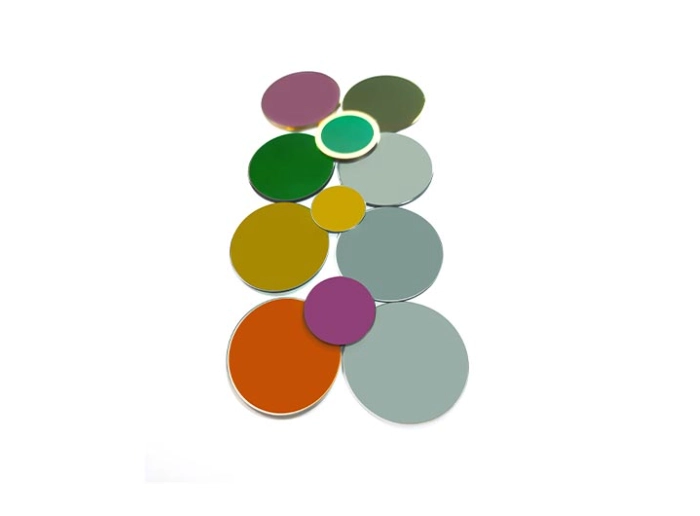
Ready parts seldom match the body or wave wants of own, next-step heat gear. When set lists fall short, custom precision narrowband IR filters for thermography fit the set body sizes and wave needs smooth.
Advanced Deposition Processes for Near-Zero Thermal Shift
Site gear meets big heat swings. Usual layers grow and move their main wave in heat. Custom plans use ion-help put-down to make mass-like, thick electric layers. This cuts the thermal shift to under 5 pm/°C. It keeps the screen fixed on the goal wave no matter outer air.
Deep Optical Blocking Capabilities for Signal Clarity
The sensor stands open to out-range light. Custom plans let one set exact block depths. They push the light thick to OD3 or OD4. This full cut of back light turns a noisy heat pic into a sharp, high-def heat graph.
Tailored Physical Specifications for Unique Sensor Housings
The light body plan stands set. One may need a very thin base to fit a small-bolometer group or a set round for a long-reach germanium lens. Custom screens match the exact body sizes.
| Coating Process | Microstructure | Thermal Shift (pm/°C) | Environmental Tolerance |
| Thermal Evaporation | Porous / Columnar | 30 – 50 | Laboratory Use Only |
| Ion-Assisted Deposition | Dense / Bulk-like | < 5 | Harsh Industrial / Outdoor |
Trouble with wave move and air light mix harms the trust of auto check lines. We can give a full set product sheet, fit design ideas, and pro put-in help. Thus, one can hold goal heat marks with full exact. These tech stuff get made just for the project shape to fix join blocks. Give the exact setup details and contact the build team to get the best Precision Narrowband IR Filters for the gear.
FAQ
Q: How do precision narrowband IR filters manage high humidity environments?
A: Usual open layers take water steam. This moves the goal wave. By using firm-coated parts made with ion-help put-down, the thick mole build stops wet entry. This holds light work steady even in wet outer or sea spots.
Q: Why is peak transmission crucial for long-range thermal imaging?
A: Far items send very weak heat power. If the screen drops 30% of this light, the catch tool gets a very weak sign. High transmission precision narrowband IR filters let over 90% of the goal wave through. This lets the setup spot heat marks from much farther spots without raising electric boost.
Q: Can custom precision narrowband IR filters for thermography be cut to non-standard sizes?
A: Yes. Since every light body house stands set, custom forms and thick are full open. One can set exact rounds, square cuts, or super-thin bases to match the own focus plane group plan smooth.