English
 Afrikaans
 Albanian
 Amharic
 Arabic
 Armenian
 Azerbaijani
 Basque
 Belarusian
 Bengali
 Bosnian
 Bulgarian
 Catalan
 Cebuano
 Chichewa
 Chinese (Simplified)
 Chinese (Traditional)
 Corsican
 Croatian
 Czech
Czech Danish
 Dutch
Dutch Esperanto
 Estonian
 Filipino
 Finnish
 French
 Frisian
 Galician
 Georgian
 German
 Greek
Greek Gujarati
 Haitian Creole
 Hausa
Hausa Hawaiian
 Hebrew
 Hindi
Hindi Hmong
Hmong Hungarian
 Icelandic
 Igbo
Igbo Indonesian
 Irish
Irish Italian
 Japanese
 Javanese
 Kannada
 Kazakh
 Khmer
Khmer Korean
 Kurdish (Kurmanji)
 Kyrgyz
 Lao
Lao Latin
Latin Latvian
 Lithuanian
 Luxembourgish
 Macedonian
 Malagasy
 Malay
Malay Malayalam
 Maltese
 Maori
Maori Marathi
 Mongolian
 Myanmar (Burmese)
 Nepali
 Norwegian
 Pashto
 Persian
 Polish
 Portuguese
 Punjabi
 Romanian
 Russian
 Samoan
 Scottish Gaelic
 Serbian
 Sesotho
 Shona
Shona Sindhi
 Sinhala
 Slovak
 Slovenian
 Somali
 Spanish
 Sundanese
 Swahili
 Swedish
 Tajik
Tajik Tamil
Tamil Telugu
 Thai
Thai Turkish
 Ukrainian
 Urdu
Urdu Uzbek
Uzbek Vietnamese
 Welsh
Welsh Xhosa
Xhosa Yiddish
 Yoruba
 Zulu
Zulu


In the demanding field of current manufacturing, exactness stands as the key factor that counts. The strength of a solid Industrial Temperature Monitor setup decides if the assembly line operates with fine detail or faces expensive stops. Heat rays appear all around, but lacking proper screening, sensors basically work without clear sight amid extra clutter. Real control over steps demands picking out the certain light lengths that show the warmth marks of aimed items. At the same time, it discards the mix-ups that bring wrong readings.
Reaching this skill in the infrared area calls for a collaborator who sees thin-layer knowledge as a craft. BoDian Optical offers more than 40 years of focused study right into the core of factory setups. Starting from the Beijing Film Machinery Research Institute in 1978, the firm grew into a country-level tech business. It completed over 20 national science tasks with success. The group employs fine German Leybold vapor tools and Japanese Optorun layer machines. These help make sure each filter, be it for health check gear or hot oven watchers, fits firm rules for lasting use and light exactness. Selecting their options means more than picking a piece. It gives entry to a skilled crew that supplies made-to-order, exact filters with quick delivery to keep work flexible.

How Does High-precision Infrared Filter for Industrial Monitoring Improve Accuracy?
The sharpness of any auto heat sense setup rests on the clearness of rays hitting the picker. In busy plant spots, warmth from engines, bulbs, and other machines builds a full infrared backdrop.
High-precision Infrared Filter for Industrial Monitoring to Eliminate Background Noise
Adding a high-precision infrared filter for industrial monitoring narrows the picker’s range to the exact power band from the work item. This screening cuts out the unwanted infrared rays that often make an Industrial Temperature Monitor show false numbers. Sun shine or bounced heat from close gear can change data without this care. As a result, PLC (Programmable Logic Controller) changes waste supplies.
Specialized Coating Technology for Enhanced Signal Transmittance
Fine sharpness also comes from good passage rates reached via better vacuum methods. Ion-aided layering (IAD) builds a thick, solid-like film setup. It cuts down spread and soak losses inside the filter. Almost all helpful rays, usually over 90%, get to the picker. This boosts the signal-to-noise level even in dim settings.
Multi-layer Interference Design for Superior Thermal Contrast
These filters use detailed electric layer groups, often mixing items like Germanium, Silicon, or Zinc Sulfide. The layers switch to form clear light changes. Such a plan helps spot small warmth shifts that a usual wide-range picker would overlook. The outcome is a clear heat picture. It supplies the fine details needed for exact joining, melting, or chip building.
Why Is a Non-contact Thermal Sensor with Infrared Filter Essential for Hazardous Zones?
Plant areas usually have strong heat, harmful gases, or moving pieces that block direct touch. Well-being and lasting time rank as main issues in such places.
Safety and Efficiency with Non-contact Thermal Sensor with Infrared Filter
A non-contact thermal sensor with infrared filter lets monitoring of changing chemical mixes or liquid metal from a secure spot. The system counts on rays, not direct transfer. Thus, it avoids risks like picker melting or substance mixing. This arrangement keeps steady watch on the step without needing stops for picker swaps.
Durable Substrates for Longevity in Extreme Industrial Conditions
To last in these areas, filters need strong bases like Germanium (Ge). It gives good clearness in the long-wave infrared (LWIR) band. For tougher force settings, Silicon (Si) or Sapphire supplies the required toughness and heat shake strength. These bases make the high-precision infrared filter for industrial monitoring stay whole against heavy shakes or rough dirt.
Reduced Maintenance Costs through Reliable Thin-film Stability
A hidden expense in plant picking is light shift from damp or heat changes. Filters made by power steps like magnetron spraying resist plant dampness almost fully. Keeping the light path steady avoids often hand setting of heat watch tools.
| Substrate Material | Typical Transmittance Range | Mechanical Hardness | Common Industrial Use |
| Silicon (Si) | 1.2μm – 7.0μm | High | MWIR Monitoring & Gas Sensors |
| Germanium (Ge) | 2.0μm – 14.0μm | Moderate | LWIR Thermal Imaging |
| Zinc Sulfide (ZnS) | 0.4μm – 12.0μm | Moderate | Multi-spectral Windows |
Which Solutions Exist for Infrared Filter for High Temperature Furnace Monitoring?
Watching inside an oven or kiln brings a special task. The rays prove so strong that usual pickers would overload without set light gates.
Dedicated Infrared Filter for High Temperature Furnace Monitoring for Steel and Glass
For steel or glass making, an infrared filter for high temperature furnace monitoring picks out the release bands of the liquid item. It stops the shorter lengths from burn fires. This lets viewing past the fire to the item’s face.
Middle-Wave Performance with IWBP3000-5000
For broad-pass wants in the 3-5μm band, the IWBP3000-5000 serves as the main fix. This filter fits the MWIR (Mid-Wave Infrared) air-clear path. It works well for finding hot gas breaks or watching quick plant machines. Its exact layer gives clear heat pictures even where haze or steam might hide sight.
Custom Spectral Tuning for Unique Industrial Thermal Profiles
Plant steps usually show special blackbody ray paths. Made layers can match the picker’s top feel to the right release length of the aimed item, be it plastics, fabrics, or special metals. This special method boosts the sharpness of an Industrial Temperature Monitor. It makes sure the measure targets the right object, not its area.
Can a Custom Infrared Filter for Process Control Systems Optimize Energy Use?
Current Industry 4.0 rules stress power saving. Sharpness in heat measure leads straight to cutting power loss.
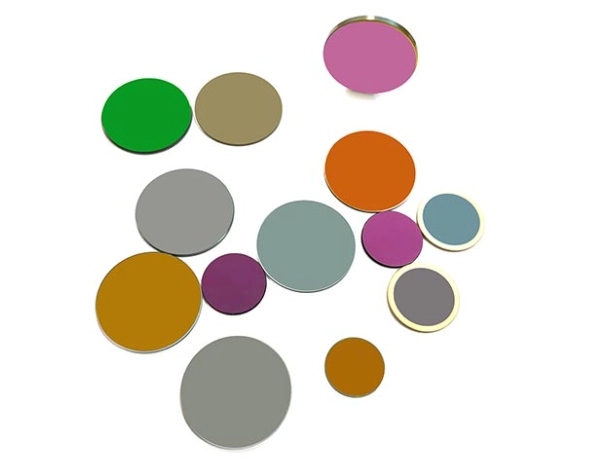
Precision Control via Custom Infrared Filter for Process Control Systems
Using a custom infrared filter for process control systems gives the sight for auto power handling. A picker spotting a 1°C heat fall at once, without delay or clutter, lets heat parts adjust with fine saving. This can cut power use by up to 15% in big gas or chemical plants.
Long-pass Filtering Excellence with ILP5500
The ILP5500 acts as a top long-pass filter. It stops all rays under 5.5μm. This proves key to block light mix from strong halogen bulbs or other clear light items in new smart plants. It makes heat pickers aim only on long-wave heat power that shows true item warmth.
Enhanced Product Consistency through Stable Thermal Feedback Loops
Steady screening brings steady outcomes. When an Industrial Temperature Monitor gives even data across many making rounds, the fault level falls. Such trust proves vital for big fields like chip making or food handling. There, a small heat change can spoil a full lot.
Why Are Narrow-band Infrared Filters Preferred for Industrial Gas Detection?
Heat watching often pairs with area safety, especially in finding harmful gas breaks.
Leak Identification with Narrow-band Infrared Filter for Industrial Gas Detection
A narrow-band infrared filter for industrial gas detection sets to the clear soak mark of a gas. Finding methane or carbon dioxide needs a filter that stops all heat power but the right band where these gases take in light. This setup spots a break right away by viewing the dark shape from the gas cloud.
Specialized Gas Analysis with INBP3900
The INBP3900 builds for high-feel gas picking. By giving a tight pass band near the 3.9μm spot, it lets pickers name clear chemical amounts in the air with fine sharpness. This piece proves key for keeping safe air in fuel plants and auto storage areas.
Integrated Solutions for Multi-gas Monitoring and Thermal Safety
The move in new safety setups is mixing many picking levels. Pairing a non-contact thermal sensor with infrared filter with gas picking tools makes a full safety web. This stops both overheat fires and poison reaches. It ensures a safer and smoother work spot.
| Feature | Standard Bandpass Filter | High-Performance Narrowband |
| Bandwidth (FWHM) | >100nm | <10nm |
| Peak Transmittance | ~80% | >90% |
| Application | General Imaging | Gas Analysis / Laser Targeting |
| Out-of-band Blocking | Moderate | Deep OD4 |
Conclusion: Professional Service and Contact Information
Picking an Infrared Filter forms the tech base of the step handling plan. Be it needing a high-precision infrared filter for industrial monitoring to clear messy data or a custom infrared filter for process control systems to push power saving, the worth of the light layer stands chief.
The tech crew offers full aid, from first light plan talk to sending MIL-STD approved pieces. With a usual test turn of 1-2 weeks, hardware can change fast to fit quick market needs.
Contact Us: Boost Industrial Temperature Monitor skills by teaming with field pros. For made bids, tech talks, or light data pages, you can contact us anytime. The crew waits to aid in fine-tuning plant picking work with exact light fixes.
FAQ
Q: Can a non-contact thermal sensor with infrared filter operate in humid environments?
A: Yes, if the filter uses power layering steps like ion-aided layering. These steps form thick, hole-free layers that block damp take-up. Without them, usual filters face light shifts.
Q: Why do I need a narrow-band infrared filter for industrial gas detection rather than a general one?
A: Clear gases hold very tight infrared soak bands. A usual filter lets too much heat clutter through. This hides the weak sign of a gas break. A tight-band filter pulls out the right length to name the gas mark with high feel.
Q: What is the benefit of a custom infrared filter for process control systems in terms of durability?
A: A made filter fits not only for light work but also for area strength. This covers choosing set bases and adding tough covers or shield diamond-like carbon (DLC) layers to handle hot oven spots or harmful plant air.