English
 Afrikaans
 Albanian
 Amharic
 Arabic
 Armenian
 Azerbaijani
 Basque
 Belarusian
 Bengali
 Bosnian
 Bulgarian
 Catalan
 Cebuano
 Chichewa
 Chinese (Simplified)
 Chinese (Traditional)
 Corsican
 Croatian
 Czech
Czech Danish
 Dutch
Dutch Esperanto
 Estonian
 Filipino
 Finnish
 French
 Frisian
 Galician
 Georgian
 German
 Greek
Greek Gujarati
 Haitian Creole
 Hausa
Hausa Hawaiian
 Hebrew
 Hindi
Hindi Hmong
Hmong Hungarian
 Icelandic
 Igbo
Igbo Indonesian
 Irish
Irish Italian
 Japanese
 Javanese
 Kannada
 Kazakh
 Khmer
Khmer Korean
 Kurdish (Kurmanji)
 Kyrgyz
 Lao
Lao Latin
Latin Latvian
 Lithuanian
 Luxembourgish
 Macedonian
 Malagasy
 Malay
Malay Malayalam
 Maltese
 Maori
Maori Marathi
 Mongolian
 Myanmar (Burmese)
 Nepali
 Norwegian
 Pashto
 Persian
 Polish
 Portuguese
 Punjabi
 Romanian
 Russian
 Samoan
 Scottish Gaelic
 Serbian
 Sesotho
 Shona
Shona Sindhi
 Sinhala
 Slovak
 Slovenian
 Somali
 Spanish
 Sundanese
 Swahili
 Swedish
 Tajik
Tajik Tamil
Tamil Telugu
 Thai
Thai Turkish
 Ukrainian
 Urdu
Urdu Uzbek
Uzbek Vietnamese
 Welsh
Welsh Xhosa
Xhosa Yiddish
 Yoruba
 Zulu
Zulu


An Infrared Security Camera needs more than a sensor that can respond to infrared radiation. The optical path must decide which radiation reaches that sensor. Active night vision depends on reflected infrared illumination, while thermal detection reads radiation emitted by objects in the scene. These two jobs place different demands on the filter, so filter selection should start with the imaging method rather than with a general “infrared” specification.
BoDian Optical develops optical thin-film components for infrared imaging, detection, monitoring, and other sensing systems. Its infrared portfolio includes narrow bandpass and broadband filters, with coating design, substrate selection, dimensional inspection, and spectral testing covering transmittance, reflectance, and absorbance. For camera manufacturers, this means the filter can be discussed as part of the complete optical path instead of as an isolated component.
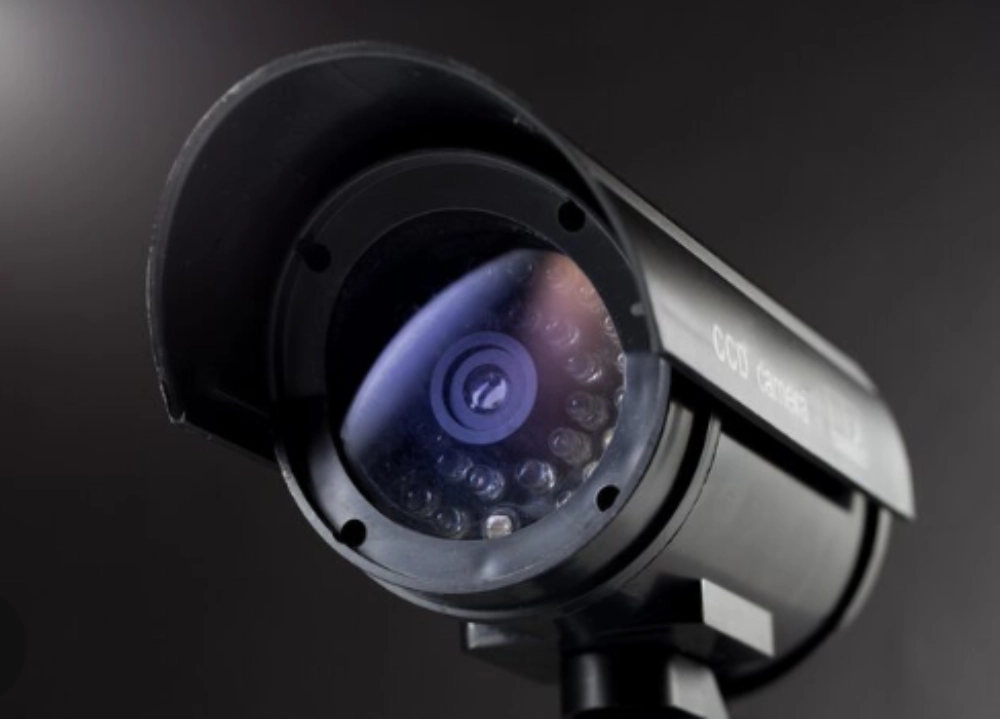
Why Do Infrared Security Cameras Need Different Spectral Filtering Strategies?
An infrared security camera can either illuminate a target and measure the returned signal or collect thermal radiation already present in the scene. These methods may both be called infrared imaging, but the filter requirements are quite different.
Active Night Vision Detects a Controlled Infrared Return
Active night vision uses an infrared source to illuminate a person, vehicle, wall, gate, or other target. The camera receives light reflected from that target.
The useful return signal may reach the detector together with visible light, sunlight, artificial lighting, and unrelated infrared radiation. The optical filter therefore needs to preserve the selected illumination channel while reducing wavelengths that do not help the image.
This is where wavelength-selective filtering becomes useful. The source spectrum and detector response should be reviewed together before the center wavelength and bandwidth are fixed.
Thermal Detection Collects Radiation from the Scene
Thermal imaging works differently. It does not need to illuminate the target first. Objects above absolute zero emit infrared radiation, and the detector uses differences in this radiation to form scene contrast.
A person, vehicle, machine housing, or heated surface can therefore remain detectable even when visible illumination is poor. The filter in this system usually needs to preserve a wider useful infrared region rather than isolate one narrow illumination channel.
The lens, protective window, detector package, atmosphere, and filter all affect the usable spectral range.
Filter Bandwidth Must Follow the Detector Task
BoDian Optical separates narrowband and broadband designs by bandwidth relative to center wavelength: a half-power bandwidth within 6% of the center wavelength is classified as narrowband, while a wider value is broadband.
That distinction is separate from NIR, MWIR, or longer-wave infrared classifications. “Narrowband” describes how wide the passband is. “Near infrared” or “far infrared” describes where that passband sits in the spectrum.
For an infrared security camera, the practical rule is simple: use a selective passband when the camera follows a defined active source, and consider a wider controlled window when the detector needs thermal scene energy.
| Camera Method | Optical Signal | Typical Filter Direction | Main Selection Focus |
| Active Night Vision | Reflected IR Illumination | Narrow Bandpass | Source Wavelength, Bandwidth, Blocking |
| Thermal Detection | Emitted Thermal Radiation | Broadband Pass | Detector Window, Throughput, Background |
How Do Narrow Bandpass Filters Improve Active Infrared Night Vision?
For an infrared security camera using active illumination, collecting every wavelength available at the lens can work against the detector. An active infrared night vision filter should separate the wanted return from background radiation without removing too much useful signal.
Narrow Bandpass Filters Isolate the Intended Return Signal
A Infrared Narrow Bandpass Filter transmits a controlled region around a selected center wavelength while suppressing radiation outside the required band.
For a camera built around a defined NIR emitter, the filter should be matched to the emitter spectrum and detector sensitivity. A narrow bandpass filter for night vision should not be selected only because its nominal center wavelength looks close to the source. Bandwidth, wavelength tolerance, transmission, blocking range, and installed optical geometry all matter.
A narrower passband may improve spectral isolation, but it can also reduce the amount of received energy. Camera designers therefore need to balance rejection against the signal level available from the illuminator and target.
Blocking Unwanted Light Protects Image Contrast
Passband transmission is only half of the specification. The camera also needs a clear definition of what should be rejected.
Sunlight or artificial lighting can introduce detector input outside the active illumination band. If the blocking range is incomplete, this unwanted energy can reduce contrast or change exposure behavior even when peak transmission inside the passband is acceptable.
Procurement drawings should therefore state both the transmission region and the blocking region. Terms such as “strong blocking” are not useful acceptance criteria unless the wavelength interval and required rejection are defined.
Wide Camera Optics Can Shift Narrowband Performance
Thin-film interference filters change spectral position as the Angle of Incidence increases. As rays move away from normal incidence, the center wavelength and other spectral features shift toward shorter wavelengths.
This matters in wide-FOV cameras and fast optical systems. Rays near the edge of the image may strike the filter at a different angle from rays near the optical axis.
For production approval, provide the nominal AOI, angular range, field of view, and beam geometry. A spectral curve measured only at normal incidence may not represent the filter response inside the assembled camera.
Why Are Broadband Infrared Filters Better Suited to Thermal Detection?
A thermal infrared security camera needs enough scene radiation to create useful contrast. Restricting the optical path too tightly may starve the detector, while transmitting an unnecessarily wide region may admit background that the system does not need.
Broadband Filters Preserve More Thermal Signal
Thermal imaging commonly works across wider spectral windows than wavelength-specific active sensing. The 3–5 μm and 8–13 μm regions are useful engineering references, although the practical band can be narrower after the lens, detector package, atmospheric transmission, and protective window are considered.
A thermal imaging infrared filter should preserve the detector’s useful scene energy while controlling radiation outside the intended imaging range.
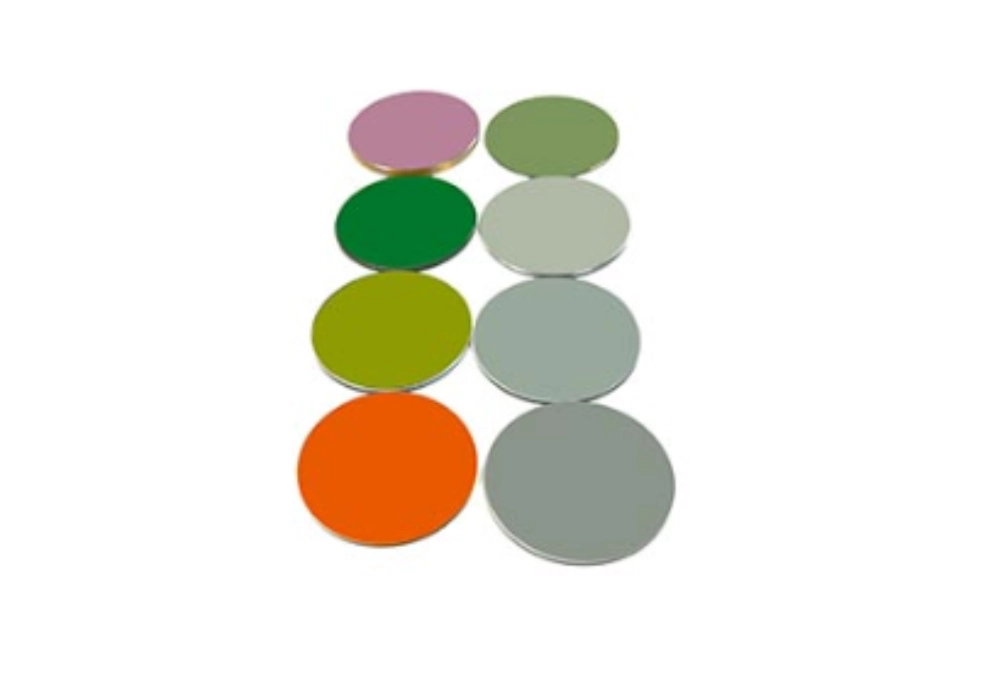
For this type of optical architecture, BoDian Optical’s Infrared Broadband Pass Filter series provides several passband directions for different detector systems.
Thermal Passbands Must Match the Detector and Optical Window
BoDian Optical’s broadband range includes IWBP3000-5000, IWBP5600-6800, IWBP6500-8400, IWBP8075-9400, and IWBP13000-13600. IWBP3000-5000, for example, corresponds closely to the commonly referenced 3–5 μm mid-wave region.
That does not make it a universal thermal-camera filter. A broadband infrared filter for thermal imaging should be selected after comparing the filter band with the detector response, lens transmission, window transmission, AOI, and expected scene conditions.
The model name alone is not enough for approval. Buyers should review the actual spectral requirement of the assembled camera.
Higher Throughput Must Be Balanced against Background
A wider passband can admit more useful radiation, but it can also admit more unwanted background. More transmission is therefore not automatically better.
Camera performance depends on the filter, lens, protective window, detector, aperture, mounting position, and calibration working together. Chipped edges inside the clear aperture, restricted usable area, surface defects, or a passband shifted by installation angle can affect image uniformity even if the filter looks correct on a basic specification sheet.
Prototype testing should include the assembled optical path rather than the filter alone.
What Specifications Should Buyers Define before Ordering an Infrared Camera Filter?
For an infrared security camera project, a clear technical inquiry reduces repeated sampling and makes supplier comparison much easier. Good infrared camera filter selection begins with the source-detector chain and then turns that system requirement into measurable optical and mechanical limits.
Center Wavelength, Bandwidth, Transmission, and Blocking
For Narrow Bandpass Filters, define center wavelength, bandwidth, wavelength tolerance, required transmission, blocking interval, and rejection requirement.
For Broadband Filters, define the useful transmission window, edge positions, in-band transmission requirement, and out-of-band blocking.
Do not approve a filter based only on peak transmission. A filter can transmit strongly at one point and still allow unwanted radiation elsewhere.
For blocking performance, buyers can use Optical Density as a measurable acceptance criterion rather than terms such as “deep blocking.” BoDian Optical supports custom blocking requirements in the OD4 to OD6 range for demanding designs. In practical terms, OD4 corresponds to 0.01% residual transmission, OD5 to 0.001%, and OD6 to 0.0001%, but the OD value must always be tied to a defined wavelength interval. Surface quality should also be specified on the engineering drawing with an agreed Scratch-Dig grade instead of assuming a generic cosmetic standard, because allowable defects depend on the clear aperture and detector sensitivity. Incidence conditions require the same discipline: 0° represents normal incidence, and increasing AOI shifts interference-filter spectral features toward shorter wavelengths. Since the actual shift depends on wavelength, coating design, effective refractive index, and ray angle, buyers should define the nominal AOI and maximum cone angle and request spectral verification at the installed geometry rather than applying a fixed blue-shift allowance.
AOI, Field of View, and Detector Response
Provide the detector response curve whenever possible. For active systems, include the source spectrum as well.
The specification should also state nominal AOI, maximum ray angle, FOV, and whether the beam is collimated or converging. These details help the coating design account for installed spectral shift.
Testing a prototype inside the camera is especially important for wide-angle or compact modules, where the laboratory geometry may differ noticeably from actual use.
Substrate, Clear Aperture, and Surface Quality
Infrared substrates are not interchangeable. BoDian Optical works with material directions including silicon, sapphire, calcium fluoride, zinc sulfide, zinc selenide, and germanium. The choice depends on the working spectral region, mechanical arrangement, surface requirement, coating process, and operating conditions.
The drawing should also define outer dimensions, thickness, tolerance, coating side, clear aperture, edge condition, and mounting direction.
A filter can meet its outside diameter and still restrict the beam if the usable optical aperture is too small. Dimensional inspection, edge condition, cracks, polishing condition, and clear aperture therefore belong in the acceptance process alongside spectral testing.
Why Work with BoDian Optical on Custom Infrared Camera Filters?
The filter in an infrared security camera should follow the camera architecture. Selecting a catalogue part first and forcing the lens, detector, source, or holder around it can create avoidable integration work later.
Coating and Spectral Testing Support Custom Camera Designs
BoDian Optical has more than four decades of optical coating experience and uses processes including vacuum evaporation and magnetron sputtering. Its inspection work covers transmission, reflection, absorbance, dimensions, surface condition, and clear aperture.
For camera development, these capabilities are useful because optical performance and mechanical fit can be reviewed together during sampling.
The production target should always be a measurable specification: spectral position, usable passband, blocking region, optical aperture, dimensions, and installed conditions.
Custom Narrowband and Broadband Filters Follow the Camera Architecture
A custom infrared filter for security cameras should start with the failure mode the camera needs to prevent.
For active night vision, that may be environmental radiation entering outside the emitter channel. Narrow Bandpass Filters are the more direct option when wavelength isolation is required.
For thermal detection, the problem is different. Broadband Filters can preserve a wider thermal window, but their band must still follow the detector and optical train.
BoDian Optical can also work from wavelength requirements, drawings, samples, substrate requirements, and size constraints when a standard configuration does not match the module.
Service and Contact for Samples, Drawings, and Custom Projects
If your infrared security camera project is still at the filter-selection or prototype stage, prepare the detector response, source wavelength for active systems, required passband, blocking range, AOI or FOV, operating conditions, dimensions, clear aperture, drawing, and expected sample quantity. These details give the coating team something measurable to review. Project requirements and drawings can be sent through the BoDian Optical contact page for technical selection and sample planning.
FAQ
What Filter Should an Infrared Security Camera Use for Night Vision?
An Infrared Security Camera using a defined active infrared source will often benefit from a Narrow Bandpass Filter matched to the source and detector. The final choice should consider center wavelength, bandwidth, blocking, AOI, and available return signal rather than selecting the filter from the camera category alone.
Can the Same Infrared Filter Be Used for Active Night Vision and Thermal Imaging?
Usually not without checking the complete optical system. Active night vision measures reflected illumination around a selected source band, while thermal imaging collects emitted infrared radiation across a wider detector window. Their passband and blocking requirements are therefore different.
What Information Is Needed to Order a Custom Infrared Camera Filter?
Prepare the target wavelength or spectral window, detector response, source spectrum if applicable, transmission and blocking requirements, AOI, field of view, substrate preference, dimensions, clear aperture, operating conditions, and drawing. These items allow the filter specification to be matched to the assembled camera rather than to a generic infrared label.