English
 Afrikaans
 Albanian
 Amharic
 Arabic
 Armenian
 Azerbaijani
 Basque
 Belarusian
 Bengali
 Bosnian
 Bulgarian
 Catalan
 Cebuano
 Chichewa
 Chinese (Simplified)
 Chinese (Traditional)
 Corsican
 Croatian
 Czech
Czech Danish
 Dutch
Dutch Esperanto
 Estonian
 Filipino
 Finnish
 French
 Frisian
 Galician
 Georgian
 German
 Greek
Greek Gujarati
 Haitian Creole
 Hausa
Hausa Hawaiian
 Hebrew
 Hindi
Hindi Hmong
Hmong Hungarian
 Icelandic
 Igbo
Igbo Indonesian
 Irish
Irish Italian
 Japanese
 Javanese
 Kannada
 Kazakh
 Khmer
Khmer Korean
 Kurdish (Kurmanji)
 Kyrgyz
 Lao
Lao Latin
Latin Latvian
 Lithuanian
 Luxembourgish
 Macedonian
 Malagasy
 Malay
Malay Malayalam
 Maltese
 Maori
Maori Marathi
 Mongolian
 Myanmar (Burmese)
 Nepali
 Norwegian
 Pashto
 Persian
 Polish
 Portuguese
 Punjabi
 Romanian
 Russian
 Samoan
 Scottish Gaelic
 Serbian
 Sesotho
 Shona
Shona Sindhi
 Sinhala
 Slovak
 Slovenian
 Somali
 Spanish
 Sundanese
 Swahili
 Swedish
 Tajik
Tajik Tamil
Tamil Telugu
 Thai
Thai Turkish
 Ukrainian
 Urdu
Urdu Uzbek
Uzbek Vietnamese
 Welsh
Welsh Xhosa
Xhosa Yiddish
 Yoruba
 Zulu
Zulu


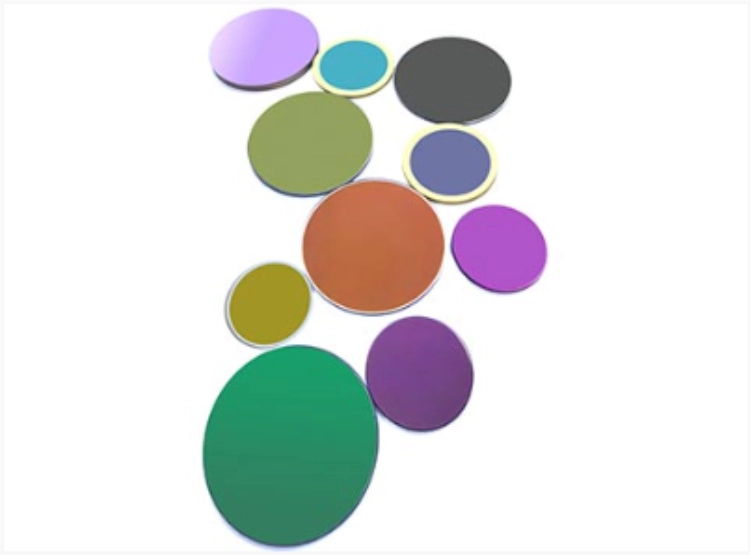
A long-pass filter transmits light of wavelengths longer than a specified cut-off, thus light of wavelengths above the edge of interest is transmitted. A short-pass filter does the reverse and transmits light of wavelengths below the edge of interest. Application of such filters depends on source, detector, unwanted radiation, angle of incidence and steepness of transition.
BoDian Optical supplies infrared long‑pass and short‑pass filters covering a wide range of wavelength windows. When designing an optical train, higher‑grade filter series are not always necessary; optimal component selection should be driven by your actual system requirements. Ultimately, your final solution will also be determined by the detector and light source in your setup.
Key takeaways
- Long-pass filters transmit wavelengths above the cutoff and reject shorter wavelengths.
- Short-pass filters transmit wavelengths below the cutoff and reject longer wavelengths.
- Cutoff, transition steepness, blocking, angle, and detector response must be specified together.
- ILP10000 and ISP5100 are useful BoDian product examples, but the system requirements decide the final choice.

Long-pass or short-pass: which one should you choose?
When designing an infrared measurement, it is often necessary to work with the full spectral range of radiation incident on a detector. Draw the portion of the spectrum that is of interest to the measurement first. A short-pass filter is one which transmits radiation of wavelengths shorter than the cutoff of the filter. Design a long-pass filter first if the detector’s useful edge is on the long wavelength side, and a short-pass first if the detector’s useful edge is on the short wavelength side. Mark out the radiation that must be rejected and the useful spectral band, and the distance between the band and the filter’s edge.
Infrared work often involves signals with a range greater than the peak of the signal of interest. Thus a filter which transmits the signal of interest can also transmit background energy if its blocking is not sufficiently narrow. The cutoff of a filter must be specified with the same convention as is used in the test reports of potential suppliers.
How does a long-pass filter work?
Transmission above the cutoff
A long-pass filter or long-wave pass filter is an optical filter that transmits long wavelength light and blocks short wavelength light. The useful part of the filter’s action is therefore on the right-hand side of the cutoff point shown for wavelength.
ILP10000 infrared long wave pass filter is a verified BoDian example. We can use the filter’s official product description as a starting point, noting that it transmits longer wavelengths and has deep rejection of shorter wavelengths. Of course, we would still like to know details such as the operating band, angle, temperature, size and amount of blocking required by the system buyer.
When long-pass filtering is useful
Long-pass filters are used in systems to block shorter wavelength background radiation prior to detection by the detector. Typical applications for long-pass filters are thermal imaging and temperature measurement. Other infrared instruments can also benefit from long-pass filters. If the usefull signal is located close to the edge of the filter, ask for the transition width and minimum transmission after the edge instead of the nominal cut-off.
How does a short-pass filter work?
Transmission below the cutoff
A short-pass filter transmits light of wavelengths shorter than the edge of the filter and blocks light of longer wavelengths. From a wavelength plot perspective, the region of interest is to the left of the cutoff. The width of the region of long wavelengths that is blocked by the filter must be sufficient for the detector and the source in use in the instrument.
The ISP5100 infrared short wave pass filter is described by BoDian as transmitting below 5100 nm with a sharp cutoff for SWIR applications. When evaluating a part like this, confirm how the cutoff is defined and whether the test angle matches the optical assembly.
When short-pass filtering is useful
Short-pass filters are used to block longer wavelength infrared light when the system requires the shorter wavelength IR light. Short-pass filters can be used to clean up an SWIR image, to protect a detector from viewing an unwanted area, or to separate the source from the thermal background by viewing the source in a specific band of light while blocking all other light of longer wavelength.
What is the practical difference between the two filter types?
| Point to compare | Long-pass filter | Short-pass filter |
| Useful region | Above the cutoff | Below the cutoff |
| Main rejection region | Shorter wavelengths | Longer wavelengths |
| First design question | Where should transmission begin? | Where should transmission end? |
| BoDian example | ILP10000 | ISP5100 |
| Key test terms | Cut-on, passband, short-wave blocking | Cut-off, passband, long-wave blocking |
Both filters can have sharp edges, high transmission and custom sizes. The only difference is that for one side of the spectrum the filter has to pass the signal and for the other side it has to stop it. Therefore a comparison of products has to take this into account in order to find the correct filter type, but not necessarily the correct cut-off.
How do you match the cutoff to a real optical system?
Start with the detector and source
Note down the source range, the detector response range, the useful signal and the unwanted radiation. The blocking range of a detector with a broad response may be as important as the range which is allowed to pass. A narrow source can be ‘stopped’ by a steep edge to prevent measurement of nearby radiation.
Allow for angle and temperature effects
Interference filters can shift with incidence angle. A filter tested at normal incidence may not have the same edge when installed in a converging beam. Include the operating angle or cone angle in the request. Temperature can also matter when the optical path is exposed to a wide environment; specify the range when it affects the measurement.
Check mechanical and optical integration
Check the following for your filter: substrate, clear aperture, thickness, surface finish, method of attachment, and orientation. Even if your filter meets the curve of your system, it can still reduce system performance if it clips the beam. Also, surface finish and edge quality make a big difference when something is to be handled or mounted repeatedly.
What should appear on a long-pass or short-pass specification?
Ask for the cutoff definition, transition width, minimum transmission, blocking range, blocking limit, angle of incidence, polarization condition, substrate, dimensions, tolerances, and test method.
- Useful wavelength region
- Rejected wavelength region and detector response
- Operating angle, temperature, and clear aperture If the filter will be used near a strong source, ask whether reflectance or absorbance data should be supplied as well.
BoDian’s product families include infrared long wave pass filters and short-wave pass filters. Additionally, BoDian processes customer materials, samples, or drawings and usually can save time by having a Spectrum Sketch ready when issuing an RFQ instead of just issuing an RFQ with the words “infrared filter”.
Frequently asked questions
Can a long-pass and short-pass filter be used together?
Yes. Used together, they can define a band between two edges. The combined result must be checked for insertion loss, edge spacing, angle sensitivity, and the blocking requirements of the complete system.
Is cutoff wavelength the same as center wavelength?
No. A cutoff describes an edge. A center wavelength describes the middle of a bandpass region. They should not be substituted for one another in a drawing.
Which filter is better for thermal imaging?
There is no universal answer. A long-pass filter is often considered when longer wavelengths are useful and shorter wavelengths are unwanted, but the detector, window, source, and required blocking range still decide the specification.
Conclusion
The choice is straightforward once the optical system is drawn in wavelength space: useful light above the edge points to a long-pass filter, while useful light below the edge points to a short-pass filter. Define the cutoff, blocking, angle, and mechanical requirements together, then compare the measured curve with the application. Technical contact team with the target band and detector details for a product or custom review.